DAGMAR HASTRUP – pink wild rose – Hastrup
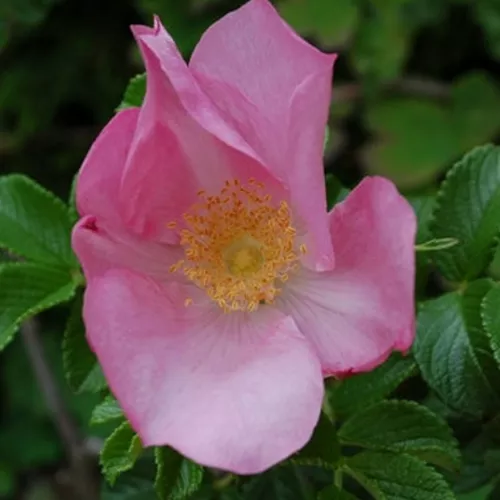
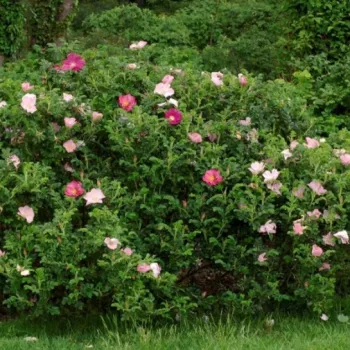
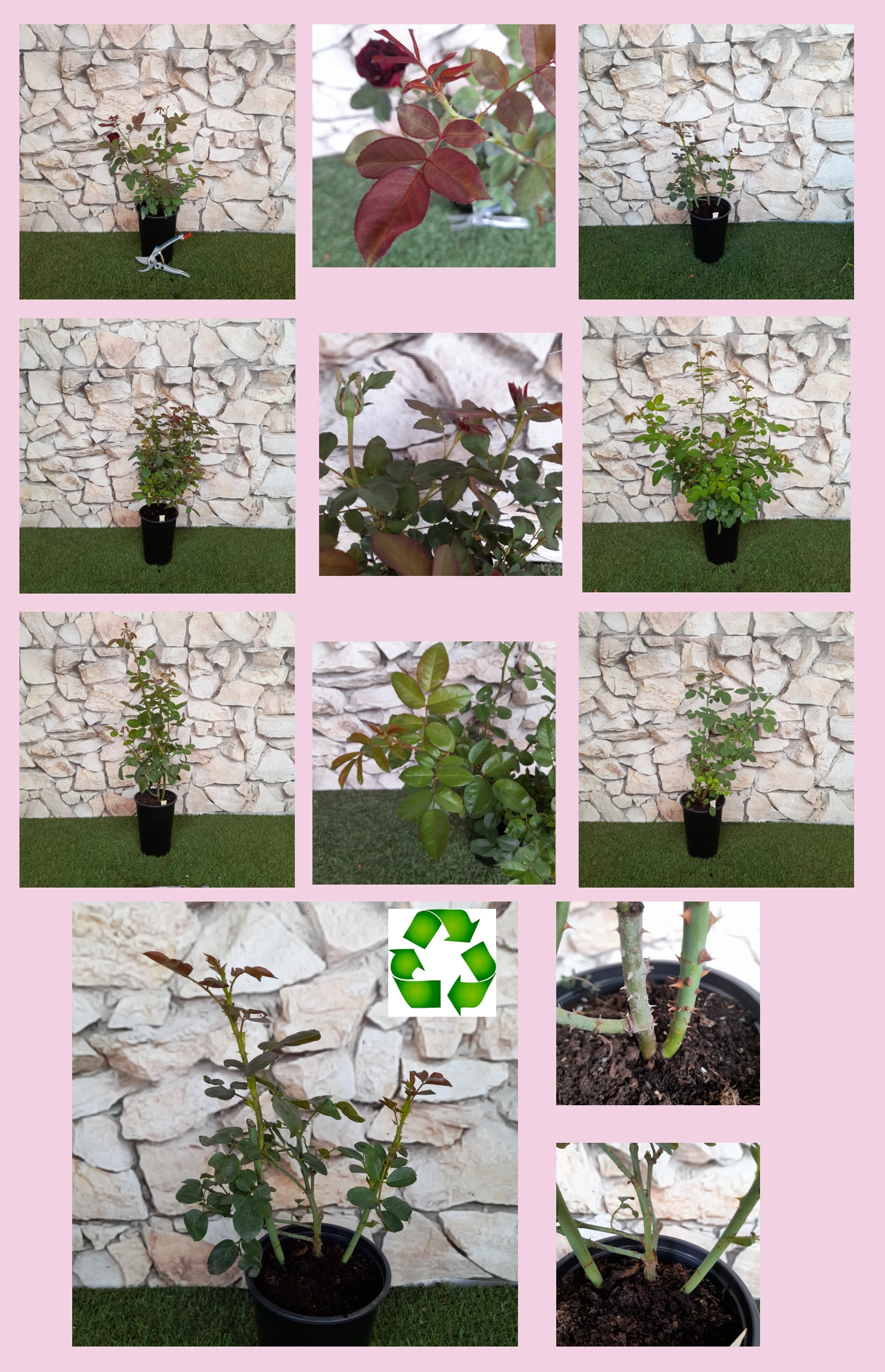
Step out after rain and breathe in the fragrance of ‘Dagmar Hastrup’, a classic hybrid Rugosa shrub rose that thrives in everyday family gardens and coastal winds, coping calmly with heavy showers and changeable British weather. Its naturally healthy foliage and strong root system let you enjoy an easy-care, long-lived planting that settles in steadily rather than demanding constant attention. As an own-root rose it builds a durable framework that regenerates from below if ever damaged, helping to preserve its character season after season with minimal pruning. The single, mid-pink blooms open wide to reveal golden stamens, offering abundant nectar to bees and other pollinators from early summer into autumn. Over time the dusky hips and textured foliage add structure and movement, keeping interest even when flowers pause. Ideal for low, informal hedges or relaxed front gardens, it partners beautifully with lavender and sage in a sustainable, rainwater-conscious design. Plant once, water in well, and watch it move from establishing roots to confident shoots to full garden presence over its first three years, bringing lasting balance to compact urban and suburban spaces that need reliable, unfussy beauty and a quietly sustainable rhythm.
Usage options
| Target area | Reasoning |
|---|
| Low-maintenance front-garden hedge |
The spreading habit and dense, dark green foliage knit together into a thick, informal hedge that screens cars and pavements without demanding intricate pruning. Strong Rugosa background and own-root vigour support a very long planting life for busy urban gardeners. |
| Pollinator-friendly shrub in mixed borders |
Single, cupped flowers with exposed stamens provide easy access to nectar and pollen, supporting bees and hoverflies through a long flowering window. The mid-season pastel pink tones blend gently with perennials, adding ecological value for nature-minded beginners. |
| Resilient coastal or exposed garden planting |
Rugosa heritage gives this rose excellent tolerance of salt-laden winds, poor soil and urban pollution, keeping leaves healthy where other roses may struggle. Its robust structure stays tidy in blustery conditions, reassuring coastal homeowners. |
| Rainwater-conscious front garden or verge |
Deep, fibrous roots help anchor heavier, wetter soils and make good use of stored rainwater, while the shrub copes well with heavy showers and breezy, unsettled days. This supports simple, resilient planting schemes for sustainability-focused households. |
| Family garden play-area boundary |
Dense branching and prickly stems create a natural barrier that subtly guides children and pets, while the plant’s toughness shrugs off the odd misplaced football. Own-root growth recovers steadily from accidental knocks, suiting young active families. |
| Groundcover on banks or awkward corners |
The broad, spreading form covers bare soil, softening slopes and difficult spots where mowing is awkward. Vigorous, low-care growth reduces weeding and helps stabilise the surface over time, making tricky spaces more manageable for time-poor gardeners. |
| Peat-free container or large planter (40–50 L+) |
In a generously sized, peat-free container the compact height and wide spread create a billowing, fragrant presence by the front door or on a terrace. Strong rugosa roots adapt well, rewarding straightforward watering and feeding for balcony and patio owners. |
| Naturalistic, wildlife-friendly planting strips |
The relaxed shrub outline, pastel pink flowers and decorative red hips work beautifully with grasses and salvias, evoking a soft, coastal meadow feel. Long-lived own-root plants mature steadily into durable, low-input schemes valued by wildlife-conscious designers. |
Styling ideas
- Soft-hedged welcome – Line a short front path with a single row of ‘Dagmar Hastrup’, underplanting with low nepeta to create a perfumed, bee-friendly entrance – ideal for homeowners seeking gentle structure.
- Coastal-calm strip – Combine this shrub with drought-tolerant grasses and dwarf yew along a windy boundary, keeping colour and form where other plants fail – suited to exposed, seaside gardens.
- Rainwise rugosa – In a rainwater-fed bed near a downpipe, mix with Salvia nemorosa and thyme for a resilient, low-pruning display – perfect for sustainability-focused terraced-house front gardens.
- Pastel pollinator patch – Plant in a loose triangle with lavender and sage, letting pink blossoms and silver foliage mingle for a long-season wildlife buffet – ideal for beginner wildlife gardeners.
- Urban meadow edge – Soften a driveway or parking edge by dotting this rose among airy grasses, allowing hips and foliage to carry the look into autumn – well suited to contemporary city plots.
Technical cultivar profile
| Parameter | Data |
|---|
| Name and registration |
Hybrid Rugosa shrub rose marketed as Dagmar Hastrup, also labelled Hastrup; a classic park and shrub type used as a wild rose-style landscape variety, unregistered but firmly established in gardens. |
| Origin and breeding |
Raised in Denmark in 1914 by Knud Julianus Hastrup, later introduced widely by Poulsen Roser A/S with Wayside Gardens as an early US distributor; now a proven heritage landscape shrub. |
| Awards and recognition |
Holds the RHS Award of Garden Merit for dependable garden performance, and American Rose Society Classic Shrub Rose awards from 1999 and 2000, reflecting strong international appreciation. |
| Growth and structural characteristics |
Low, spreading habit 70–110 cm high and 100–160 cm wide, with dense, slightly glossy dark green foliage and many thorns; forms a tough, ground-hugging shrub suited to hedges and groundcover. |
| Flower morphology |
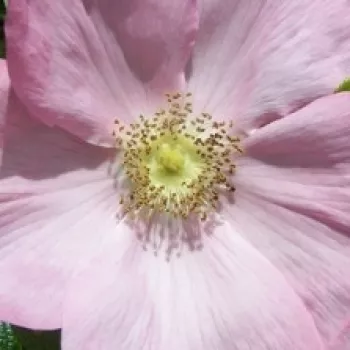
Single to semi-double, cupped blooms with 5–12 petals, medium-sized and borne in clusters; remontant, giving a main flush followed by generous repeating waves across the season. |
| Colour data and phenology |
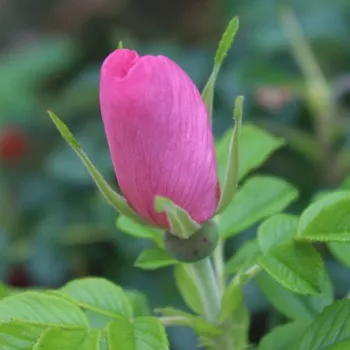
Mid-pink buds open to soft light pink, ARS Lp, RHS 65C outer and 65D inner, fading towards near-white in strong sun; colour softens as flowers age, lending a gentle, pastel effect over time. |
| Fragrance and aroma |
Distinctive, strong rugosa fragrance with a classic rose character, noticeable on warm, still days and especially after rain; scented flowers, plus pollen-rich centres, make it attractive to garden visitors. |
| Hip characteristics |
Produces globose, spherical hips around 20–30 mm in diameter, ripening to bright red RHS 40A; ornamental autumn feature, though numbers may be moderate where flowering is more double. |
| Resistance and winter hardiness |
Exceptionally hardy, tolerating roughly -37 to -34 °C (RHS H7, Swedish zone 6, USDA 3b). Foliage is resistant to black spot and powdery mildew, with moderate rust resistance in humid seasons. |
| Horticultural recommendations |
Suited to hedges, groundcover and naturalistic planting at 110–200 cm spacing; thrives in poor or clay soils with decent drainage, low maintenance needs and good heat and drought tolerance. |
DAGMAR HASTRUP offers strongly fragrant, pollinator-friendly blooms on a long-lived, resilient own-root shrub that suits easy-care hedges and front gardens, a thoughtful choice if you value durable beauty with minimal fuss.