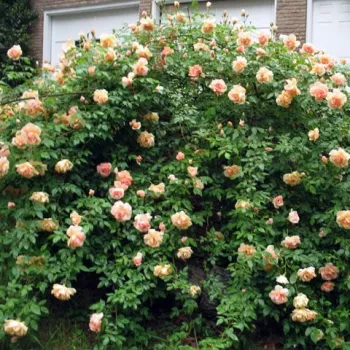
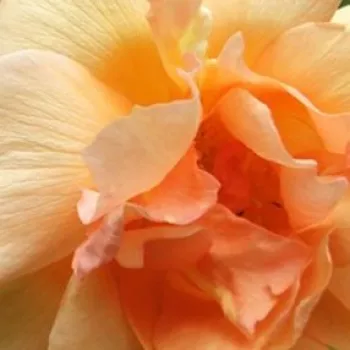
CRÉPUSCULE – apricot historic Noisette rose – Dubreuil
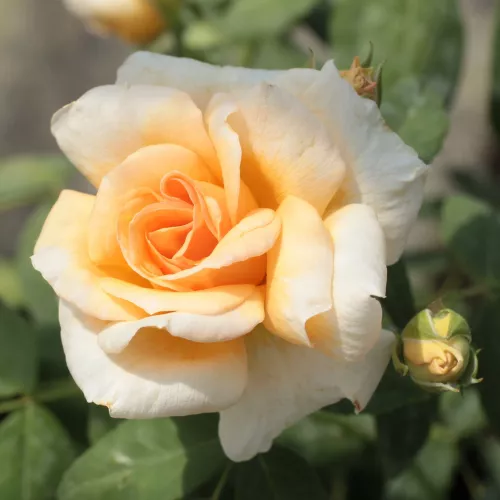
Step out to the front of your terraced home after rain and find Crépuscule glowing against brickwork, its warm peach clusters and sweet, tea-fruity perfume drifting along the pavement, even where drainage is challenging and summers are increasingly humid. This historic Noisette climbs with leisurely grace, clothing arches, railings and balcony trellises in semi-double blooms from early summer to autumn, needing only light trimming and occasional tying-in. As an own-root rose it offers reassuring longevity, regenerating from the base if winter or pruning are severe, so its ornamental value stays stable over many years. Planted once in good, peat-free soil and watered with collected rain, it settles quickly; in year one it focuses on roots, in year two you see confident new shoots, and by year three you enjoy its full, romantic impact. Its reliable resistance, moderate pollinator appeal and generous fragrance make it a quietly luxurious, low-effort choice for sustainable city gardens.
Usage options
| Target area | Reasoning |
|---|
| London terraced-house front garden arch |
Ideal for training over a simple metal arch by a small front gate, where its vigorous climbing habit and semi-double clusters create a soft, peach-toned tunnel of scent with minimal pruning for busy urban gardeners |
| Rainwater-friendly railings and fence cover |
Works well in narrow beds along railings or fences where soil can stay wet, coping steadily even when heavy rain and wind test drainage and structure, while foliage remains healthy for sustainability-focused homeowners |
| Balcony or patio planter (large container) |
Suitable for a robust 40–50 litre container with a trellis, where its own-root vigour and moderate size can be guided upward, providing colour and fragrance without dominating confined spaces for compact-space garden owners |
| Family seating area backdrop |
Behind a bench or small terrace, its strong, tea-fruity scent and soft peach colour create a calming backdrop, flowering on and off all season so there is always something to enjoy for relaxation-seeking families |
| Part-shaded side return or alley |
Performs reliably in partial shade where many roses sulk, bringing light, sunset tones and sweet fragrance to side passages or returns that only catch a few hours of sun for owners of tricky, shaded plots |
| Low-intervention sustainable rose border |
Its good resistance to black spot, mildew and rust means spraying is usually unnecessary, supporting a low-chemical, peat-free planting scheme with simple winter tidy-ups and mulching for time-poor beginner gardeners |
| Soft historic accent in modern planting |
The historic Noisette heritage gives relaxed, romantic form that blends easily with ornamental grasses and perennials, adding maturity and story to newer builds or refreshed gardens for design-conscious home improvers |
| Pollinator-friendly mixed city border |
Semi-double flowers offer moderately accessible stamens, fitting into a mixed scheme with perennials that better support insects, contributing fragrance and continuity of bloom for environmentally aware city gardeners |
Styling ideas
- Twilight-Arch – Train Crépuscule over a slim arch with lavender and nepeta at its feet for soft movement and scent – ideal for romantic, low-care front gardens.
- Peach-Canvas – Cover a sunny wall with its apricot clusters, underplanting with silver sage and airy gypsophila – suited to homeowners wanting easy structure and long bloom.
- Balcony-Haven – Grow it in a 50 litre container with a narrow obelisk, combining with trailing thyme and compact grasses – perfect for space-conscious urban balcony gardeners.
- Heritage-Blend – Mix with coneflowers and evergreen St John’s wort for year-round interest and historic charm – good for families seeking a characterful yet undemanding border.
- Calm-Return – Line a side passage with Crépuscule and cool-toned hostas, letting fragrance soften a functional route – for those wishing to upgrade overlooked, part-shaded corners.
Technical cultivar profile
| Property | Data |
|---|
| Name and registration |
Historic Noisette rose known as Crépuscule, also traded as Crépuscule Historic rose Dubreuil; an old garden rose in the Noisette / Tea Noisette group, unregistered but well established in collections. |
| Origin and breeding |
Bred by Francis Dubreuil in Lyon, France, and introduced in 1904 via the Francis Dubreuil Nursery; a classic French Tea Noisette with unknown parentage and strong historical character. |
| Growth and structural characteristics |
Vigorous climbing habit reaching about 250–450 cm high and 200–320 cm wide, with moderately dense, slightly glossy dark green foliage and moderate prickles; self-cleaning flowers simplify upkeep. |
| Flower morphology |
Semi-double, cup-shaped blooms with 13–25 petals, medium-sized and borne in clusters; remontant, delivering an initial flush followed by an abundant repeat flowering later in the season. |
| Colour data and phenology |
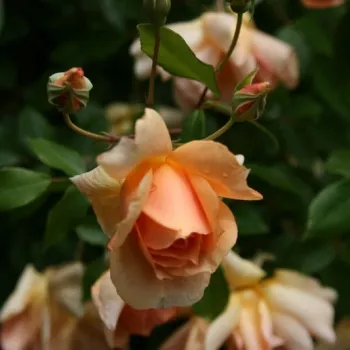
Warm peach flowers with golden undertones reminiscent of sunset; buds open light peach-yellow with coppery veils, deepen in cool weather and fade paler in heat, giving gentle tonal variation over time. |
| Fragrance and aroma |
Sweet, tea-fruity fragrance of strong intensity, clearly noticeable on still, humid days and around seating areas; scent quality reflects its Tea rose ancestry and suits evening enjoyment. |
| Hip characteristics |
Hip set is usually sparse; when present, fruits are small, spherical, orange-red globes about 12–18 mm in diameter, adding occasional seasonal interest without significant self-seeding. |
| Resistance and winter hardiness |
Shows good resistance to major rose diseases such as black spot, powdery mildew and rust; hardy to about –18 to –21 °C (RHS H7, USDA 6b), and tolerates heat and moderate drought once established. |
| Horticultural recommendations |
Recommended for arches, arbours, pergolas, walls and urban green spaces at 200–380 cm spacing; low maintenance, suitable for partial shade, mass planting, hedging or as a specimen feature. |
CRÉPUSCULE offers fragrant peach clusters, low-maintenance climbing coverage and long-lived own-root reliability, making it a considered choice if you would like a graceful historic rose that quietly earns its place over time.