CORALINE – apricot climbing rose – Eve
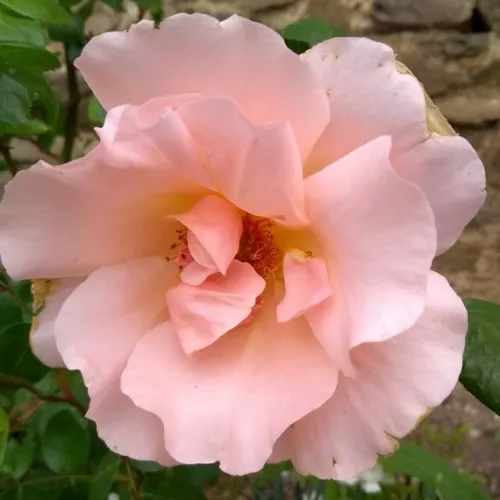
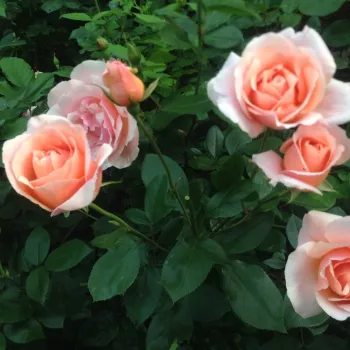
Step out after rain and let Coraline frame your front garden with soft, salmon‑peach blooms that seem to glow against textured brick and railings. This reliable climbing rose offers balance between romantic colour and straightforward upkeep, well suited to small London terraces and rain‑aware urban plots where good drainage supports clay and chalk soils in changeable weather. Its semi‑double flowers are gently pollinator-friendly, opening wide to reveal accessible stamens, while the habit is naturally climbing and easy to train over a porch, fence or compact pergola. Container‑grown on its own roots, your plant arrives in a practical 2‑litre pot, ready to establish steadily for a long garden life with dependable new growth from the base. In typical seasons, roots focus in year one, shoots and framework build in year two, and by year three you enjoy full ornamental impact with generous flushes of flower. Moderate disease resistance and self‑cleaning blooms help keep maintenance simple, so you spend more time enjoying its gentle post‑rain fragrance than working on it.
Usage options
| Target area | Reasoning |
|---|
| Terraced-house front fence or railings |
CORALINE’s moderate height and spread give elegant, vertical colour without overwhelming a narrow frontage, and its medium maintenance suits busy routines who still want seasonal interest for beginners. |
| Rain-aware urban pergola or arch |
The strong climbing habit and flexible canes are easy to tie in over a small pergola, while its own-root longevity repays careful initial planting in well-drained soil for sustainable, long-term structure for urbanites. |
| South or west-facing wall on clay or chalk |
Once established, CORALINE forms a persistent framework and flowers generously, provided you give it basic drainage attention in heavier or alkaline soils to handle wet, breezy spells reliably for homeowners. |
| Large container on balcony or courtyard (40–60 litres) |
In a generous, well-drained pot, this own-root climber develops a strong base and can be trained on a trellis, offering long-lived vertical colour in tight spaces with modest upkeep for balcony-gardeners. |
| Partially shaded side passage or alley |
Suitable for partial shade, CORALINE still produces warm-toned flowers and tidy foliage along side paths, adding softness without needing complex pruning, provided you water during extended dry spells for time-poor. |
| Pollinator-supporting entrance planting |
Semi-double blooms with accessible stamens offer moderate nectar access, and repeat flushes mean a longer visiting window through summer, supporting bees and hoverflies in compact, car-free front gardens for wildlife-lovers. |
| Family garden seating area backdrop |
The repeat-flowering habit gives months of gentle colour behind a bench or small terrace; self-cleaning blooms reduce deadheading, keeping the overall effect relaxed and low-effort for busy-families. |
| Soft screening between neighbouring gardens |
Trained along wires or a light trellis, CORALINE creates a semi-transparent, peach-toned screen with hips in autumn; its moderate thorniness and own-root resilience support long-term, manageable boundaries for planners. |
Styling ideas
- Romantic-railings – Train CORALINE along black iron railings, underplant with lavender and soft nepeta to echo its peach tones – ideal for terrace owners wanting instant charm.
- Peach-pergola – Pair over a small pergola with white clematis and drought-tolerant sage in gravel mulch for low-fuss, rain-ready planting – for urban gardeners seeking structure and ease.
- Clay-courtyard – In a 50‑litre pot with free-draining mix, add thyme and sedum at the base for a compact, sustainable courtyard feature – perfect for beginners on heavy soils.
- Soft-screen – Run tensioned wires between posts and interplant with airy grasses and Gypsophila repens ‘Knuddel’ for a light, semi-private boundary – suited to neighbours sharing green space.
- Evening-entrance – Frame a front door with CORALINE and underplant with white anemones and low sage for pale highlights at dusk – for homeowners who arrive home after work.
Technical cultivar profile
| Attribute | Data |
|---|
| Name and registration |
Climbing large-flowered rose marketed as CORALINE – apricot climbing rose – Eve; ARS exhibition name ‘Coraline’; part of the Rambling rose collection within the climbing rose commercial group. |
| Origin and breeding |
Bred by André Eve in France and introduced in 1976 through Clause; exact parentage is unrecorded, but selection reflects traditional French garden climbers with reliable flowering and balanced growth. |
| Growth and structural characteristics |
Vigorous climber reaching about 250–400 cm high and 150–260 cm wide, with moderately dense, slightly glossy mid-green foliage and moderate prickliness; best trained on supports rather than self-supporting. |
| Flower morphology |
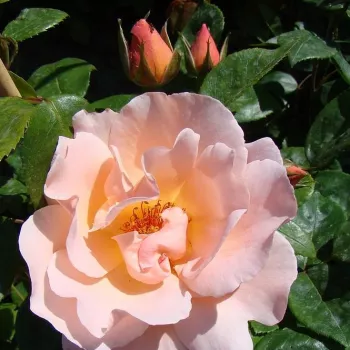
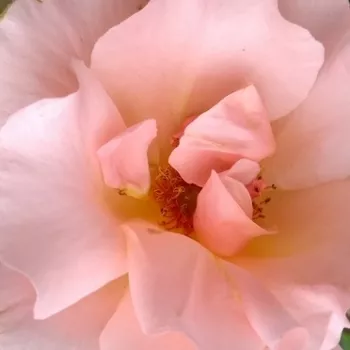
Semi-double, flat blooms with 13–25 petals, typically borne singly on stems; large-flowered (around 7–10 cm), with a remontant habit that gives a strong first flush followed by plentiful repeat flowering. |
| Colour data and phenology |
Warm salmon-peach base with delicate pink hues; buds open intense peach with brighter centres, then lighten through even peach to pastel pink and cream edges, fading more in strong sun over successive days. |
| Fragrance and aroma |
Delicate, classic rose fragrance of very weak intensity; scent is best appreciated at close range in still air or after rain, contributing to a subtle sensory backdrop rather than a dominant perfume. |
| Hip characteristics |
Forms ovoid orange-red hips in moderate quantities, around 12–18 mm in diameter, adding soft seasonal interest to the climber’s framework and offering discreet late-season colour among the foliage. |
| Resistance and winter hardiness |
Rated to RHS H7 and roughly USDA zone 6b, tolerating about –21 to –18 °C; disease resistance is moderate to common fungal issues, so simple monitoring and occasional treatment may be needed. |
| Horticultural recommendations |
Suited to pergolas, fences, walls, pillars and cutting; prefers well-drained soil with watering during prolonged drought, and benefits from regular tying-in plus light annual pruning to renew flowering wood. |
CORALINE offers an easy-going climbing habit, repeat peach flowering and a long-lived own-root framework that settles in steadily over the years, making it a thoughtful choice if you want enduring colour with modest effort.