CONSTANCE SPRY – pink climbing rose - Austin
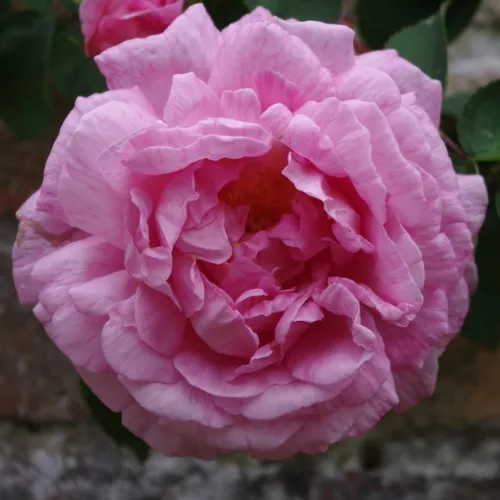
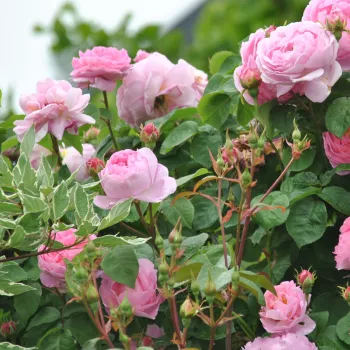
Step out after rain and let Constance draw your eye upwards with softly cascading, mid-pink rosettes and a myrrh perfume that lingers along walls, fences and pergolas. Bred by David Austin, this classic English climbing rose is remarkably reliable in typical UK summers, thriving even in exposed gardens where frequent showers and breezes meet heavier soils that simply need sensible drainage for lasting health. Once-flowering but lavish, it delivers a glorious early-summer spectacle, then settles into a calm green backdrop with decorative hips. Dense growth and generous foliage help you create a secluded, romantic corner in even a narrow London front garden, while the strong fragrance and excellent health mean little more than basic pruning and deadheading. As an own-root rose it establishes steadily, becoming more resilient and ornamental with each passing year. Plant it once, water from your waterbutt where possible, and enjoy a long-lived vertical haven that matures gracefully.
Usage options
| Target area | Reasoning |
|---|
| Pergola walk-through in a family garden |
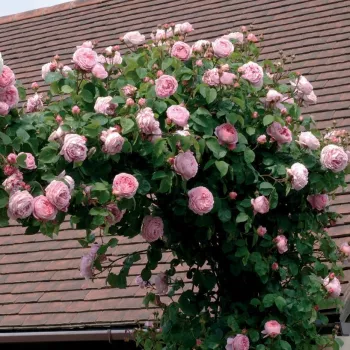
Trained over a pergola, its vigorous upright growth cloaks the structure with dense foliage and a single, breathtaking flush of fragrant pink rosettes in early summer, turning a simple path into an immersive seasonal experience for beginners. |
| London terraced-house front garden |
Ideal where space is tight, this climber can be tied flat against the house wall or railings, freeing up ground for other planting while providing height, privacy and a classic English-rose welcome that suits busy urban homeowners. |
| Rainwater-friendly wall or fence planting |
Planted into improved clay or chalk beside a boundary, its strong root system appreciates steady moisture yet dislikes waterlogging, fitting well with simple rainwater-harvesting and soakaway ideas for sustainability-minded gardeners. |
| Low-maintenance family seating area backdrop |
Once tied in and lightly pruned after flowering, it needs little more than occasional deadheading, staying healthy with good disease resistance and forming a leafy, flower-laden screen behind patios for time-poor families. |
| Pollinator-friendly naturalistic corner |
Large, fragrant clusters of flowers followed by abundant hips support garden biodiversity; even with very full blooms, the variety is noted for attracting insects, making it a thoughtful choice for wildlife-aware city-dwellers. |
| Own-root long-term feature on an arbour |
As an own-root plant it thickens from the base, replaces older canes over time and recovers well after pruning, giving a stable, long-lived structure without the graft issues that can worry less experienced gardeners. |
| Large container (minimum 40–50 litres) on a balcony |
In a generous, well-drained container, its upright habit can be trained onto trellis to create a vertical flower wall, with watering made simple by collecting rainwater and feeding lightly for busy urban balcony-owners. |
| Cut-flower and hip display border |
The very full, mid-pink rosettes with powerful scent are superb for cutting in early summer, while the later flush of orange-red hips extends garden and vase interest, appealing to creative, design-led hobbyists. |
Styling ideas
- Romantic archway – Train Constance Spry over a metal or timber arch, underplant with Nepeta x faassenii and lavender for a scented entrance – ideal for homeowners wanting a soft, traditional welcome.
- Soft-screen fence – Cover a plain fence with its long canes, weaving them horizontally, and edge the base with Carex morrowii for a gentle, meadow-like effect – perfect for families needing privacy without heaviness.
- Front-garden statement – In a narrow London front garden, pair the climber on railings with low Ajuga reptans groundcover to green up hardstanding – suited to urbanites turning parking areas into planted spaces.
- Secluded seating nook – Grow it up a pergola beside a bench, adding shade-tolerant perennials beneath for a restful retreat – appealing to busy people seeking a calm, fragrant corner with minimal upkeep.
- Container vertical – In a 50-litre pot with peat-free compost, fan-train against balcony trellis and mix in drought-tolerant herbs below – great for renters wanting reversible, wildlife-friendly height in small spaces.
Technical cultivar profile
| Parameter | Data |
|---|
| Name and registration |
Constance Spry (Constance Spry), English Rose Collection; ARS exhibition name Constance Spry; large-flowered climber / shrub for garden use and exhibition display. |
| Origin and breeding |
Bred by David C. H. Austin, United Kingdom, from ‘Belle Isis’ × ‘Dainty Maid’; introduced and first distributed by David Austin Roses Ltd in 1961 as an early English Rose. |
| Awards and recognition |
Holds the Royal Horticultural Society Award of Garden Merit (1993) and Royal National Rose Society Award of Garden Merit (1996), plus Modern Shrub Rose recognition at the Rose Society of Tucson Show (1999). |
| Growth and structural characteristics |
Vigorous, upright climbing habit reaching about 2.5–4 m high and 1.8–3.2 m spread; dense, matt light-green foliage with moderate prickles, best grown trained on supports for structure. |
| Flower morphology |
Large, very double, rosette-shaped blooms with over 40 petals, borne in clusters; once-flowering in early summer rather than repeat-blooming, producing a single but abundant seasonal display. |
| Colour data and phenology |
Mid-pink blooms (RHS 65D outer, 57C inner) with slightly paler edges; colour pales in strong sun to soft pastel pink and holds better in cooler conditions during the main early-summer flowering period. |
| Fragrance and aroma |
Very strong, distinctive myrrh fragrance, noticeable at a distance in still air; suitable for scented gardens and cut flowers where rich perfume is a key design and planting consideration. |
| Hip characteristics |
After flowering, forms abundant ellipsoidal hips about 14–22 mm across, in orange-red RHS 40A; hips are edible and decorative, extending season of interest into autumn and early winter. |
| Resistance and winter hardiness |
Good overall disease resistance with noted resistance to powdery mildew, black spot and rust; reliably hardy to around −26 to −23 °C (RHS H7, USDA 5b, Swedish Zone 4) in well-sited plantings. |
| Horticultural recommendations |
Best on pergolas, arbours, walls and fences at 1.5–2.75 m spacing; prefers regular watering, performs poorly in drought, and tolerates partial shade; suit mass planting, hedging or specimens with light pruning. |
CONSTANCE SPRY rewards patient gardeners with a once-a-year cascade of scented pink blooms, reliable health and long-term structure, while the own-root form supports a durable, steadily maturing presence worth planning your garden around.