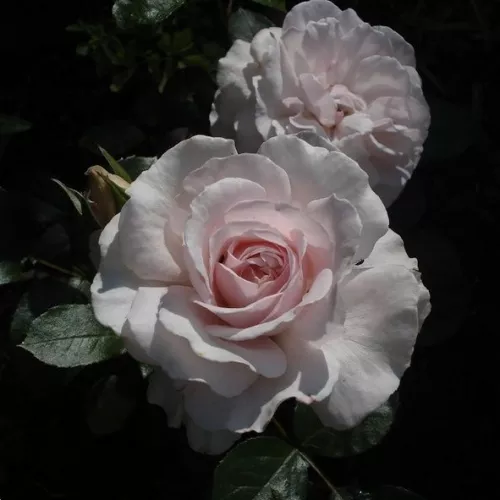
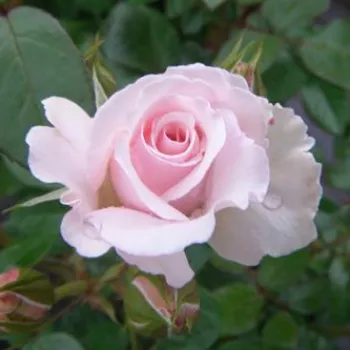
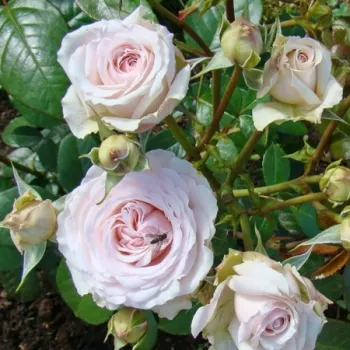
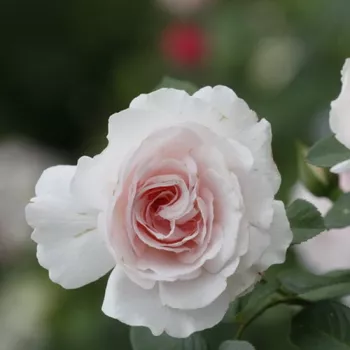
CONSTANCE FINN – light pink bedding floribunda rose – Harkness
Step out after rain and meet Constance in full, fragrant bloom: an upright, medium-height floribunda that settles easily into small London front gardens and handles typical British weather with reassuring poise, even where clay soil needs careful drainage. Its very double, shell-pink flowers appear in generous flushes from early summer onwards, with a strong, classic old-rose fragrance that rewards every passing visit, while glossy dark foliage keeps borders looking tidy between blooms. As an own-root rose it ages gracefully, regenerating from the base for a long garden life with minimal complicated care, and you can expect a natural rhythm of building roots in the first year, more confident shoots in the second, and full ornamental impact by the third.
Usage options
| Target area |
Reasoning |
| Front garden focal rose by the path |
The strong, old-rose scent and very double, shell-pink flowers create a welcoming focal point beside a narrow front path, especially in small terraced gardens where fragrance matters more than size, suiting the time-poor yet style-conscious urban gardener. |
| Rainwater-aware bed in heavy clay soil |
Its upright habit and moderate spread fit well into raised or improved clay beds, where careful soil preparation combines with its reliable structure to cope with wet spells and blustery showers, supporting greener, storm-smart front gardens for the sustainably minded homeowner. |
| Medium-height flowering hedge or boundary line |
A planting distance of about 40–50 cm allows you to form a low, continuous flowering line, the consistent height and dense foliage giving gentle privacy without shading neighbours, ideal for families wanting defined yet friendly boundaries in compact plots with children. |
| Own-root long-term “investment” specimen |
Grown on its own roots, this rose avoids graft failure and suckering, quietly building a stable framework that can be refreshed by pruning over the years, a thoughtful choice for gardeners seeking a rose that matures with them rather than needing frequent replacement beginners. |
| Container feature on balcony or paved front |
In a 40–50 litre peat-free container, its upright habit and repeat flowering give months of interest on balconies or paved drives, with simple watering from saved rainwater and seasonal feeding, perfect for those turning hardstanding into a softer green welcome flat-dwellers. |
| Repeated colour in mixed pastel borders |
The reblooming habit supplies regular flushes of light-pink, pearly flowers that blend seamlessly with lavenders, sages or nepeta, keeping borders visually calm while avoiding clashing brights, a gentle palette well suited to relaxed, low-maintenance family gardens colour-sensitive buyers. |
| Robust structure in windy or coastal situations |
Its compact, upright framework and dense, glossy foliage cope well with exposed sites and breezier conditions, helping it stay attractive between flushes, which is reassuring where gardens face regular wind off the sea or open aspects for the practical coastal resident. |
| Moderate-care rose for busy week schedules |
Average disease resistance, good black spot performance and simple pruning keep maintenance at a manageable level: an annual tidy, occasional checks for mildew or rust, and routine feeding are usually enough, suiting those who want flowers without weekend-dominating chores busy owners. |
Styling ideas
- Soft-Frontage – Line a narrow path with a short run of Constance Finn, underplanting with aubrieta to spill over edges for a pretty, “girly” approach – ideal for terrace owners wanting charm from the pavement inwards.
- Pastel-Mix – Combine with lavender or catmint for haze and fragrance, letting the shell-pink blooms float above a blue-lilac base – suits gardeners after a calm, romantic scheme that still feels contemporary.
- Clay-Raised – Plant in a shallow raised bed over improved clay, mixing in crocosmia for a later, fiery contrast – helpful for those turning difficult front plots into resilient, rain-smart flower spaces.
- Container-Accent – Use a single plant in a 40–50 litre pot by the front door, paired with soft grasses for movement – perfect for busy urban households seeking maximum effect from one easy-care rose.
- Boundary-Ribbon – Create a waist-high flowering ribbon along a low fence, backed with feverfew for lightness and movement – a good option for families wanting subtle separation without solid hedging.
Technical cultivar profile
| Characteristic |
Data |
| Name and registration |
Floribunda bed rose; registered as HAReden, marketed as Constance Finn bedding rose HAReden; ARS exhibition name Constance Finn; feminine given-name cultivar from the bedding rose collection. |
| Origin and breeding |
Bred by Robert Harkness of R. Harkness & Co. Ltd., United Kingdom; introduced and registered in 1997 by Harkness Roses, with HAReden representing a classic late-20th-century British floribunda lineage. |
| Awards and recognition |
Holder of the R. J. Frizzell Award for Most Fragrant Rose, Belfast 1999, and the DGAA Homelife Centenary Rose award, confirming notable fragrance and garden merit acknowledged by specialist judges. |
| Growth and structural characteristics |
Upright, medium-height shrub reaching about 95–130 cm tall and 55–85 cm wide, with dense, glossy dark green foliage and moderate prickliness; suited to bedding, low hedging and specimen planting in family gardens. |
| Flower morphology |
Large, very double, cup-shaped blooms with more than 40 petals; flowers borne mainly singly, reblooming strongly with generous second flushes that maintain an attractive display through the main growing season. |
| Colour data and phenology |
Light shell-pink pastel; ARS code lp, RHS 65C outer, 65D inner; buds open pale powder pink, then fade to very pale pink with nearly white outer petals and a subtle whitish-lilac, pearly veil before petal fall. |
| Fragrance and aroma |
Strong, distinctive old-rose fragrance, rich and traditional in character; valued as a perfumed garden rose where scent is a priority, and historically recognised in competitions for the intensity of its aroma. |
| Hip characteristics |
Hip set is usually light because of very double blooms; where formed, hips are small, spherical, about 8–12 mm across, and orange-red, adding occasional late-season colour without significant self-seeding. |
| Resistance and winter hardiness |
Hardy to about −21 to −18 °C (USDA 6b, RHS H7, Swedish zone 3); disease profile: black spot resistant, powdery mildew and rust moderate, requiring periodic monitoring and, if needed, targeted treatment. |
| Horticultural recommendations |
Plant 40–50 cm apart for hedging, 50 cm for bedding, 75 cm as a specimen; prefers fertile, well-drained soil, regular feeding and deadheading; performs best with routine yet not intensive care in temperate gardens. |
CONSTANCE FINN offers strong fragrance, generous repeat flowering and reliable structure on a durable own-root framework, making it a thoughtful long-term choice for gardeners ready to invest in lasting beauty.