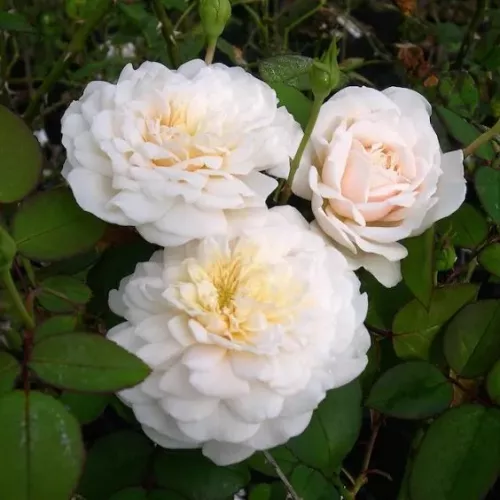
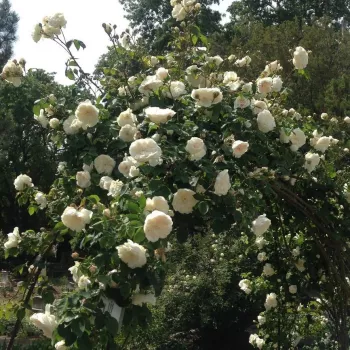
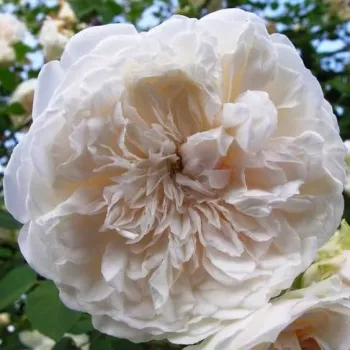
COLONIAL WHITE® – white climbing rose
Step out to the scent of warm, tea-like fragrance after rain as COLONIAL WHITE® clothes pergolas and façades in generous, snow-white blooms while keeping upkeep pleasantly manageable. Its dense, glossy foliage and reliable disease resistance mean less spraying, fewer worries and more time to enjoy your London front garden or compact terrace, even where heavy soil needs careful drainage to cope with winter wet. This own-root climber is supplied in a handy 2‑litre pot, settling in steadily for a long life: first focusing on roots, then building strong shoots, before rewarding you with full, romantic impact from the third season. Ideal for sustainable, rainwater-fed planting schemes, its refined, historical character adds enduring elegance to small and medium-sized family gardens.
Usage options
| Target area |
Reasoning |
| Terraced-house front façade |
Trained against a wall or house front, this large-flowered climber offers abundant, romantic white rosettes with a strong scent yet asks for only modest routine care, suiting time-pressed beginners. |
| Pergola or garden arch |
Its vigorous, upright climbing habit and dense foliage make it ideal for covering arches and pergolas, creating shaded walkways with repeat flowering that matures into a stable, long-lived structure for family enjoyment. |
| Rainwater-fed, sustainable front garden |
Performing well where soil structure is improved for good drainage, this variety responds positively to stored rainwater and mulching, fitting low-input, resource-conscious designs valued by urban gardeners. |
| Fragrance-focused seating corner |
The strongly scented, warm tea and citrus fragrance carries beautifully over seating areas, giving evening and post‑rain perfume while the plant’s robust constitution demands minimal intervention from busy owners. |
| Partially shaded side return |
Tolerant of partial shade, it flowers reliably on east- or north-facing fences and side passages, bringing light, reflective white colour where space is tight and practical planting is essential for urban households. |
| Low-maintenance vertical screening |
Once established, its height and spread form an effective vertical screen with evergreen-like visual cover from dense foliage, needing only occasional tying-in and deadheading, ideal for relaxed homeowners. |
| Cut flowers and special occasions |
The large, very double rosette blooms lend themselves well to cutting for vases, where their nostalgic form and fragrance stand out, giving reliable stems for informal arrangements created by enthusiastic hobbyists. |
| Long-term feature in family garden |
Grafted-free, own-root growth supports steady regeneration and longevity, so once the framework is established you can expect consistent flowering year after year, appealing to sustainability-minded buyers. |
Styling ideas
- Romantic Archway – Train COLONIAL WHITE® over a metal or wooden arch, underplant with lavender and nepeta to contrast its white rosettes and scent, perfect for couples creating a welcoming front-garden entrance.
- Elegant Pergola – Let the climber drape from a timber pergola, with pots of sage and silvery Artemisia beneath to echo its creamy tones, ideal for families wanting shade and fragrance over an outdoor dining area.
- Urban Facade – Use along a terrace frontage with gravel mulch and a rainwater butt for irrigation, combining it with upright grasses for movement, suited to city homeowners aiming for low-upkeep kerb appeal.
- Cottage Corner – Pair its nostalgic blooms with cranesbill geraniums and soft pink perennials around a bench or bistro set, appealing to hobby gardeners who enjoy traditional style without complex maintenance.
- Courtyard Screen – Grow in a large 50‑litre container with a trellis panel, adding compact nepeta and herbs at the base for texture, an option for balcony or patio dwellers seeking discreet privacy and scent.
Technical cultivar profile
| Parameter |
Data |
| Name and registration |
Large-flowered climbing rose marketed as COLONIAL WHITE® – white climbing rose; widely known in exhibitions as ‘Sombreuil’; own-root supply in pharmaROSA® ORIGINAL 2‑litre containers. |
| Origin and breeding |
Old-style climber with parentage ‘New Dawn’ × ‘Mme Hardy’; bred in the United States around 1940, registered in 2006 and introduced commercially after 2006 through specialist rose nurseries. |
| Growth and structural characteristics |
Strong, climbing habit to about 260–470 cm in height and 150–270 cm spread; moderately thorny, with dense, dark green, glossy foliage forming a substantial vertical framework over supports. |
| Flower morphology |
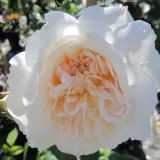
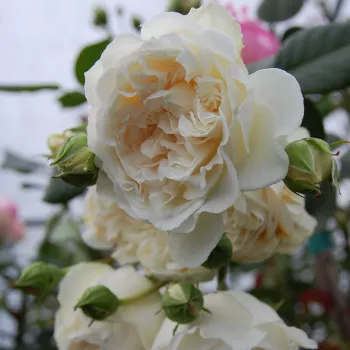
Large, very double rosette blooms with 40+ petals, carried mainly in clusters; repeat flowering with a generous second flush, giving a classic exhibition look and good performance as a cut flower. |
| Colour data and phenology |
Pure white to creamy off‑white blooms, ARS W, RHS 155D outer, 155C inner; buds creamy with greenish tips, opening to warm white rosettes that only gently cream in strong sun, retaining their tone well. |
| Fragrance and aroma |
Strong, distinctive fragrance with a warm, tea-like character and delicate citrus top notes; perceptible in still air and after rainfall, ideal for gardens where scent is a key design priority. |
| Hip characteristics |
Produces moderate quantities of small, ellipsoid red hips about 9–16 mm in diameter; ornamental value is secondary to the floral display but adds a subtle seasonal interest in late season. |
| Resistance and winter hardiness |
Rated H7 with approximate hardiness to −21 to −18 °C; shows good resistance to powdery mildew, black spot and rust, with moderate heat tolerance when watered regularly in extended dry spells. |
| Horticultural recommendations |
Best on supports such as arches, pergolas or trellises; spacing 140–220 cm; suitable for partial shade; prefers improved, well-drained soil and regular watering, especially when grown in containers of 40–50 litres or more. |
COLONIAL WHITE® – white climbing rose offers strongly scented white rosettes, dependable disease resistance and long-term own-root resilience; a thoughtful choice if you value enduring structure with minimal fuss.