CHRISTCHURCH™ – orange bedding floribunda rose - Fryer
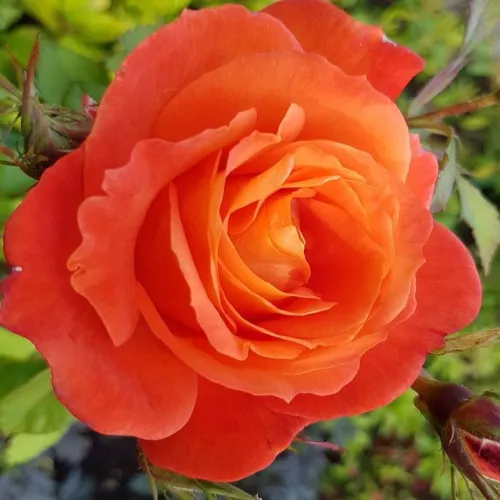
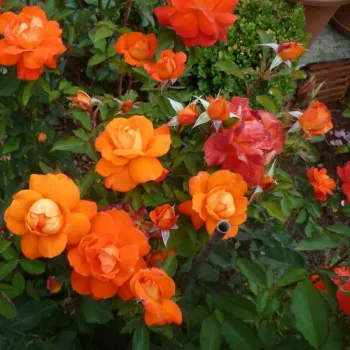
Step out to the front door after summer rain and CHRISTCHURCH™ greets you with colour that stays bright even in strong sun, bringing a sense of balance to compact London terraces and small family plots. This floribunda forms a bushy, upright structure with dense, glossy foliage, its semi-double clusters making a gently pollinator-friendly haven without demanding expert care. Own-root plants are a long-lived investment for your garden, regenerating well after pruning and keeping their ornamental value year after year with minimal fuss. In the first year roots settle, the second year shoots build, and by the third the plant reaches full ornamental impact, coping reliably with typical British rainfall and heavier soils when drainage is sensibly managed.
Usage options
| Target area | Reasoning |
|---|
| Front garden bedding strip |
Ideal for narrow, rainwater-friendly front gardens where you want strong visual effect from the street with little daily care; the bushy habit and persistent orange blooms create instant kerb appeal for busy urban homeowners |
| Low informal hedge |
Planted at 50 cm spacing, its upright, branching growth knits into a dense flowering ribbon, giving structure without feeling harsh or formal, and remaining attractive for many seasons on its own roots for long-term planners |
| Mixed perennial border |
The fiery orange clusters sit well with cool-hued companions such as lavender, sage or nepeta, extending colour and interest through repeated flowering while providing a modest resource for visiting insects for pollinator-conscious gardeners |
| Large container on balcony or patio |
Performs well in a substantial pot of at least 40–50 litres, where controlled watering and peat-free compost make it a practical choice for paved spaces, offering long-lasting colour in limited room for space-limited city dwellers |
| Rainwater-managed planting pocket |
Suited to urban beds that receive extra roof or path run-off, provided you improve drainage, it copes with wet spells and windy conditions typical of exposed UK streets, supporting climate-resilient designs for sustainability-minded owners |
| Family garden play-area edge |
Its medium height and compact footprint define lawn or play spaces without overwhelming them; regular deadheading is simple, and the plant’s own-root stamina means it recovers well from the odd stray football for practical family gardeners |
| Small cutting patch |
Clustered stems of semi-double orange blooms cut cleanly for short vases, with repeat flushes across the season, giving reliable stems from a limited area and keeping colour coming with straightforward seasonal pruning for home flower arrangers |
| Coastal or exposed town garden |
Glossy foliage and moderate disease resistance cope steadily where wind and damp can be an issue, especially in heavier or chalky soils when you support drainage and thoughtful watering, providing resilience for weather-aware beginners |
Styling ideas
- Terrace Glow – Line a narrow front bed with CHRISTCHURCH™ and underplant with low nepeta to soften the edge and cool the orange; perfect for time-poor terrace owners
- Urban Ribbon – Create a loose hedge along a path, weaving in lavender at intervals to add scent and pollinator interest; ideal for sustainability-focused city households
- Balcony Statement – Grow one plant in a generous 50-litre container with trailing thyme around the base for texture and easy care; suited to small-balcony beginners
- Sunset Border – Combine with blue sage and airy grasses so the vivid blooms punctuate a more naturalistic planting; appealing to design-conscious hobby gardeners
- Rain-Garden Pocket – Position near a downpipe in free-draining soil with dwarf iris and creeping phlox to knit the surface and manage splash; useful for climate-resilient front gardens
Technical cultivar profile
| Property | Data |
|---|
| Name and registration |
CHRISTCHURCH™ (FRYleyeca), floribunda bed rose, also exhibited as Super Trouper; registered as a flowerbed floribunda for versatile garden and urban planting uses. |
| Origin and breeding |
Bred by Gareth Fryer, Fryer’s Nurseries Ltd., United Kingdom, from unknown parentage; bred 2008, registered 2008 and introduced in 2009 through Matthews Nurseries Ltd., New Zealand. |
| Awards and recognition |
Gold Standard Award 2009, Novelty Rose of the Year 2010, Glasgow Lord Provost’s Cup 2011, and RHS Award of Garden Merit 2012, confirming strong ornamental and garden performance. |
| Growth and structural characteristics |
Bushy, upright shrub reaching about 70–100 cm in height and 65–95 cm spread, with dense, glossy dark green foliage and moderate prickles, forming a solid, well-filled bedding or low hedge plant. |
| Flower morphology |
Semi-double cupped blooms, 13–25 petals, medium-sized clusters on branching stems; remontant flowering gives an abundant second flush, though spent blooms usually need deadheading to stay neat. |
| Colour data and phenology |
Vibrant rich orange with subtle reddish undertone; buds deep orange-red, then fiery orange, later softening toward yellowish-peach edges, with very good colour retention and minimal fading in strong sunlight. |
| Fragrance and aroma |
Light classic rose fragrance, generally barely noticeable in the garden; grown more for vivid, long-lasting colour and reliable flowering than for strong scent, fitting family and public planting schemes. |
| Hip characteristics |
Produces moderate numbers of small spherical hips, around 8–12 mm across, in attractive orange-red tones, offering late-season interest where deadheading is relaxed toward the end of summer. |
| Resistance and winter hardiness |
Hardy to about −21 to −18 °C (RHS H7, roughly USDA 6b); moderate resistance to black spot, mildew and rust, with steady performance when basic hygiene and feeding are maintained. |
| Horticultural recommendations |
Suited to beds, edging, containers and urban green spaces; plant 55 cm apart in mass beds, 50 cm in hedges; thrives in full sun or light shade with regular feeding, watering and annual pruning. |
CHRISTCHURCH™ offers vivid long-season colour, compact low-hedge structure and steady pollinator interest in a durable own-root form; consider it when you want lasting impact from a small, manageable space.