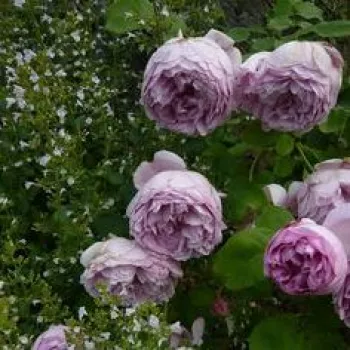
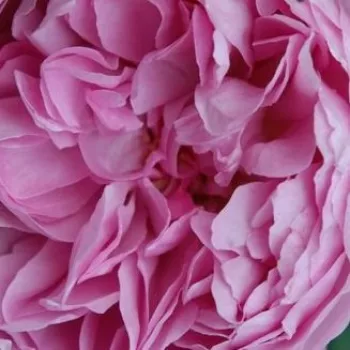
CHARLES RENNIE MACKINTOSH – lilac-pink English rose - Austin
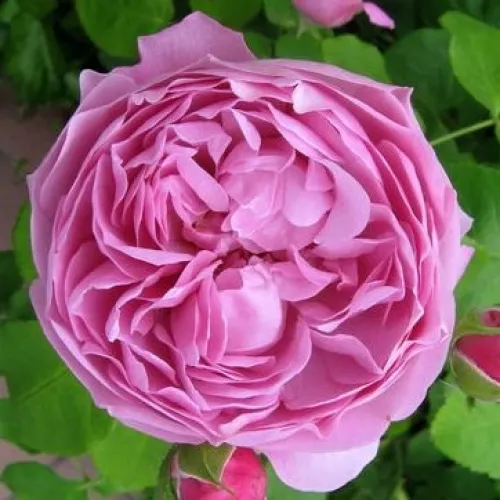
Imagine a London front garden after rain, the air rich with fragrance and the path edged by softly lilac-pink rosettes: this English shrub rose offers classic charm with modern, easy-care reliability. Its romantic, cupped blooms repeat through the season, bringing a strong, old-rose perfume with a gentle almond undertone, while dense dark foliage gives lasting structure in a small family garden. Grown on its own roots, it builds long-term strength and can regenerate from the base, supporting a long lifespan with less fuss in everyday care. In typical British conditions it copes well with damp spells and wind, ideal where drainage has been improved on heavier clay and similar soils. In a 2-litre container it is simple to plant: in year one it concentrates on roots, year two brings more shoots, and by year three it shows its full ornamental value. Its medium, bushy height fits neatly beneath windows or along a narrow terrace, creating a balanced, sustainable accent that works beautifully with rainwater-conscious planting and soft, pastel colour.
Usage options
| Target area |
Reasoning |
| Front garden feature shrub |
Medium, upright growth and dense foliage make this rose ideal as a compact focal shrub by a front door or bay window, giving strong perfume without overwhelming a modest plot; well suited to busy homeowners seeking reliable impact front-garden owners |
| Small urban flower bed |
Its repeat-flowering, rosette blooms deliver continuous colour in tight borders, even in part shade between buildings, so you can enjoy a romantic English look without intensive care or complex pruning urban terrace gardeners |
| Mixed hedge or edging row |
Regular spacing creates a gently formal, scented boundary that remains bushy from low down, working well along narrow paths where family members brush past and catch the strong, classic fragrance family-garden planners |
| Large container on patio or balcony |
Planted in a peat-free mix in a 40–50 litre container and watered with saved rainwater, it becomes a long-lived, own-root potted rose that can move with you if you change home or replan your space balcony and container users |
| Rainwater-aware planting scheme |
Once established with good drainage, this shrub copes well with frequent rain and breezy conditions common in UK streetscapes, pairing neatly with permeable paths and soakaway borders for sustainable town gardens rain-conscious city gardeners |
| Romantic pastel border |
The lilac-pink rosettes blend beautifully with lavender, sage or nepeta for a soft, “girly” palette, while the strong fragrance adds a traditional note to otherwise modern, low-maintenance planting combinations romantic-style enthusiasts |
| Cut flowers for the home |
Sturdy, medium stems and very double, cupped blooms give elegant, strongly scented stems for vases, so even a small bed can provide regular indoor flowers across the summer with light deadheading home bouquet makers |
| Long-term own-root planting |
As an own-root shrub it develops a stable framework over time, able to regenerate from the base if cut back, so it can settle into one spot for many years without the decline often seen in grafted roses long-horizon gardeners |
Styling ideas
- Pastel-Frontage – Line a narrow terraced-house front bed with this rose and soft grasses for a gentle welcome – ideal for design-conscious city homeowners
- Rain-Garden – Combine with permeable gravel paths, thyme and low sedges to catch rainwater and highlight its scented structure – for sustainability-focused gardeners
- Balcony-Bower – Grow one plant in a large pot with trailing nepeta to create a romantic corner seat – perfect for renters with limited space
- Evening-Perfume – Plant near a seating area with lavender and night-scented stocks so fragrance intensifies on damp evenings – suited to after-work relaxers
- Cottage-Ribbon – Thread through a cottage-style mix of foxgloves and hardy geraniums along a path – appealing to lovers of traditional English borders
Technical cultivar profile
| Property |
Data |
| Name and registration |
Charles Rennie Mackintosh – English shrub rose (Romantic group); registered as AUSren, part of the English Rose Collection; approved exhibition name: Charles Rennie Mackintosh. |
| Origin and breeding |
Bred by David C. H. Austin (UK, 1988) from (Chaucer × Conrad Ferdinand Meyer) × Mary Rose; introduced after 1994 by David Austin Roses Ltd. and registered in 1994. |
| Growth and structural characteristics |
Bushy, upright shrub 100–150 cm tall and 70–110 cm wide, with dense, slightly glossy dark green foliage and moderate prickles; spent blooms often remain and benefit from occasional deadheading. |
| Flower morphology |
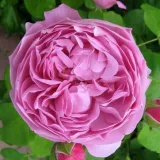
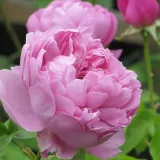
Medium-sized, very double rosette blooms, typically solitary on stems, with over 40 petals; remontant habit with abundant second flush giving long seasonal interest in beds and borders. |
| Colour data and phenology |
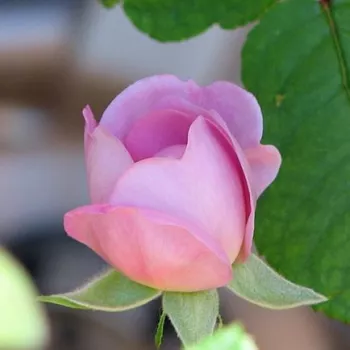
Lilac-pink flowers (RHS 76D outer, 75C inner) opening from slightly richer buds, fading to soft pastel pink; colour holds better in cooler weather, paling more quickly in strong sun. |
| Fragrance and aroma |
Strong, long-lasting perfume with a classic old-rose character and a subtle almond nuance; scent is pronounced around paths or seating areas, especially in cool, moist air after rainfall. |
| Hip characteristics |
Hip set usually light due to very double flowers; when present, spherical orange-red hips about 11–17 mm in diameter add discreet late-season interest without dominating the shrub. |
| Resistance and winter hardiness |
Hardy to approximately –26 to –23 °C (RHS H7, USDA 5b, Swedish zone 4); black spot resistance good with moderate susceptibility to mildew and rust, benefiting from balanced watering and airflow. |
| Horticultural recommendations |
Best at 55–100 cm spacing; suitable for flower beds, edging, hedging and specimen use, plus cutting; prefers regular watering in hot weather and moderate plant protection where disease pressure is high. |
CHARLES RENNIE MACKINTOSH offers strong fragrance, repeat lilac-pink blooms and compact structure in a durable own-root form, making it a considered choice for long-lived, low-fuss planting.