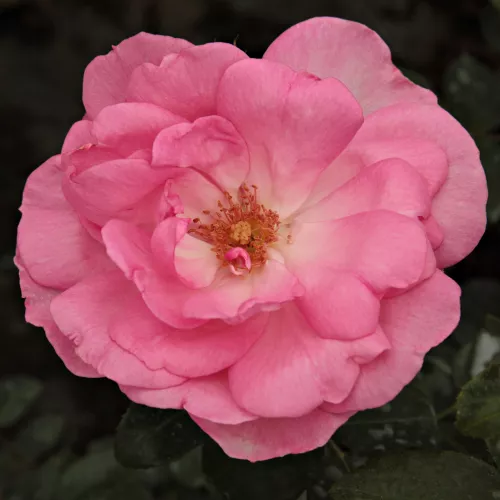
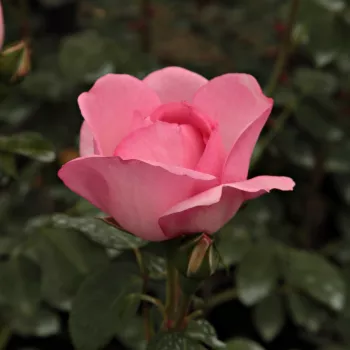
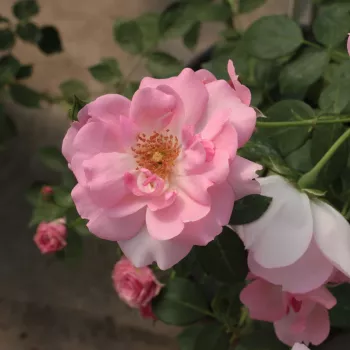
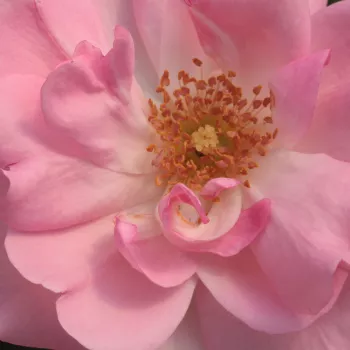
CENTENAIRE DE LOURDES™ – pink floribunda bedding rose
Step into the soft, after-rain light of a London front garden, where Centenaire de Lourdes™ settles in calmly and rewards you with months of flowering. This classic floribunda offers semi-double, cup-shaped blooms that open wide for bees, bringing a quietly romantic rhythm to compact beds, terraces and rainwater-friendly city plots. Its bushy, medium-height habit and dense foliage make it easy to place in small family gardens, coping reliably with coastal winds and heavier soils when drainage is sensibly improved. Own-root planting supports a long, balanced life in the garden, regenerating well after pruning and weather knocks, so you can enjoy stable colour with modest maintenance. In year one roots establish, year two brings confident shoots, and by year three it reaches full ornamental character, with pastel petals, mild fragrance and ornamental hips that sit beautifully amongst lavender, sage and other pollinator favourites.
Usage options
| Target area | Reasoning |
|---|
| Urban front garden bed |
Compact, bushy growth and moderate height make it ideal for a small London-style front garden, giving structured flowering from pavement edge to doorstep with little intervention for busy urban gardeners. |
| Pollinator-friendly mixed border |
Semi-double blooms open wide, exposing stamens for bees, while repeat clusters provide nectar over a long season when paired with lavender, sage or nepeta for wildlife-conscious beginners. |
| Low floribunda hedge |
Regular spacing at around 55 cm forms a soft, pink flowering line that frames paths or boundaries, combining dense foliage with manageable pruning for family garden owners. |
| Rainwater-conscious clay garden |
Performs well where rainfall is frequent, provided drainage is improved, giving reliable structure and colour in heavier urban soils that collect roof and path runoff for sustainability-minded households. |
| Patio container, 40–50 L and above |
In a generous peat-free container it becomes a focal point on steps or terraces, with own-root resilience helping it recover from occasional dry spells or missed feeds for time-pressed city dwellers. |
| Long-season family flower bed |
Remontant flowering means a strong second flush, keeping borders lively from early summer into autumn with soft pink tones that blend easily with perennials for colour-loving gardeners. |
| Cutting for small indoor vases |
The large, softly cupped blooms and pastel pink shades suit short-stem arrangements in jugs or jam jars, bringing a gentle, classic look indoors for home-decoration enthusiasts. |
| Durable, long-lived planting scheme |
Own-root plants build a stable framework over years, regenerating well from the base and maintaining ornamental value with modest care in typical family gardens for long-term planners. |
Styling ideas
- Terraced-Elegance – Line a narrow front path with Centenaire de Lourdes™ and lavender, echoing traditional London terraces with soft scent and colour – ideal for design-conscious homeowners.
- Rain-Garden-Romance – Combine with nepeta and ornamental alliums in a free-draining, rain-fed bed to turn downpipe run-off into a pastel, pollinator-friendly display – perfect for sustainability-focused city gardeners.
- Pastel-Parterre – Create a low rose parterre edged with box or dwarf yew, using this cultivar as the main infill for soft, structured pink geometry – suited to formal-style enthusiasts.
- Balcony-Focus – Plant one shrub in a 50 L container with trailing thyme and violas for a compact, ever-changing focal point – great for small-balcony dwellers.
- Cottage-Ribbon – Weave a loose hedge along a picket fence with Russian sage behind, for a breezy, cottage look in suburban plots – appealing to relaxed, wildlife-friendly gardeners.
Technical cultivar profile
| Characteristic | Data |
|---|
| Name and registration |
Floribunda bed rose marketed as Centenaire de Lourdes™ / Les Centenaires de Lourdes®, registered cultivar DELge, exhibition floribunda; commemorative name marking the Lourdes centenary. |
| Origin and breeding |
Bred by André Delbard-Chabert in France from ‘Frau Karl Druschki’ × seedling; introduced by Delbard in 1958 and distributed internationally as a reliable garden floribunda. |
| Awards and recognition |
Selected among the World’s Ten Best Roses at the 1994 World Rose Congress, reflecting long-standing global appreciation for garden performance and decorative value. |
| Growth and structural characteristics |
Bushy, medium-tall shrub reaching about 100–140 cm high and 75–105 cm wide, with dense, slightly glossy green foliage and moderate prickliness, forming a full, rounded presence in beds. |
| Flower morphology |
Semi-double, large, cup-shaped blooms with around 13–25 petals, borne in clusters; remontant habit with a strong second flush providing generous seasonal coverage on well-branched stems. |
| Colour data and phenology |
Muted mid-pink with a slight salmon undertone, deep in bud then lightening to soft pastel and paler edges; colour holds moderately before fading gently to cream-tinted centres with age. |
| Fragrance and aroma |
Mild, discreet scent with a soft rose character; not overpowering near seating or doors, but adding a subtle perfumed note when blooms are cut for small indoor arrangements. |
| Hip characteristics |
Forms moderate numbers of small, spherical red hips about 8–12 mm across, adding autumn and early winter ornamental interest among the remaining foliage and bare stems. |
| Resistance and winter hardiness |
Hardy to approximately −26 to −23 °C (RHS H7, USDA 5b, Swedish Zon 4); disease profile shows good black-spot resistance with moderate susceptibility to powdery mildew and rust. |
| Horticultural recommendations |
Best in sunny positions with improved drainage; suitable for beds, hedges, parks, containers over 40–50 L and cutting, needing medium maintenance with occasional plant protection as required. |
CENTAINE DE LOURDES™ offers long-season flowering, pollinator-friendly semi-double blooms and durable own-root growth, making it a considerate choice for relaxed, sustainable family gardens.