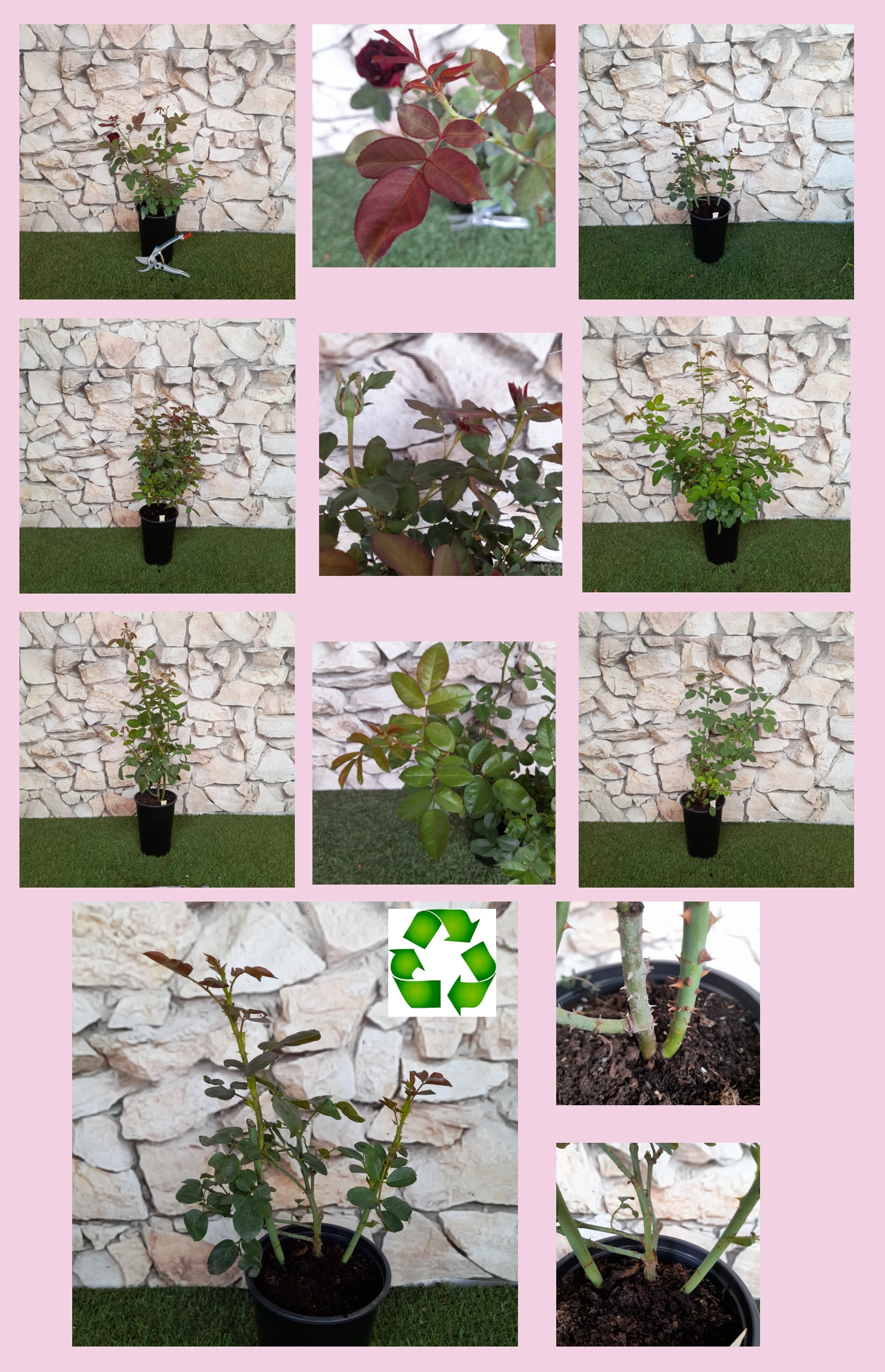
KANEGEM – orange-red Hybrid Tea rose - Sierplantenteelt
Step out after rain and let KANEGEM’s intense orange-red blooms bring a sense of balance to a small London front garden, combining classic hybrid-tea elegance with practical, own-root longevity. This compact, bushy rose offers reliable repeat flowering, producing high-centred, exhibition-style clusters that stand out even in tight urban spaces with challenging drainage and heavier soils. Dense, glossy foliage supports its structural impact, while good heat tolerance means it copes well with warm, enclosed courtyards when given regular watering. As an own-root rose it establishes steadily, giving you strong roots in year one, confident top growth in year two, and full ornamental character by year three. Plant it where you can appreciate the refined, very double blooms at eye level, enjoy their long vase life indoors, and create a quietly sustainable rhythm in your everyday walk to the front door. Ideal for those who prefer clear, simple planting steps and an easy-care routine.
Usage options
| Target area |
Reasoning |
| Urban front garden focal point |
Use KANEGEM as a single specimen by your front door or bay window, where its compact, bushy habit and bright orange-red blooms provide a reliable visual anchor without overwhelming a small plot. Best for the homeowner seeking a clear, standout feature in a modest space |
| Formal flower bed or edging |
Planted at 50–60 cm intervals, KANEGEM forms a neat, low hedge with dense foliage, giving good definition to paths and lawn edges while maintaining an elegant, hybrid-tea flower form that reads well from the pavement. Ideal for gardeners aiming for structured yet manageable borders in everyday settings |
| Cut-flower row in a family garden |
The long-stemmed, high-centred blooms are well suited for cutting, with good colour retention in the vase, allowing you to enjoy the flowers both outdoors and indoors throughout the season. Suitable for those who like to pick home-grown stems without specialist know-how |
| Heat-exposed terrace or courtyard bed |
Good heat tolerance makes KANEGEM a practical choice for sun-trapped, paved front gardens where reflected warmth is an issue, provided the soil is watered during prolonged dry spells to keep plants performing well. A sound option for busy city gardeners managing warm microclimates |
| Rainwater-conscious planting strip |
In a narrow border beside a driveway or path, KANEGEM works admirably where improved topsoil overlies heavier subsoil, performing well so long as basic drainage is in place and avoiding the need for complex planting schemes. Well suited to householders planning straightforward rain-aware planting |
| Partial-shade townhouse aspect |
Where front gardens receive only part-day sun due to neighbouring buildings, KANEGEM’s partial-shade tolerance helps maintain flowering, particularly when sited where it still benefits from good morning light. A sensible choice for residents coping with overshadowed plots yet wanting colour |
| Own-root long-term feature planting |
As an own-root rose, KANEGEM offers long-lived structure; if stems are damaged or cut back hard, new growth emerges from the same genetic base, helping the plant recover and maintain its ornamental value over many seasons. Ideal for those seeking enduring plantings with minimal replacement |
| Large container on balcony or patio |
In a 40–50 litre or larger container with drainage holes, KANEGEM becomes a movable accent, combining dense foliage and vivid blooms that can be repositioned as your outdoor space evolves and access to water and light change. Best for container gardeners wanting flexibility and clear results |
Styling ideas
- Terrace-Showpiece – Line a narrow front path with KANEGEM backed by low evergreen candytuft for year-round structure and fiery summer colour – for city homeowners upgrading a simple entrance walk.
- Cottage-Stripe – Mix KANEGEM with blue globe thistle and soft grasses in a small bed for a balanced, modern-cottage look – for gardeners who enjoy colour contrast with little redesign work.
- Formal-Edge – Create a clipped effect by repeating KANEGEM along a low picket fence, underplanted with dwarf euonymus for neat, low-maintenance geometry – for those wanting order without complex pruning skills.
- Balcony-Glow – Grow KANEGEM in a 50-litre pot with trailing thyme and nepeta, using stored rainwater where possible, to soften a balcony rail – for flat dwellers keen on sustainable container planting.
- Entry-Companion – Pair KANEGEM near a doorway with lavender or sage to frame steps in scent and warm colour, keeping the rose as the central accent – for busy families wanting quick, welcoming impact.
Technical cultivar profile
| Parameter |
Data |
| Name and registration |
Hybrid Tea group rose marketed as KANEGEM – orange-red Hybrid Tea rose - Sierplantenteelt; ARS exhibition name KANEGEM; collection and commercial type listed as hybrid tea rose. |
| Origin and breeding |
Bred in Belgium in 1977 by Rijksstation voor Sierplantenteelt (RVS), from ‘Ludwigshafen am Rhein’ × ‘Satchmo’; introduced commercially by Lens Roses in 1984 and now supplied as an own-root garden form. |
| Growth and structural characteristics |
Forms a compact, bushy shrub about 70–100 cm tall and 50–75 cm wide, with dense, glossy dark green foliage and moderate prickliness; some spent blooms remain, so light deadheading is recommended. |
| Flower morphology |
Very double, high-centred blooms with over 40 petals, large-flowered and often carried in clusters; classic pointed-bud hybrid tea form with good repeat, including a notably plentiful second flush in season. |
| Colour data and phenology |
Warm orange-red flowers (RHS 34B outer, 32A inner) holding colour well; tones deepen to muted red-orange with soft coral edges before fading, though strong bleaching is not typical under normal conditions. |
| Fragrance and aroma |
Fragrance is very weak and barely perceptible, so selection is primarily for flower form, colour and garden performance rather than scent; suitable where visual impact and cutting potential are the key priorities. |
| Hip characteristics |
Hip set is usually low due to very double flowers; any hips produced are small, spherical, about 8–12 mm across, coloured red (RHS 46A), and of mainly ornamental rather than wildlife or harvest interest. |
| Resistance and winter hardiness |
Hardy to approximately –21 to –18 °C (RHS H7, Swedish zone 3, USDA 6b); tolerates heat with watering, but is susceptible to black spot, powdery mildew and rust, so monitoring and timely care are advised. |
| Horticultural recommendations |
Best in well-drained, improved soil at 50–100 cm spacing for beds, hedging or specimen planting; appreciates full sun to partial shade, regular watering in dry spells, and consistent monitoring for foliage disease. |
KANEGEM offers compact structure, vivid repeat flowering and dependable own-root longevity, making it a thoughtful choice for those planning a durable, good-looking rose for everyday garden use.