CAPITAINE JOHN INGRAM – crimson-purple historic moss rose - Laffay
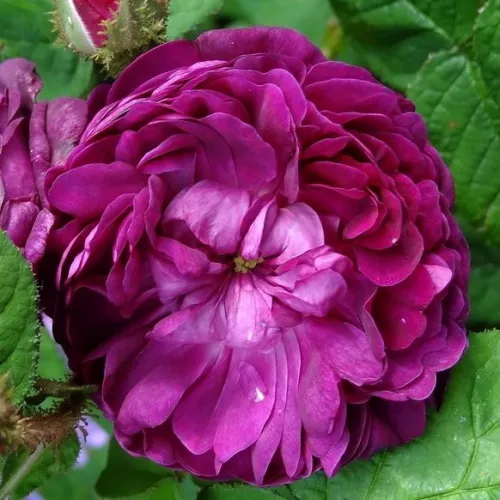
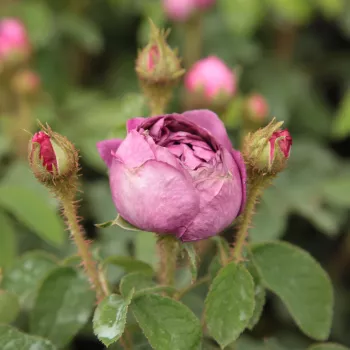
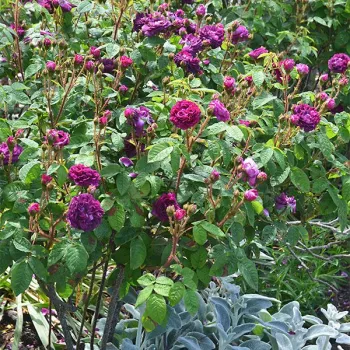
Step into the romance of a Victorian front garden with CAPITAINE JOHN INGRAM, a heritage moss rose whose richly mossed buds and deeply spicy perfume create an unforgettable atmosphere for compact London terraces and cottage-style spaces. Its velvety crimson-purple rosettes flower once in a passionate early-summer crescendo, rewarding patient gardeners with a short but truly immersive scented display that feels particularly magical after rain and in gardens that must cope with blustery showers and challenging conditions. Bushy, upright growth and mid-green foliage give this shrub strong visual structure in small to medium family gardens, while the own-root, 2-litre form supports long-term resilience, regeneration and stable ornamental character over many seasons. As its roots settle and deepen in year one, shoots and flowering volume increase in year two, leading to full historic-rose presence by year three – a measured, sustainable way to build a distinctive, future-friendly garden legacy.
Usage options
| Target area | Reasoning |
|---|
| Front garden focal shrub |
Planted by a path or gate, this tall, bushy moss rose becomes a characterful focal point, its mossed buds and once-a-year crimson flush giving strong seasonal drama in small city front gardens for heritage-loving homeowners. |
| Historic-style specimen in lawn |
Used as a solitary shrub at 150 cm spacing, the upright, slightly spreading habit and matt, mid-green foliage create an old-world presence that reads beautifully from windows, appealing to reflective gardeners. |
| Period hedge or boundary line |
In a loose hedge at 80 cm, the dense prickliness and vigorous growth help define boundaries with a traditional look, suiting those who enjoy hands-on pruning and shaping as enthusiastic amateurs. |
| Highly scented cutting corner |
Although it flowers once, the medium-sized, double rosettes are superb for deeply perfumed, short-stemmed arrangements, ideal for people who treasure peak-season fragrance as sensory connoisseurs. |
| Collector’s heritage rose bed |
With its 1854 French origin and moss rose character, this cultivar adds historical breadth and texture to themed beds, particularly valued by those curating authentic collections as devoted enthusiasts. |
| Moss-rose texture highlight |
The distinctive mossing on buds and stems offers unique tactile and visual interest, contrasting beautifully with smoother shrubs nearby, appreciated by gardeners who relish fine details as design-led creators. |
| Mixed shrub border backbone |
Its 120–190 cm height and 80–120 cm spread give medium-scale structure in mixed borders, pairing well with lilacs and dogwoods, suiting planners who like long-term frameworks as border architects. |
| Long-term own-root investment planting |
The own-root form helps the shrub regenerate after pruning or weather damage, maintaining its character year after year even where heavy showers and wind regularly test garden plantings, reassuring forward-looking owners. |
Styling ideas
- Victorian-Pathway – Line a narrow front path with CAPITAINE JOHN INGRAM underplanted with low lavender and thyme to brush as you walk by – ideal for scent-focused urban romantics.
- Moss-Texture – Combine its mossed buds with smooth-stemmed shrub roses and Nepeta for a tactile, layered border – perfect for design-conscious collectors of historic varieties.
- Cottage-Panel – Place a single shrub against pale brick or timber, backed by lilac and fringed with hardy geraniums – suited to homeowners wanting a story-rich cottage feel in city plots.
- Evening-Scent – Position near a bench or bay window so the extremely strong fragrance drifts indoors on summer evenings – appealing to those who unwind through scent and atmosphere.
- Heritage-Mixture – Mix with Potentilla and variegated Cornus for a soft, historically inspired shrub composition that looks good beyond flowering – great for gardeners building long-view, characterful schemes.
Technical cultivar profile
| Parameter | Data |
|---|
| Name and registration |
Historic moss rose marketed as CAPITAINE JOHN INGRAM, a heritage shrub in the historic rose group; unregistered cultivar with ARS exhibition name matching its current trade name. |
| Origin and breeding |
Heritage French moss rose introduced by Laffay in 1854; bred by Jean Laffay, with parentage and breeding institution unrecorded, representing a traditional mid-nineteenth-century selection. |
| Growth and structural characteristics |
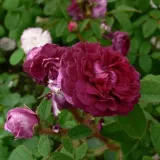
Bushy, slightly spreading shrub 120–190 cm high and 80–120 cm wide, with moderately dense, matt, mid-green foliage and densely thorned stems giving strong structural presence and deterrent value. |
| Flower morphology |
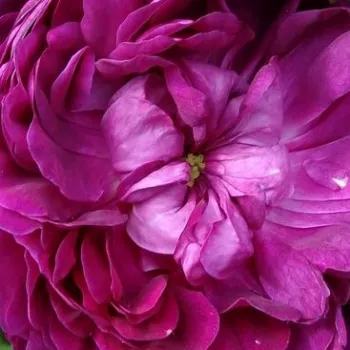
Medium-sized, double rosette blooms with 26–39 petals borne mainly singly; a once-flowering, non-remontant variety producing its principal display in one historic-style early-summer flush. |
| Colour data and phenology |
Closed buds deep velvety crimson; blooms open crimson-red with a purplish hue, deepening then lightening slightly in strong sun, with subtle smoky purple tones at petal edges as flowers mature. |
| Fragrance and aroma |
Extremely strong, garden-filling scent with a deeply spicy character evocative of traditional historic roses, especially noticeable in still evening air and after rainfall around the flowering period. |
| Hip characteristics |
Poor fruit set due to double flowers; occasionally forms small, spherical orange-red hips about 10–15 mm across, adding modest late-season interest when present but not a dominant ornamental feature. |
| Resistance and winter hardiness |
Very susceptible to powdery mildew, black spot and rust, needing regular preventive care; reliably hardy to approximately −26 to −23 °C, corresponding to RHS H7 and USDA zone 5b conditions. |
| Horticultural recommendations |
Best in full sun with good air movement; requires attentive disease management and watering during prolonged drought; space 80–150 cm depending on use, in borders, specimen plantings or historic displays. |
CAPITAINE JOHN INGRAM offers a richly fragrant, once-a-year crimson spectacle with distinctive mossed buds, developing into a long-lived, regenerating own-root shrub that rewards patient gardeners seeking a meaningful, characterful addition to their garden.