BURNING LOVE® – red hybrid tea rose - Tantau
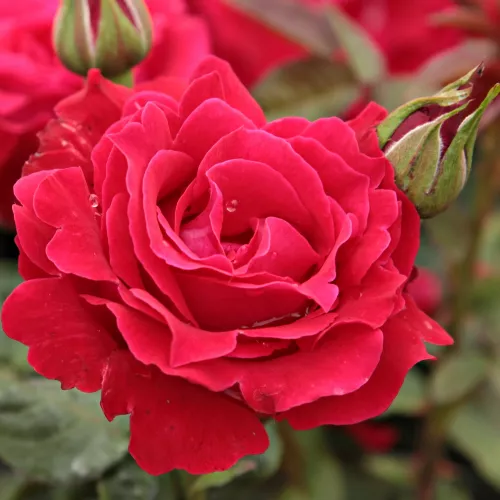
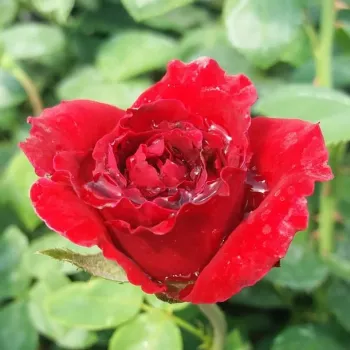
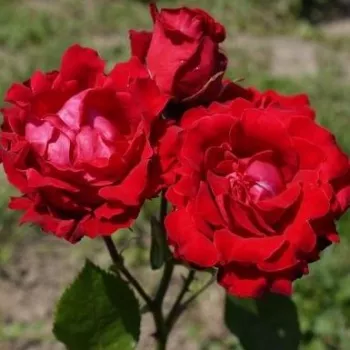
In a compact London front garden or balcony, BURNING LOVE® brings a sense of calm balance with its vivid scarlet-red blooms and naturally bushy habit. This hybrid tea forms dense, glossy foliage that frames the flowers beautifully, while the semi-double blooms combine a classic shape with accessible centres for visiting pollinators. The medium, sweet rose fragrance adds a gentle evening ritual, particularly after rain, when the goblet-shaped flowers catch droplets yet cope well with breezy, damp conditions and heavier soils often found in town gardens, even where drainage needs a little extra care. Container-grown on its own roots in a 2‑litre pot, it settles in quickly, then over three seasons steadily builds from establishing roots, to confident new shoots, to full ornamental impact. With reliable repeat flowering through summer, excellent colour stability and moderate maintenance needs, it suits busy householders seeking long-term ease rather than constant fuss.
Usage options
| Target area | Reasoning |
|---|
| Front garden focal point |
The vivid scarlet-red blooms hold their colour exceptionally well, so a single plant or small group makes a dependable front-garden focus that never looks washed out in strong light. Ideal for the beginner. |
| Rainwater-conscious urban bed |
Own-root plants establish steadily and respond well to improved drainage, suiting small urban beds where heavy clay is opened up with grit and compost for better rain soak-away. Particularly reassuring for the busy. |
| Cutting and vase use |
The long-stemmed, goblet-shaped flowers are ideal for cutting, offering a classic hybrid tea form and medium, sweet scent that performs gracefully in a vase for home decoration. A thoughtful choice for the stylist. |
| Pollinator-friendly mixed border |
Semi-double blooms with accessible centres offer moderate forage, especially when paired with salvia, nepeta or lavender to extend nectar availability across the season. A sound option for the wildlife-lover. |
| Compact hedge or low divider |
The bushy, dense structure and glossy foliage allow neat low hedges on 30–35 cm spacing, creating a defined line without feeling harsh or formal in smaller gardens. Well suited to the organiser. |
| Large containers and terraces |
In a 40–50 litre pot with peat-free compost, this bushy hybrid tea forms a stable, long-lived specimen whose own-root character supports regeneration if pruned harder after a few years. A practical solution for the balcony-owner. |
| Low-maintenance family planting |
Moderate disease resistance, especially to black spot and powdery mildew, keeps foliage healthy with only occasional protection, useful where time for spraying and close monitoring is limited. A reassuring feature for the family. |
| Season-long colour backbone |
Remontant flowering gives a generous second flush, maintaining bright red colour from early summer into autumn and supporting that sense of continuity many small gardens rely on. Especially appealing to the planner. |
Styling ideas
- Crimson-Pathway – Line a short front path with a low hedge of BURNING LOVE® underplanted with thyme to soften edges and provide scent underfoot – for design-conscious homeowners.
- Balcony-Jewel – Grow a single plant in a 50 litre pot with trailing ivy and white lobelia to highlight the scarlet blooms against foliage – for city balcony gardeners.
- Pollinator-Ribbon – Combine with drifts of lavender, nepeta and salvia in a narrow border to offer moderate rose forage framed by nectar-rich companions – for wildlife-friendly beginners.
- Evening-Vase – Plant near the back door with a clump of dusky pink astrantia so you can easily cut stems for perfumed table arrangements – for home entertainers.
- Clay-Garden-Mix – In improved clay, weave BURNING LOVE® between blue globe thistle and coreopsis for a resilient, colourful, textural display – for practical family-garden owners.
Technical cultivar profile
| Characteristic | Data |
|---|
| Name and registration |
Hybrid tea rose, exhibition category hybrid tea; registered cultivar name ‘Burning Love’, traded as BURNING LOVE® – red hybrid tea rose - Tantau; ARS exhibition name ‘Burning Love’. |
| Origin and breeding |
Bred by Mathias Tantau Jr. (Rosen Tantau, Germany) from ‘Fanal’ × ‘Crimson Glory’; breeding completed 1956 in Germany, introduced 1957, initially distributed by Hazlewood Bros. Pty. Ltd. in Australia. |
| Growth and structural characteristics |
Bushy, compact shrub reaching about 70–95 cm tall and 40–60 cm wide, with dense, dark green, glossy foliage and moderate prickliness, forming a naturally full outline suited to beds, borders and low hedges. |
| Flower morphology |
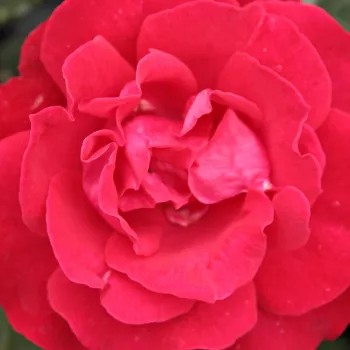
Semi-double, goblet to cup-shaped blooms, 13–25 petals, typically in clusters on branching stems; large-flowered (approximately 7–10 cm), remontant with a generous second flush in suitable conditions. |
| Colour data and phenology |
Intense, uniform scarlet-red flowers (RHS 53B outer, 46A inner); colour holds excellently, edges only slightly lighter, darkening a little before petals fall, maintaining a vivid effect from bud to fading stage. |
| Fragrance and aroma |
Medium-strength fragrance with a slightly sweet, classic rose character, evident on warm, still days and suitable for cutting, bringing a traditional rose scent indoors without being overpowering. |
| Hip characteristics |
Forms ovoid, orange-red rose hips about 10–14 mm in diameter in moderate quantities, adding a discrete late-season feature and potential interest for wildlife if spent flowers are not removed. |
| Resistance and winter hardiness |
Hardy to approximately −21 to −18 °C (RHS H7, Swedish zone 3, USDA 6b); resistant to black spot and powdery mildew, with moderate rust resistance, generally reliable under typical UK garden conditions. |
| Horticultural recommendations |
Plant in fertile, well-drained soil, spacing 30–55 cm depending on use; prefers full sun, regular watering in dry periods and moderate feeding, with light pruning to maintain form and encourage repeat flowering. |
BURNING LOVE® offers vivid, lasting colour, fragrant cut stems and a compact, bushy shape on a resilient own-root plant that will mature gracefully over the years, making it a thoughtful addition to your long-term garden plans.