BRIGHT FUTURE – orange climbing rose – Kirkham
Plant Bright Future once and enjoy a balanced, low-fuss climber that settles reliably into a typical family garden, coping well with blustery, damp spells and heavier soils in many UK settings. Its glossy dark foliage and rich orange-apricot blooms create an uplifting, subtly girly welcome over a London terrace rail or front wall, while the sweet, strong perfume drifts along the path after rain. As an own-root rose, it offers reassuring longevity, quietly regenerating from its base and holding its ornamental value year after year. In containers of at least 40–50 litres or in open ground, you can count on reliable repeat flowering along supports, giving vertical interest without complex pruning routines. Over time, roots establish first, then vigorous new shoots follow, and by the third summer the full impact of this sustainable, easy-care climber truly comes into its own, offering fragrant, colour-washed arcs of blooms.
Usage options
| Target area | Reasoning |
|---|
| Small urban front garden arch |
Medium-height climbing growth and dense, dark-green leaves form a graceful curtain of colour on a modest arch without overwhelming a narrow pathway, ideal for a London terrace frontage where simple, manageable structure is valued by the busy gardener seeking ease. |
| Rain-friendly railings and fences |
The own-root system and moderate disease tolerance suit front gardens where rainwater is directed into planting strips, as this climber copes well with typical coastal wind and rain while its steady framework matures with minimal fuss, appreciated by sustainability-focused owners favouring resilience. |
| Family doorway or porch feature |
Abundant, remontant flowering brings repeating waves of orange to apricot blooms, creating a warm, welcoming backdrop to the front door, while the strong, sweet fragrance adds daily enjoyment without extra effort, attractive for time-pressed households prioritising beauty. |
| Balcony or patio in a large container |
In a 40–50 litre or larger pot, the own-root form develops a stable, long-lived framework that can be lightly tied to a trellis, offering vertical colour in tight spaces with only periodic feeding and watering, suiting urban renters and beginners appreciating simplicity. |
| Low-maintenance side return screen |
The medium maintenance requirement and moderate disease resistance mean routine deadheading and an occasional check for problems are usually sufficient, making it a good choice for screening side passages where gardeners want privacy and flowers without constant attention, perfect for those valuing practicality. |
| Romantic “girly” mixed border backdrop |
The rich orange, peach and pale apricot colour shifts combine softly with pastel perennials, creating a feminine, romantic mood with changing tones through the season, appealing to home stylists who enjoy coordinated, photo-ready planting but prefer plants that largely look after themselves, especially stylists. |
| Scented seating-area trellis |
The strong, pleasantly sweet perfume and repeated flushes of cup-shaped flowers provide ongoing sensory interest near a bench or small patio, inviting relaxed evening use without demanding complex pruning skills, recommended for fragrance-lovers who still consider themselves gardening novices. |
| Wildlife-aware, flower-focused garden edge |
Clustered, double blooms with accessible centres can still offer some forage opportunities through a long season of repeat flowering, complementing more overt pollinator plants and keeping the garden decorative while remaining relatively easy to manage, appreciated by eco-conscious families prioritising nature. |
Styling ideas
- Peach-porch welcome – Train along a slim arch by the front door with lavender in the underplanting to echo the apricot tones and scent – ideal for families turning a small entrance into a fragrant feature.
- Terrace-trellis charm – Grow in a 50‑litre container with a slim obelisk, underplanted with Nepeta and thyme for soft edging – perfect for renters wanting vertical colour on a compact patio.
- Soft-clay solution – In heavier clay, raise the planting area slightly and edge with hardy geraniums for a pretty, practical strip – suited to urban owners working with inherited, tough soils.
- Apricot-boulevard – Repeat-plant along a low front fence, interspersed with sage and ornamental grasses, for a modern, sustainable street-side border – good for neighbours coordinating a unified streetscape.
- Romantic-rain garden – Place near a permeable, gravelled path with Sedum and Campanula catching runoff, letting the climber rise behind – appealing to eco-conscious gardeners designing rain-friendly, feminine planting.
Technical cultivar profile
| Parameter | Data |
|---|
| Name and registration |
Climbing rose cultivar Kirora, marketed as BRIGHT FUTURE – orange climbing rose – Kirkham; large-flowered climber type, suitable for exhibition use under the American Rose Society name Bright Future. |
| Origin and breeding |
Bred in the United Kingdom by Gordon Wilson Kirkham around 2006, with parentage not recorded; introduced and registered in 2007, with initial distribution attributed to C & K Jones. |
| Growth and structural characteristics |
Medium-vigorous climbing growth reaching about 2.4–3.6 m high with a 70–120 cm spread, moderately thorny canes, and dense, glossy, dark green foliage forming an attractive vertical framework. |
| Flower morphology |
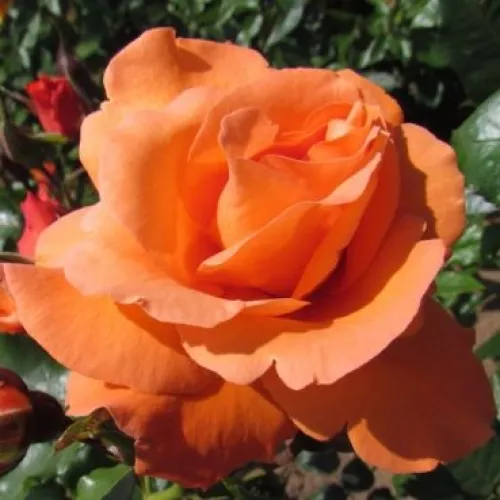
Double, cup-shaped blooms with approximately 26–39 petals and medium flower size, produced in clusters; remontant habit ensures a generous second flush and further repeats through the season in favourable conditions. |
| Colour data and phenology |
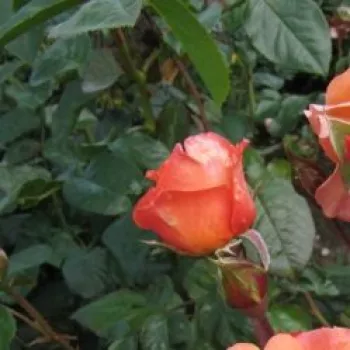
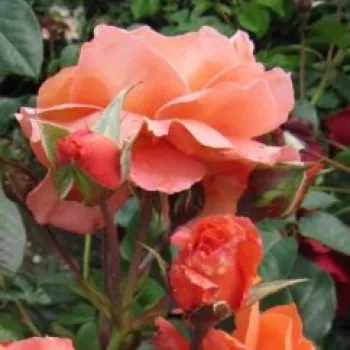
Rich sunlit orange buds open to vibrant orange (RHS 34A/B), then soften through peach, salmon and pale apricot tones, with centres lightening as blooms mature, giving a lively, colour-shifting display over time. |
| Fragrance and aroma |
Strongly scented cultivar with a distinctive, pleasantly sweet rose fragrance, most noticeable around fully open blooms and particularly effective when trained near seating areas, doors, or frequently used garden paths. |
| Hip characteristics |
Moderate hip set, producing small, spherical orange-red hips about 8–12 mm across, adding a discreet late-season decorative element and some wildlife interest once the main flowering period has eased. |
| Resistance and winter hardiness |
Hardy to approximately −21 to −18 °C (RHS H7, USDA 6b, Swedish zone 3) with moderate resistance to black spot, powdery mildew and rust; benefits from standard good hygiene and site selection for best performance. |
| Horticultural recommendations |
Best in sunny positions with free-draining soil; plant 80–150 cm apart depending on use, tying young canes to supports and providing occasional feeding and irrigation during extended dry spells for reliable flowering. |
BRIGHT FUTURE – orange climbing rose – Kirkham offers long-lived own-root reliability, repeat flowering and strong fragrance in everyday gardens, making it a thoughtful choice when you want lasting colour with manageable care.