BOSSA NOVA – medium-pink bedding floribunda rose – POUloma
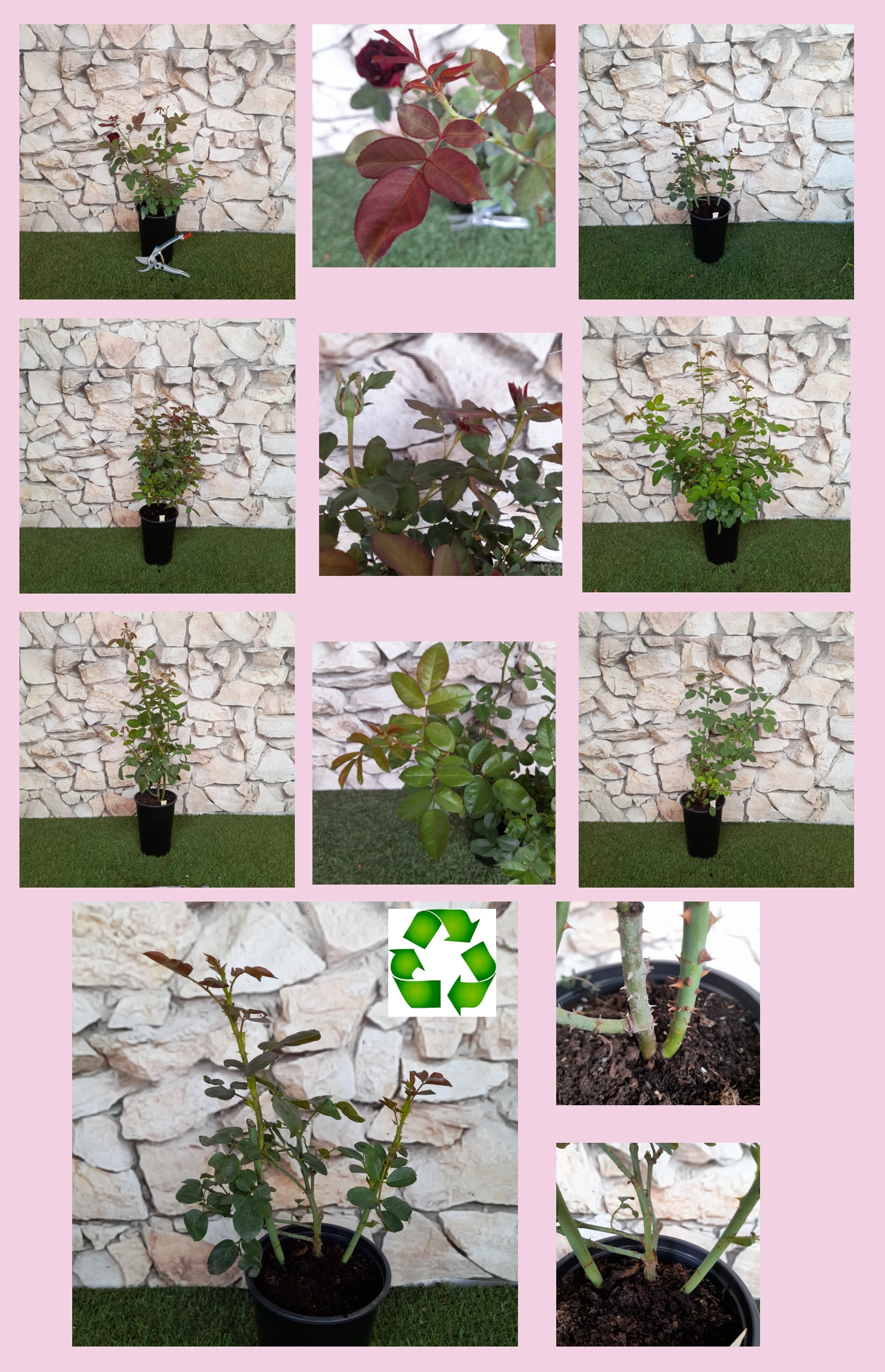
In a compact London front garden or balcony, BOSSA NOVA creates a calm, rhythmic backdrop of soft colour, its spreading habit quickly covering bare soil for rain-friendly planting and helping on sites with persistent winter-wet and heavy drainage challenges. Masses of petite, rosette blooms in a uniform mid-pink tone repeat through the season, fading gently to pastel shades that keep the whole plant looking fresh without constant deadheading. As an own-root rose it builds a durable framework below ground, so if weather, time or pruning go awry it can regenerate cleanly from the base and keep an even, low profile for edging, groundcover and containers. Planted once, it is designed to settle in and offer reliable coverage for many years, gradually strengthening from early root establishment to fuller top growth and, by the third year, complete ornamental impact with very little asked of the busy urban gardener.
Usage options
| Target area | Reasoning |
|---|
| Small front-garden bedding |
The bushy, widely spreading habit fills narrow beds with a low, even carpet of mid-pink rosettes, giving instant softness to hard pavements without demanding intricate pruning, ideal for the time-pressed beginner. |
| Groundcover on slopes |
Its 120–180 cm spread and dense foliage knit together into a stabilising mat that suppresses weeds and covers awkward banks, reducing bare soil and mowing along inclines for the practical home gardener. |
| Rainwater-conscious urban planting |
The extensive canopy shades the soil surface, helping slow evaporation while the low structure works well around permeable gravel or planting pockets that accept roof run-off, a useful partner for rain-aware city owners. |
| Own-root long-term hedge line |
As an own-root shrub it ages without graft-union issues, quietly thickening from roots to framework, then to full flowering performance over three seasons, reassuring those planning for a lasting family garden. |
| Family play-area edging |
Its modest 75–105 cm height creates a defined but not overpowering border around lawns and play spaces, keeping sightlines open while adding soft colour that suits shared spaces for all household members. |
| Medium to large containers (40–50 L+) |
In substantial pots of at least 40–50 litres, the broad, spreading crown cascades slightly over the rim, giving a generous, low-maintenance display on terraces and balconies that appreciate long-season flowering. |
| Low-maintenance mixed rose bed |
Moderate self-cleaning and remontant flowering mean occasional deadheading is enough to maintain a presentable display, avoiding intensive routines and suiting those who prefer straightforward seasonal tasks. |
| Urban green strips and verges |
The medium disease resistance, hardy root system and tolerance of typical city exposure make it suitable for public-facing verges and communal beds where reliability matters to local landscape planners. |
Styling ideas
- Pink-ribbon – Run BOSSA NOVA in a continuous line along a narrow terrace front, underplant with low thyme for scent – for design-conscious city homeowners.
- Pastel-drift – Combine its mid-pink spread with soft blue nepeta and pale lavender in a gravel strip – for low-effort, rain-permeable front gardens.
- Courtyard-ballet – Place a pair in 50 L terracotta pots with trailing ivy and white bacopa – for balcony and patio dwellers wanting long-season colour.
- Soft-boundary – Use as a loose hedge, interspersed with compact euonymus, to define paths without tall fencing – for families seeking gentle privacy.
- Urban-meadow – Let its pink mounds emerge from a matrix of ornamental grasses and small calamint – for sustainable gardeners favouring airy, naturalistic beds.
Technical cultivar profile
| Property | Data |
|---|
| Name and registration |
Floribunda POULSEN™ bed rose; registered as POUloma and marketed as BOSSA NOVA, a compact floribunda shrub rose suitable for exhibition and domestic use in mixed bedding schemes. |
| Origin and breeding |
Bred in Denmark in 1983 by L. Pernille and Mogens Nyegaard Olesen for Poulsen Roser A/S; an unknown seedling crossed with ‘The Fairy’, registered 1998 and introduced after 1998. |
| Growth and structural characteristics |
Bushy, widely spreading habit, 75–105 cm high with 120–180 cm spread; dense, slightly glossy medium-green foliage, moderate prickles, forming a broad, ground-hugging shrub in beds and borders. |
| Flower morphology |
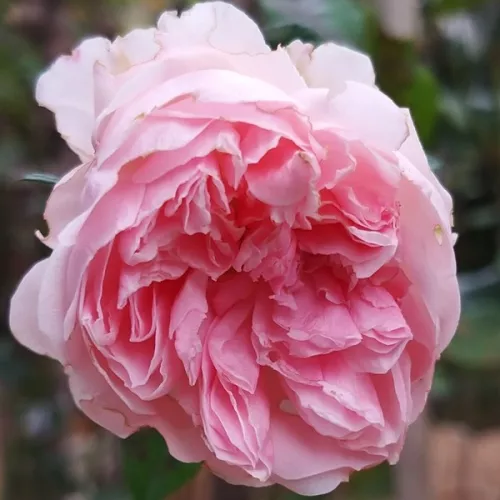
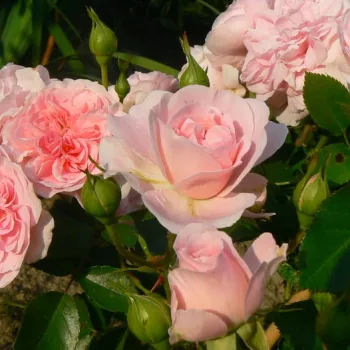
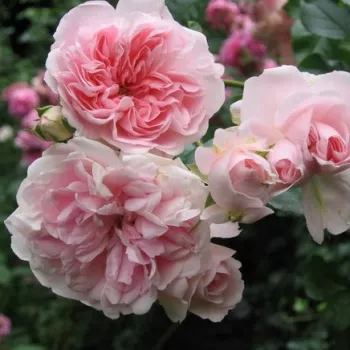
Small, very double rosette blooms, 40+ petals, carried in clusters; remontant with a generous second flush, giving many petite flowers rather than a few large exhibition-type blooms. |
| Colour data and phenology |
Uniform medium-pink (ARS MP; RHS 62C–62D); buds open mid-pink then fade to pastel and almost pale pink towards petal centres, maintaining a soft, harmonious colour block throughout flowering. |
| Fragrance and aroma |
Very faintly scented, with barely perceptible fragrance; grown primarily for visual effect and reliable bedding performance rather than for strong perfume or cutting for scented indoor arrangements. |
| Hip characteristics |
Produces moderately formed hips, about 10–16 mm across; discreet in appearance, adding subtle seasonal interest but not the main decorative feature compared with the continuous flowering display. |
| Resistance and winter hardiness |
Hardy to approximately –26 to –23 °C (RHS H7; USDA 5b; Swedish Zone 4); medium resistance to black spot, mildew and rust, needing standard monitoring and occasional protective treatments. |
| Horticultural recommendations |
Use for groundcover, beds, edging, slopes, containers and urban spaces; plant 90–165 cm apart depending on effect, in well-drained soil with regular watering during prolonged summer dry spells. |
BOSSA NOVA offers a broad, flower-rich spread, durable own-root structure and rain-aware groundcover performance, making it a thoughtful choice if you want long-lived colour with modest ongoing effort.