BLUE PETER™ – purple dwarf-mini rose - De Ruiter
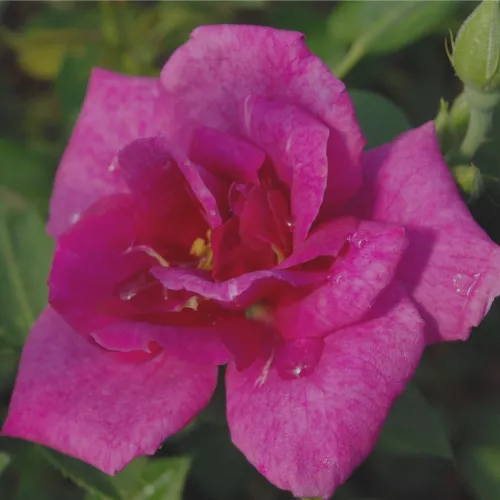
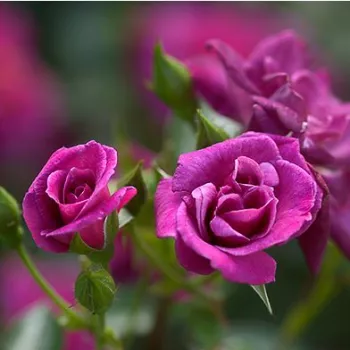
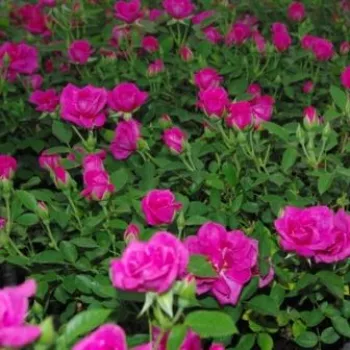
Bring maritime character to a small London front garden with BLUE PETER™, a compact miniature rose that fits beautifully into narrow borders and large containers while coping well with typical British weather and heavier soils when drainage is considered. Masses of double, lilac-purple blooms open repeatedly from early summer into autumn, offering a soft musky fragrance that greets you each time you step outside. Its naturally compact habit stays neat beside paths and doorsteps, with moderate self-cleaning to keep upkeep light. Grafted roses can tire over time, but this own-root plant builds strength gradually, with roots in year one, top growth in year two, and full ornamental presence in year three for lasting garden balance. Hardy and disease-resistant, it suits busy urban gardeners who prefer low-intervention care and reliable performance. Use it as a pretty, rainwater-friendly accent in pots of at least 40–50 litres, or cluster several for a playful, “girly” display in the front garden where children and guests can enjoy its gently scented blooms up close.
Usage options
| Target area | Reasoning |
|---|
| Small front garden border |
The compact growth and modest spread make this miniature ideal for narrow London terraced-house front beds where space is tight but colour is welcome. It forms a tidy, low edging that softens hard paving without overwhelming the view from the pavement, suiting busy urban gardeners. |
| Low hedge along a path |
Planted 25 cm apart, the even height and uniform habit create a neat, low hedge that outlines paths and driveways. Its moderate self-cleaning means fewer spent blooms to deadhead along walkways, helping keep access tidy with minimal maintenance for time-poor homeowners. |
| Rainwater-friendly container planting |
In a 40–50 litre pot with good drainage, this dwarf rose pairs well with free-draining, peat-free compost, making it easy to water with collected rainwater and avoid waterlogging typical of urban patios. Its manageable size suits balconies and courtyards used by sustainability-minded gardeners. |
| Feature plant near the front door |
The rich lilac-purple blooms and gentle musky scent provide a welcoming focal point by steps or porches. As an own-root plant, it forms a stable, long-lived structure that keeps this entrance accent reliable year after year, appealing to long-term planners. |
| Mixed border with herbaceous perennials |
The mid-height, dense branching allows it to sit smoothly in front of taller perennials such as lupins or ornamental grasses. Repeating flushes of colour knit the planting together across the season, supporting schemes planned by colour-conscious beginners. |
| Low-maintenance family planting |
Good resistance to mildew, black spot and rust helps it maintain healthy foliage even under humid, changeable conditions, so there is less spraying or troubleshooting. This suits households wanting dependable structure with limited gardening time, especially family-focused owners. |
| Urban pocket park or community space |
The sturdy, compact framework and repeat flowering bring long-lasting colour into small communal beds that see both wind and heavy use, while moderate self-cleaning keeps them presentable. This practical reliability makes it attractive to community volunteers. |
| Colour accent in clay or chalky soils |
With a preference for sun and sensible drainage, it copes well in typical heavier UK garden soils where water can linger after rain, provided you improve structure with grit or compost, supporting a sustainable, resilient planting choice for new garden owners. |
Styling ideas
- Doorstep-duo – Plant a pair in 50-litre slate containers flanking the front door, underplanted with trailing ivy for year-round structure – ideal for design-conscious city homeowners.
- Lilac-ribbon – Create a low ribbon of colour along a path, interspersing plants with dwarf lavender for scent contrast and soft movement – suited to relaxed family gardens.
- Pastel-pocket – Combine with soft pink lupins and dusky ornamental grasses in a small front bed for a feminine, “girly” look – appealing to romantic-style gardeners.
- Balcony-bowl – Use a single plant in a wide, shallow pot with silver-leaved herbs like sage to echo its silvery lilac tones – perfect for compact balcony spaces.
- Mini-parterre – Outline a tiny formal square with evenly spaced plants, filling the centre with nepeta for a cottage-meets-classic effect – great for beginners wanting structure.
Technical cultivar profile
| Property | Data |
|---|
| Name and registration |
Miniature rose, commercial type dwarf, miniature rose from the Mini - dwarf rose collection. Registered as RUIblun, marketed as Blue Peter™ Mini - dwarf rose RUIblun; ARS exhibition name Blue Peter. |
| Origin and breeding |
Bred by Gerrit De Ruiter (Netherlands, 1983), parentage ‘Little Flirt’ × unknown seedling. Introduced and distributed in the United Kingdom by Fryer’s Roses and Fryer’s Nurseries Ltd. in 1983. |
| Growth and structural characteristics |
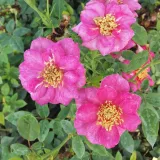
Compact, moderately thorny dwarf shrub, around 35–45 cm high and 30–40 cm wide. Moderately dense, slightly glossy light green foliage; moderate self-cleaning, with some faded blooms dropping unaided. |
| Flower morphology |
Abundantly repeat-flowering with small, 0.5–1.5 inch double blooms carried in clusters. Cup-shaped flowers with approximately 26–39 petals, giving a full, textured miniature rose effect over the season. |
| Colour data and phenology |
Mid-tone lilac-purple with silvery undertones; bud deep violet-purple. Colour lightens through soft lilac to pastel lilac with rosy-grey edges, especially in strong sun; ARS RUIblun, RHS 75A outer, 75C inner. |
| Fragrance and aroma |
Medium-strength, noticeable scent with a soft, musky character. Fragrance is appreciable at close range along paths or in containers, adding subtle sensory interest without overwhelming nearby seating areas. |
| Hip characteristics |
Occasionally forms small, spherical orange-red hips, around 5–7 mm in diameter. Hips are generally sparse and ornamental only, with limited visual impact compared with the continuing flushes of flowers. |
| Resistance and winter hardiness |
Hardy to approximately −21 to −18 °C (RHS H7, USDA 6b, Swedish zone 3). Rated resistant to powdery mildew, black spot and rust; tolerates warm spells but appreciates watering during extended dry periods. |
| Horticultural recommendations |
Best in sunny sites with well-drained soil; prefers improved clay or chalk with added organic matter. Plant 25–55 cm apart depending on use, 8.2–9.4 plants/m² for massing. Low maintenance, suitable for beds, borders and urban spaces. |
BLUE PETER™ offers compact flowers, reliable disease resistance and long-lived own-root growth in a neat miniature form, making it a refined, easy-care choice for those planning a small but enduring garden feature.