BERKELEY – pink bedding grandiflora rose – Warriner
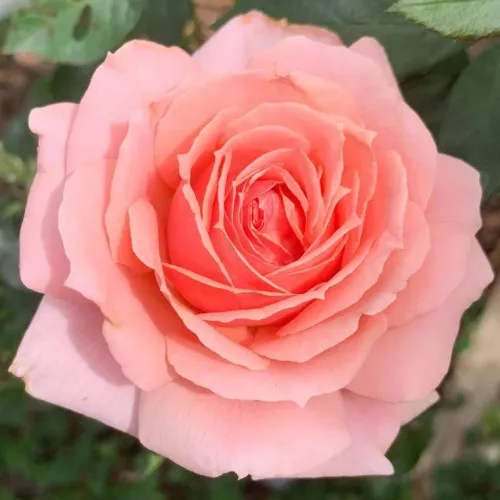
Step out after the rain and BERKELEY greets you with soft, salmon-pink clusters that sit above deep green foliage, creating a calm, ordered front garden even where rainfall is frequent and soils stay heavy. This upright, grandiflora-style shrub produces a stream of medium-sized, cupped blooms through summer and into autumn, with a gentle fragrance that suggests balance rather than drama, ideal for a narrow London terrace or compact suburban plot. Grown on its own roots, it is bred for longevity, able to regenerate from the base and retain stable shape over time, rewarding patient planting as roots establish in year one, shoots fill out in year two and the rose reaches full ornamental impact by year three. In a generous border or a 40–50 litre container, its dense foliage and elegant height structure give lasting presence, while the long-lasting flower colour and steady repeat flushes support a sustainable, rainwater-wise garden.
Usage options
| Target area | Reasoning |
|---|
| Front garden focal point by the path |
The upright habit and 130–170 cm height create a strong vertical accent beside a narrow entrance path, while dense foliage hides boundaries and bins, giving a composed welcome for busy urban gardeners. |
| Mixed border in small family gardens |
Medium-sized, cupped flowers appear repeatedly in clusters, offering dependable colour without needing complex pruning, ideal where you want visible results but have limited time for beginner home-owners. |
| Large container on terrace or balcony (40–50 L+) |
In a substantial 40–50 litre pot with good drainage, BERKELEY provides height, colour and structure on paved spaces, lending a soft, romantic feel to compact, rainwater-fed city spots for balcony and patio owners. |
| Structured rose bed with lavender or nepeta |
Planted in simple rows or small groups and underplanted with lavender, sage or nepeta, the steady flowering and warm pink tones create a classic yet low-fuss rose display for informal cottage-style gardeners. |
| Screening along low fences or railings |
Its dense, deep green foliage and repeat flowers form a semi-transparent screen along front boundaries, softening railings while maintaining light and airflow for family front-garden planners. |
| Cutting for informal indoor arrangements |
Medium, double blooms on relatively long stems suit relaxed jug or vase arrangements, allowing you to bring the gentle fragrance and soft salmon-pink tones indoors for home flower enthusiasts. |
| Rain-conscious planting in heavier soils |
When set slightly proud of surrounding clay and mulched, the upright shrub form works well in beds designed to accept and slowly drain roof run-off, coping reliably with wetter, windier spells for sustainability-focused gardeners. |
| Long-term feature shrub in evolving gardens |
Own-root growth enables the plant to rebuild from its base if cut back hard, maintaining shape and ornamental value over many seasons in changing family gardens for long-view garden planners. |
Styling ideas
- Rain-Path Welcome – Line a narrow front path with BERKELEY and dwarf lavender, using permeable gravel between plants so rain drains slowly while blooms frame the walk – ideal for city terrace owners.
- Balcony Column – Grow a single plant in a 50 litre clay pot with trailing nepeta and a moisture-retentive mulch, giving vertical interest and soft fragrance – perfect for balcony gardeners with limited soil.
- Cottage Ribbon – Plant a curving ribbon of BERKELEY through a mixed border with foxgloves and ornamental alliums, letting its repeated pink clusters knit the scheme together – suited to relaxed cottage-style gardens.
- Evening Border – Combine BERKELEY with silvery sage, pale grasses and soft lighting so its salmon-pink flowers glow at dusk along a patio edge – attractive for after-work unwinding spaces.
- Soft Screen – Use a staggered double row beside a low fence, underplanted with groundcover thyme to keep maintenance calm while providing subtle privacy – useful for small family front gardens.
Technical cultivar profile
| Property | Data |
|---|
| Name and registration |
Grandiflora shrub, commercial bed rose type; registered as JACient, marketed as BERKELEY and shown as ‘Tournament of Roses’ in exhibition classes. |
| Origin and breeding |
Bred by William A. Warriner for Jackson & Perkins Co. in the United States from ‘Impatient’ × unknown seedling; bred 1987 and introduced to commerce in 1988. |
| Awards and recognition |
Recognised as an All-America Rose Selections Award winner in 1989, highlighting its decorative performance and garden value in trial conditions at the time. |
| Growth and structural characteristics |
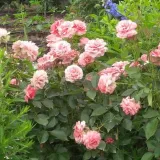
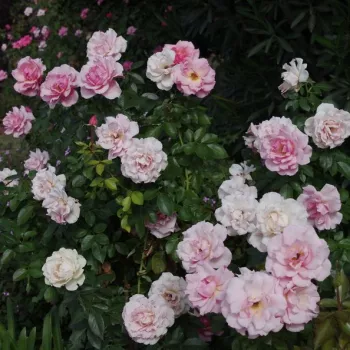
Upright, bushy plant 130–170 cm tall and 75–105 cm spread, with moderately thorny stems and dense, slightly glossy deep green foliage structuring borders and beds. |
| Flower morphology |
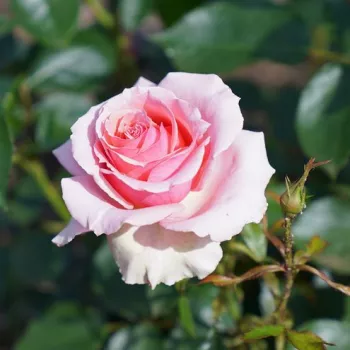
Medium, double, cupped flowers with 26–39 petals, produced mainly in clusters; remontant across the season with notably abundant second flushes after the first display. |
| Colour data and phenology |
Warm salmon-pink, RHS 55A outside and 55C inside, with deeper reverse; buds deep pink, ageing to softer pastel tones, with generally good colour retention in sun. |
| Fragrance and aroma |
Pleasant but restrained fragrance of soft character, detectable at close range without dominating seating areas, suiting compact patios and frequently used front gardens. |
| Hip characteristics |
Fruit set is usually sparse due to double flowers and continuous blooming; occasional small, spherical orange-red hips 6–10 mm may appear late in the season. |
| Resistance and winter hardiness |
Hardy to around −21 to −18 °C (USDA 6b, RHS H7) with good heat tolerance; however, very susceptible to common foliar diseases, so regular protection is needed. |
| Horticultural recommendations |
Best in sunny positions with air movement; needs regular spraying on UK clay or humid sites, plus deadheading as spent blooms do not self-clean reliably. |
BERKELEY offers upright structure, long-season salmon-pink flowering and the regenerative reliability of an own-root shrub; consider it if you want a lasting, gently romantic feature with manageable care needs.