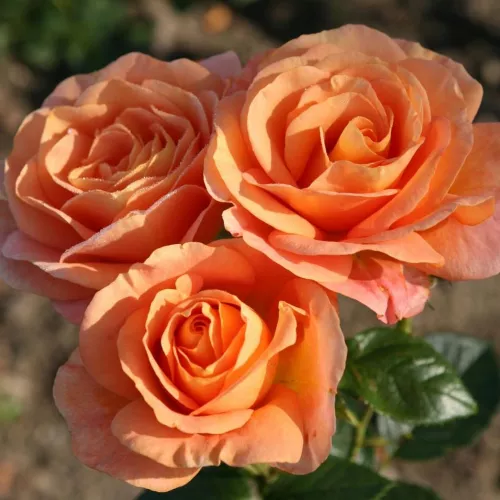
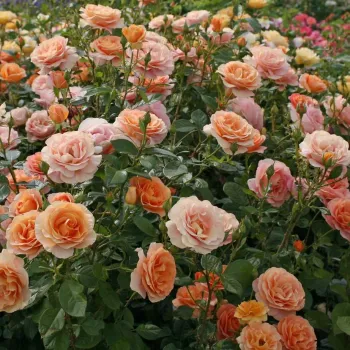
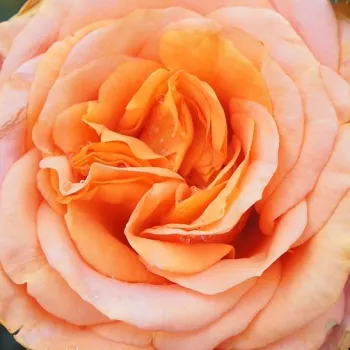
BENGALI® – peach‑orange bedding floribunda rose – Kordes
Imagine your small front garden after rain, where peach blooms glow against glossy foliage and the air carries a gentle fragrance, while the planting shrugs off blustery showers and damp conditions often found in British gardens with challenging drainage; BENGALI® is bred for steady, upright growth with generous clusters that repeat flower reliably from early summer into autumn, giving you long-lasting seasonal colour without fussy maintenance, and its semi-double clusters provide accessible centres for visiting bees; in its first year it concentrates on strong roots, in the second year you notice fuller shoots, and by the third season it settles into a stable, mature shape that fits effortlessly into a rainwater-conscious, “girly” urban front garden.
Usage options
| Target area | Reasoning |
|---|
| London terraced-house front border |
Upright, balanced growth and dense, glossy foliage create a tidy, vertical accent that works beautifully in narrow front beds, offering a long season of peach-orange colour with minimal fuss for the busy city homeowner |
| Rainwater-conscious urban planting strip |
Performs reliably in exposed, showery conditions and humid spells where many roses sulk, so it partners well with permeable gravel and rain-fed planting, easing concerns about unpredictable weather for the environmentally aware gardener |
| Small family garden flowerbed |
Cluster-flowered heads and repeat blooming give steady, family-friendly colour from one plant, while a moderate maintenance routine of watering and seasonal pruning stays manageable for time-pressed parents and new gardeners |
| Mixed border with perennials |
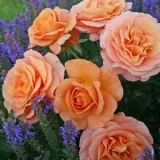
The uniform peach tones blend smoothly with lavender, sage or nepeta, and the semi-double blooms offer moderate pollinator interest, suiting those who want an ornamental yet wildlife-aware planting |
| Statement rose in a large patio container |
Its upright habit and dense foliage make a strong vertical feature in a 40–50 litre pot, where own-root stability helps it establish and regrow well, ideal for balcony or courtyard owners |
| Low, informal boundary or hedge |
Consistent height and balanced structure create a soft dividing line along paths or front boundaries, providing privacy and colour without the severity of hard landscaping, which appeals to design-conscious urban residents |
| Coastal or wind-exposed garden corner |
Handles blustery weather and damp air better than many show roses, keeping its flowers and foliage presentable even in open, breezy plots, reassuring those gardening in challenging locations near the seaside |
| Long-season scent and cut-flower spot |
Medium-sized, cupped blooms with a pleasant peach scent repeat through summer, giving both outdoor fragrance and small, charming stems for the vase, suiting enthusiasts who enjoy gentle perfume without high-maintenance divas |
Styling ideas
- TerraceWelcome – Line a narrow front path with BENGALI® and soft grey gravel, adding lavender for scent and bees – ideal for new terraced-house owners.
- PeachRibbon – Create a low, wavy hedge along a front boundary, underplanting with dwarf euonymus for year-round structure – perfect for design-led family gardeners.
- RainGlow – In a rainwater-fed bed, mix BENGALI® with nepeta and sage around a permeable path – suited to sustainability-focused urban gardeners.
- BalconyBlush – Grow one plant in a 50-litre container with trailing campanula at the rim – a good solution for flat-dwellers with a sunny balcony.
- SunsetBorder – Combine BENGALI® with gaillardia and other warm-toned perennials for a long-flowering, bee-aware border – attractive to hobby gardeners wanting easy impact.
Technical cultivar profile
| Parameter | Data |
|---|
| Name and registration |
Floribunda bed rose from the Roses Féeriques® collection; registered as KORbehati, marketed as BENGALI®; ARS exhibition name Bengali; commercial use mainly as bedding floribunda. |
| Origin and breeding |
Bred and introduced by W. Kordes & Sons (Germany); parentage not disclosed; first introduced to the market in 2011 as an upright, floribunda-type shrub suitable for beds and landscaping. |
| Awards and recognition |
Highly decorated: ADR rating 2010; Gold Medals at Baden-Baden and Kortrijk 2009; RNRS Gold Medal 2010; additional Silver Medal and Audience Award underline its garden and show performance. |
| Growth and structural characteristics |
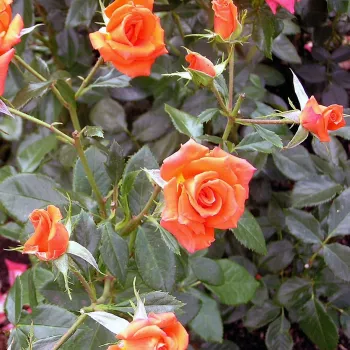
Upright, bushy shrub reaching about 130–170 cm high and 100–140 cm wide with dense, dark green glossy foliage and moderate prickles; forms a balanced, uniform framework suitable for hedging or specimen use. |
| Flower morphology |
Semi-double, cupped blooms with around 13–25 petals, borne in clusters of medium-sized flowers; repeat-blooming with especially abundant second flush; deadheading recommended to maintain strong reblooming performance. |
| Colour data and phenology |
Warm peach-orange with yellowish tones; buds open rich and saturated, then soften to creamy light peach with paler edges; colour retention moderate, giving a softly changing display from bud through full bloom. |
| Fragrance and aroma |
Medium-strength peach-scented perfume, noticeable at close range without being overpowering; fragrance adds sensory interest in small gardens and is pleasant in cut stems for indoor arrangements. |
| Hip characteristics |
Produces moderate numbers of small, spherical hips around 6–10 mm, coloured orange-red; hips can extend autumn interest if some spent flowers are left unpruned late in the season. |
| Resistance and winter hardiness |
Hardy to about –23 to –21 °C (H7, USDA 6a, Swedish Zone 3); moderate resistance to black spot, powdery mildew and rust; tolerates hot summers if watered during extended droughts. |
| Horticultural recommendations |
Best in fertile, well-drained soil with regular watering and seasonal pruning; suitable for beds, hedges and large containers; spacing depends on use, with wider gaps for solitary or specimen planting. |
BENGALI® offers upright, balanced growth, a long season of peach-orange colour and gentle scent, while the own-root form supports long-term resilience and regrowth, making it a thoughtful choice for relaxed, sustainable gardens.