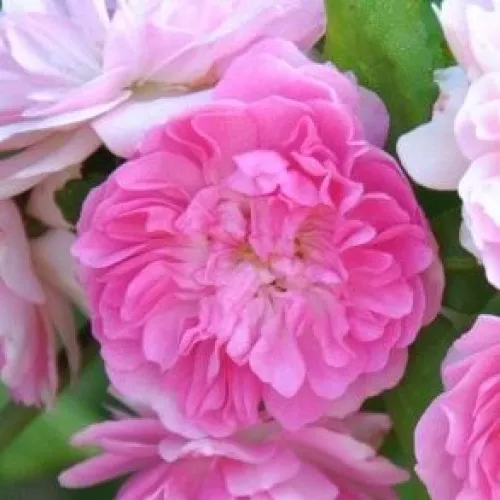
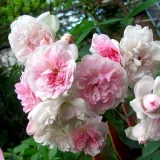
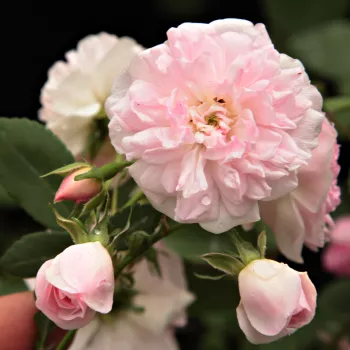
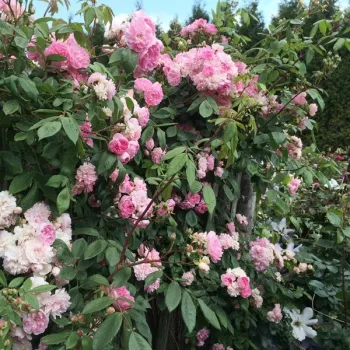
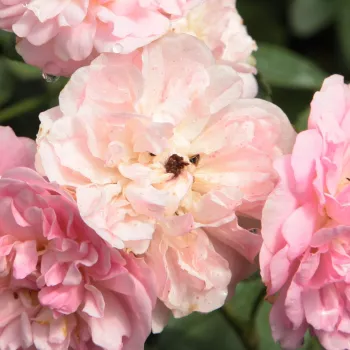
BELLE DE SARDAIGNE™ – pink climbing rose
Imagine returning home along a narrow front path lined with pastel arches of BELLE DE SARDAIGNE™, its soft pink blooms echoing Mediterranean coastal light yet coping well with typical UK rain and breeze in exposed spots. This large‑flowered climber provides a gentle sense of balance in compact London terraces, trained over railings or a small pergola, while its upright, easily guided growth remains visually tidy even in tight urban spaces. As an own‑root rose it offers reassuring longevity and the capacity to regenerate after pruning or winter damage, maintaining stable ornamental value year after year. In a peat‑free, well‑drained bed it responds reliably to stored rainwater and light feeding, rewarding you with generously clustered, cup‑shaped blossoms that become a romantic, low‑maintenance feature in your sustainable city garden.
Usage options
| Target area |
Reasoning |
| Terraced-house front boundary railings |
Ideal where you need strong vertical impact from limited ground space: its upright, easily trained stems form graceful, arching lines without overwhelming a narrow front garden, suiting busy homeowners seeking elegant structure to frame their entrance, especially beginners. |
| Small pergola or entrance arch |
The plentiful, pastel clusters create a soft, romantic canopy over a modest arch or compact pergola, bringing a Mediterranean note to everyday walkways while remaining visually light and airy, perfect for those wanting a welcoming focal point in a family garden homeowners. |
| Rainwater-friendly front garden bed |
Performs well in free-draining, improved clay or chalky soil that is watered from butts, integrating neatly into sustainable planting schemes where deep roots and woody structure support long-term planting plans for urban, water-conscious gardeners sustainability-minded. |
| Wall or fence greening in urban settings |
Its soft-stemmed habit is simple to tie in along wires, helping to soften hard boundaries and provide long-lived greenery and bloom on plain brick, while the nearly thornless canes make ongoing tying-in and pruning more manageable for cautious city gardeners urban-owners. |
| Family seating area backdrop |
A pastel-pink curtain of flowers offers visual calm behind a bench or dining set, delivering a long season of ornamental value with minimal fragrance interference at mealtimes, well suited to families seeking a gentle, balanced backdrop rather than an overpowering sensory display families. |
| Own-root, long-term feature planting |
Planted once with patience for initial establishment, it develops a durable root system and resilient framework that can regrow from the base if canes are damaged, giving a steady, long-lived presence for gardeners planning their space many seasons ahead future-planners. |
| Partially shaded side passage |
Tolerant of partial shade, it still flowers generously where direct sun is limited, such as along side alleys between houses, bringing light-coloured blooms that brighten constrained spaces for householders making the most of every metre along their plot space-maximisers. |
| Wind-exposed front or coastal-adjacent plots |
Suited to spots where breeze and wet weather can be frequent, its flexible, soft canes train securely along supports, allowing you to enjoy a refined pastel display even where other climbers might sulk in changeable, wind- and rain-prone conditions coastal-gardeners. |
Styling ideas
- Romantic Arch – Train BELLE DE SARDAIGNE™ over a slim metal arch, underplanting with lavender and nepeta to create a scented, bee-rich entrance that feels airy, not crowded – ideal for terrace-front romantics.
- Soft Pergola – Use its nearly thornless canes along a compact timber pergola, mixing with white clematis for layered bloom and gentle dappled shade – suited to family seating corners.
- Urban Screen – Cover a simple wire-strung fence with its pastel clusters, then add Euonymus fortunei ‘Minimus’ as groundcover to knit the base into a neat, evergreen carpet – perfect for overlooked city plots.
- Pastel Vista – Combine BELLE DE SARDAIGNE™ with Crocosmia ‘Lucifer’ and Phlox paniculata in a permeable, gravel-mulched bed to manage rainwater while delivering strong summer colour contrast – great for sustainability-focused decorators.
- Courtyard Column – Grow it in a 50-litre or larger container with a slim obelisk, pairing with silver-leaved sage and low herbs for texture on patios where soil is scarce – useful for balcony and courtyard gardeners.
Technical cultivar profile
| Property |
Data |
| Name and registration |
Large-flowered climbing rose from the Les Lianambelles® collection; registered as MASflesa and marketed as BELLE DE SARDAIGNE™ MASflesa, mainly used as an exhibition-type climber in gardens. |
| Origin and breeding |
Bred in France by Dominique Massad in 1996 from a seedling of ‘Rose Delacroix’ × Les Pléiades; introduced commercially in 2006 via Novaspina, with breeding rights held by Pépinières Pétales de Roses. |
| Awards and recognition |
Recipient of the Grand Prix de la Rose from the Société Nationale d’Horticulture de France, achieving first prize in the rambling and climbing rose category in 2011 for its ornamental and garden qualities. |
| Growth and structural characteristics |
Vigorous, upright, soft-stemmed climber reaching about 320–500 cm in height and 150–230 cm in spread; dense, matt grey-green foliage and canes that are easily trained with very few thorns, suitable for arches and walls. |
| Flower morphology |
Produces medium-sized, double goblet-shaped blooms with 26–39 petals in clustered, large inflorescences; remontant with a generous second flush, giving extended ornamental value across the main growing season. |
| Colour data and phenology |
Soft pastel pink flowers (RHS 65C outer, 65D inner) that open from creamy, silvery buds and gradually fade toward near white in strong sun; overall effect remains light and even, lending a gentle, romantic character. |
| Fragrance and aroma |
Fragrance is very weak and barely perceptible, making it a suitable choice near dining or seating areas where strong scent might be unwelcome; primarily appreciated for its visual impact rather than olfactory qualities. |
| Hip characteristics |
Occasionally forms small, spherical red hips about 6–10 mm across; hips are not especially numerous but can add subtle seasonal interest in late season when present, extending the plant’s decorative contribution. |
| Resistance and winter hardiness |
Hardy to approximately −21 to −18 °C (RHS H7, USDA 6b, Swedish zone 3); tolerates heat and moderate drought, but is highly susceptible to powdery mildew, black spot and rust, requiring consistent, proactive plant protection. |
| Horticultural recommendations |
Best on well-drained, fertile soil in sun or partial shade; allow 170–300 cm spacing depending on use, with frameworks and regular tying-in; monitor closely for fungal diseases and use integrated protection to maintain foliage. |
BELLE DE SARDAIGNE™ offers pastel climbing colour, manageable growth and long-lived, regenerating own-root reliability; a thoughtful choice if you value gentle structure and enduring charm in a compact garden.