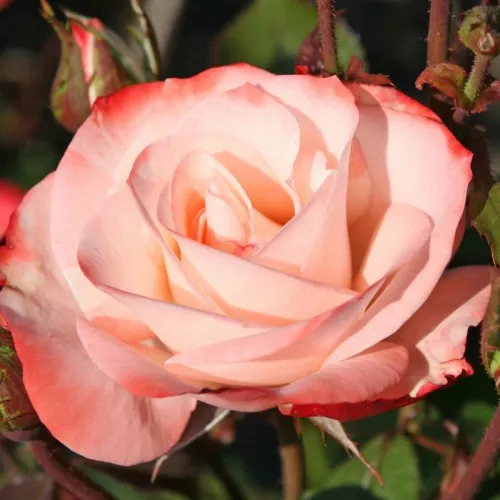
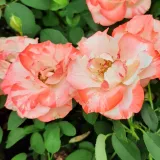
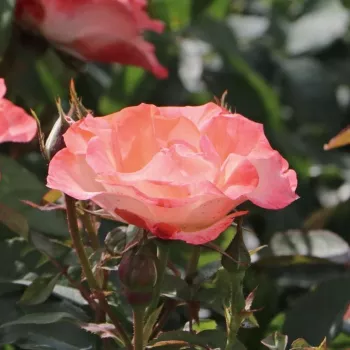
AUF DIE FREUNDSCHAFT ® – white-red bedding shrub rose
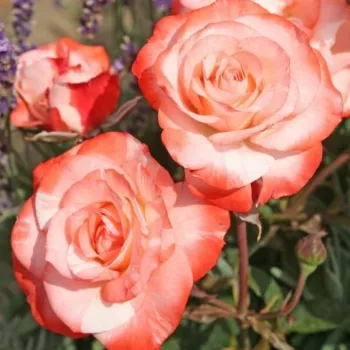
Step out after rain into a London front garden and this rose greets you with colour, easy balance and a sense of sustainable calm, its bicolour clusters brightening compact spaces while coping well with Britain’s blustery, damp weather; in modest beds or large pots it offers forgiving care needs, steady seasonal structure and reliable repeat flowering, developing roots in year one, building bushier shoots in year two, and by year three settling into full ornamental character.
Usage options
| Target area |
Reasoning |
| Narrow London front garden border |
Its upright, dense, 100–140 cm habit fits slim beds without overwhelming the pavement, giving a strong vertical accent and long-season colour on modest footprints, ideal for low-fuss kerb appeal for the busy homeowner |
| Informal low hedge along a path |
Planted at 35–40 cm intervals, it forms a gently structured, flowered line that guides you along the path, easy to keep in shape and robust enough for everyday family comings and goings, reassuring for time-pressed gardeners |
| Rainwater-friendly urban planting strip |
Suited to sunny, free-draining spots, it works well in gravel-mulched or permeable front gardens where rain can soak away, offering lasting structure and colour without heavy watering demands, attractive for sustainability-minded city-dwellers |
| Large container on balcony or terrace |
In a 40–50 litre peat-free container this shrub keeps a neat, upright outline, its glossy foliage and white-red clusters creating a focal point that needs only simple seasonal pruning, practical for compact-space beginners |
| Mixed flowerbed with perennials |
The steady remontant flowering and dark green foliage provide a calm backdrop for perennials like lavender, nepeta or sage, ensuring the bed still looks composed when other plants are between peaks, helpful for design-conscious novices |
| Family garden play-area edge |
Moderate prickles and medium maintenance make it manageable near frequently used spaces, while its upright, not sprawling, habit keeps paths clearer and reduces snagging, suiting practical, safety-aware parents |
| Coastal or wind-exposed sites |
The sturdy shrub framework and good heat tolerance cope well with breezier, more exposed gardens, maintaining shape and flower quality where more delicate roses might struggle, useful for outer-suburban and coastal owners |
| Long-term, low-input rose feature |
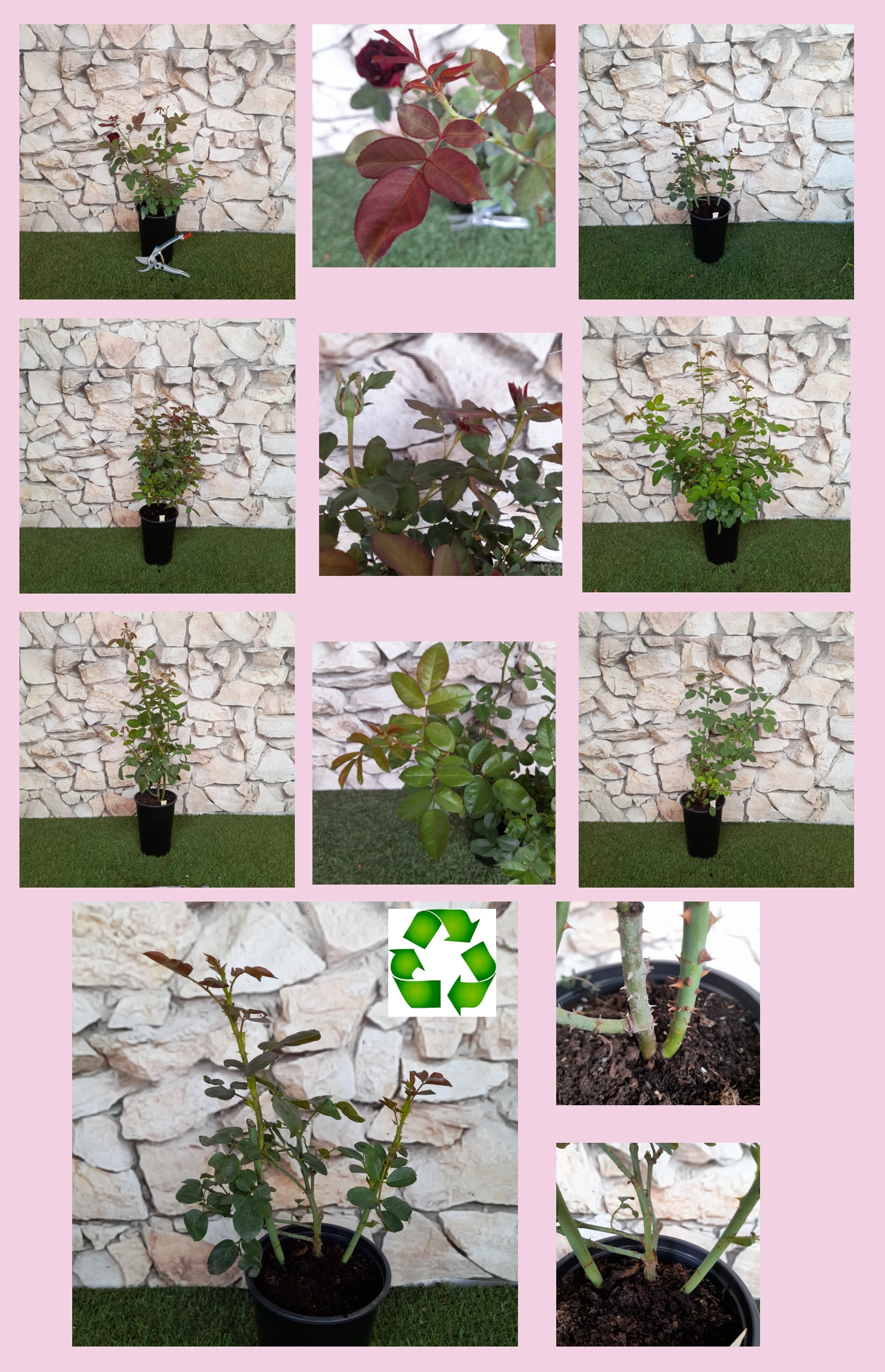
As an own-root shrub, it ages steadily, regrowing reliably from its own wood if cut back hard, staying true to type and ornamental for many years with modest upkeep, reassuring for investment-minded buyers |
Styling ideas
- Terrace-Trimmed – Line a narrow front path with a single row of these shrubs, underplanted with thyme between slabs for a clean, modern-feel “girly” entrance – ideal for style-aware terrace owners
- Pastel-Companion – Combine with soft pink echinacea and pale grasses so the crisp white-red blooms pop against a hazy, romantic backdrop – perfect for first-time cottage-style gardeners
- Monochrome-Modern – Pair with dark slate chippings, white planters and clipped Lonicera nitida for a sharp, graphic look in small urban front gardens – suited to minimal-maintenance city dwellers
- Balcony-Focus – Plant one shrub in a 50 litre container with trailing nepeta to soften the rim, creating a single, easy-care focal point – great for busy balcony gardeners
- Playful-Edge – Use a staggered row along a lawn edge with low sage mounds in front, giving floral interest without blocking sightlines to children at play – useful for young family households
Technical cultivar profile
| Parameter |
Data |
| Name and registration |
Shrub rose, registered as KORbaymun; trade names include Auf die Freundschaft ® and Heckenzauber®. Also marketed as Color Splash in some regions, within the flowerbed shrub group. |
| Origin and breeding |
Bred by Tim-Hermann Kordes in Germany from ‘Black Forest Rose ®’ × ‘Philatelie’. Introduced and registered in 2016 by W. Kordes’ Söhne, breeding completed in 2007 after extensive garden trials. |
| Growth and structural characteristics |
Upright, densely foliated shrub reaching about 100–140 cm high and 50–70 cm wide. Dark glossy leaves, moderately thorny stems and a compact, structured outline suitable for beds, hedges and containers. |
| Flower morphology |
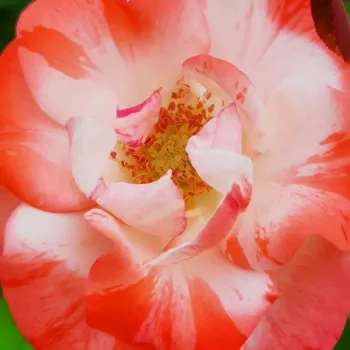
Semi-double, cupped clusters with around 17–25 petals per bloom in medium-sized trusses. Remontant through the season with an especially generous second flush, giving sustained ornamental display in gardens. |
| Colour data and phenology |
Bright white base with vivid coral to cherry-red edging, ARS rb, RHS 53B and 155C tones. Buds open deep coral-red, then soften to creamy white with pinkish margins as flowers age, providing lively colour variation. |
| Fragrance and aroma |
Fragrance is very weak and barely perceptible, so it is best chosen for visual impact, structure and repeat flowering rather than scent-driven planting schemes or fragrance-led collections in small spaces. |
| Hip characteristics |
Hip set is generally sparse due to the semi-double form; where formed, hips are small ellipsoids about 10–14 mm, orange-red in colour, adding a light seasonal accent rather than a major display feature. |
| Resistance and winter hardiness |
Hardy to approximately −21 to −18 °C (H7, USDA 6b, Swedish zone 3). Moderate resistance to powdery mildew and black spot, resistant to rust; benefits from basic preventive care in humid, high-pressure seasons. |
| Horticultural recommendations |
Prefers sunny positions with well-drained soil; tolerates moderate drought once established. Medium maintenance; occasional disease control and light annual pruning maintain form. Recommended for beds, hedges and specimens. |
AUF DIE FREUNDSCHAFT ® offers reliable repeat flowering, compact upright structure and long-lived own-root resilience, making it a thoughtful choice if you seek durable colour with modest care needs.