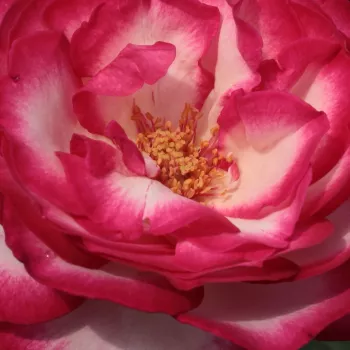
ATLAS™ – white-pink hybrid tea rose – Delbard-Chabert
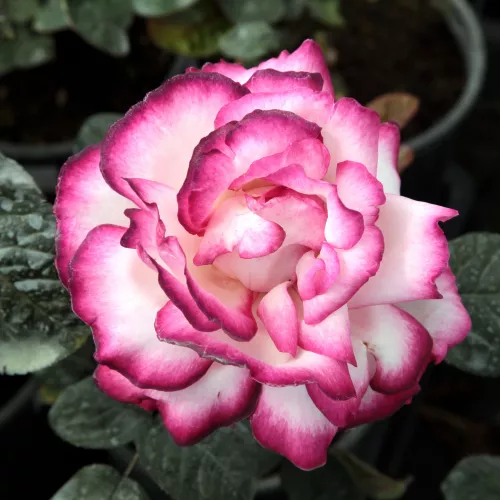
Step out after rain and the semi-double blooms of ATLAS™ catch the light: white-based petals edged in vivid pink, held on an upright, compact plant that suits small, busy gardens. Bred for reliable health, this hybrid tea keeps its foliage clean even in damp British summers, standing up well to cool, wet spells and changeable coastal breezes. Its colour holds beautifully without harsh fading, while the flowers repeat through the season, bringing a long run of cutting stems for vases and front-door displays. On its own roots, ATLAS™ offers quiet longevity, rebuilding from the base if stems are damaged and settling into a stable shape with minimal pruning. Over time you will notice strong roots in the first year, confident shoots in the second, and full ornamental impact by the third, giving you an easy-care, rainwater-friendly rose that fits neatly into a green, urban garden.
Usage options
| Target area |
Reasoning |
| Low-maintenance London front garden |
Its naturally healthy, disease-resistant foliage means less spraying, less fuss and more time to enjoy the flowers. Compact, upright growth fits narrow front beds, staying neat beside paths and railings for busy urban gardeners. |
| Cutting rose for small borders |
Good repeat flowering and elegant, semi-double hybrid tea blooms give a steady supply of stems for the house. Plant near the path so you can pick easily after work, enjoying discreet fragrance indoors for homeowners who love cut flowers. |
| Rainwater-wise urban planting strip |
ATLAS™ is happy in improved clay or chalky soils with decent drainage, working well in a permeable front-garden strip where paving has been reduced. Combine with loose perennials to soak up rainfall for gardeners planning sustainable front gardens. |
| Pollinator-friendly family garden bed |
Semi-double blooms with accessible stamens offer moderate pollen access, adding interest for bees between other nectar plants. Use in children’s play-gardens as a gentle introduction to wildlife-friendly roses for families with curious young nature lovers. |
| Compact rose hedge or boundary line |
Upright, dense growth and dark, glossy foliage create a tidy, colourful low hedge when planted at hedge spacing. Own-root plants fill out evenly along the row over time, keeping gaps to a minimum for gardeners wanting structure with little clipping. |
| Statement rose in a large container |
In a 40–50 litre pot with peat-free compost, ATLAS™ forms a strong framework without outgrowing the space. Its bicoloured blooms stand out on patios or balconies, offering long-season display for balcony and courtyard gardeners. |
| Long-lived feature in sustainable designs |
Own-root growth means the plant can regenerate from the base after hard pruning or winter damage, supporting a long lifespan. Once established, it maintains ornamental value with modest care for designers aiming for durable, low-input plantings. |
| Coastal or exposed suburban gardens |
Robust foliage and good general vigour help this rose stay presentable where wind and showers are frequent, supporting stable flowering through unsettled spells. Reliable health reduces chemical inputs for eco-conscious gardeners in breezy locations. |
Styling ideas
- Terrace-Front Focus – Place ATLAS™ by a front gate with lavender and nepeta edging so the bicoloured blooms rise above soft blue haze – ideal for homeowners refreshing a narrow city frontage.
- Pastel-Trim Border – Underplant with Hakonechloa macra and pale pink sages to echo and soften the petal tones – suitable for gardeners seeking a calm, “girly” palette without high upkeep.
- Cutting-Path Ribbon – Run a short row along a garden path with airy grasses behind, so you can clip stems easily on rainy mornings – perfect for busy professionals who still enjoy home-grown bouquets.
- Balcony-Showpiece – Grow in a large 50 litre container with trailing thyme and compact nepeta to cool the strong pink edges – aimed at urban balcony owners wanting colour and pollinator interest.
- Modern-Cottage Mix – Combine ATLAS™ with white foxgloves and soft purple catmint around a small lawn to blend formality and informality – great for families wanting a relaxed yet structured garden.
Technical cultivar profile
| Parameter |
Data |
| Name and registration |
Hybrid tea rose; registered as DELkort, marketed as Atlas™ Hybrid tea rose DELkort, ARS exhibition name Atlas; part of the Hybrid tea group for garden and cutting use. |
| Origin and breeding |
Bred by André Delbard-Chabert, France, 1966, from ‘Chic Parisien’ × ‘Provence’; introduced and distributed by Georges Delbard SA, representing classic mid-twentieth-century French hybrid tea breeding. |
| Growth and structural characteristics |
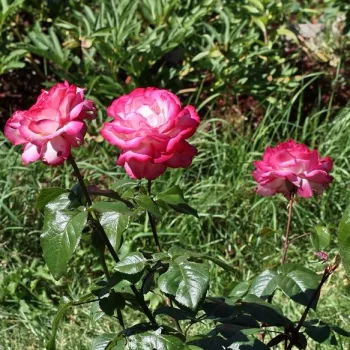
Compact, upright shrub reaching around 70–95 cm high and 45–65 cm wide, with dense, dark green, glossy foliage and moderate prickles, forming a tidy outline suitable for beds, borders and low hedging. |
| Flower morphology |
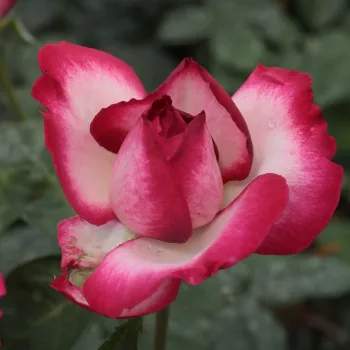
Semi-double hybrid tea blooms with 13–25 petals, small cup-shaped flowers with slightly ruffled edges, borne singly; good repeat flowering provides an abundant second flush after the main early-summer display. |
| Colour data and phenology |
White-pink bicolour; petals have a white base and vivid pink margins, ARS code pb, RHS 57C outer and 60A inner; colours deepen to darker ruby-mauve tones yet retain good resistance to harsh fading in strong sun. |
| Fragrance and aroma |
Delicate, classically rosy fragrance of mild strength, offering a discreet scent that suits close planting to paths and seating, noticeable on still days without overwhelming nearby plants or confined urban spaces. |
| Hip characteristics |
Produces moderate quantities of small, spherical hips approximately 7–10 mm across, in an attractive orange-red colour that extends seasonal interest into autumn and may lightly support wildlife foraging. |
| Resistance and winter hardiness |
Good overall disease resistance, rated resistant to powdery mildew, black spot and rust; reliably hardy to approximately –21 to –18 °C (RHS H7, USDA 6b, Swedish Zone 3) under normal garden conditions. |
| Horticultural recommendations |
Suited to borders, specimen planting and cutting; low maintenance with minimal intervention needed; plant 35–60 cm apart depending on use, at 6.3–7.2 plants/m² for massing, in fertile, well-drained soil. |
ATLAS™ Hybrid tea rose DELkort pairs reliable disease resistance, repeat flowering and compact form with the long-lived stability of an own-root plant, making it a thoughtful choice if you value lasting beauty with modest effort.