ANNA MÈGE™ – red bedding shrub rose – Massad
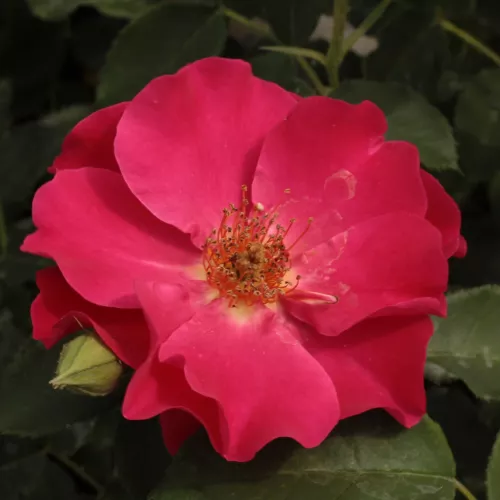
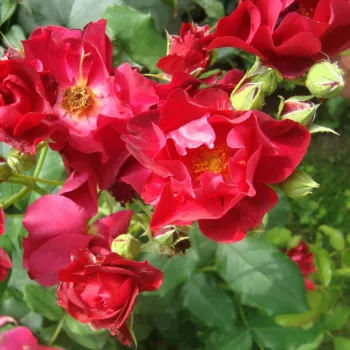
Step outside after rain and follow the crimson thread of ANNA MÈGE™ along a narrow London terrace path: semi-double blooms open just enough for visiting bees, while neat, bushy structure makes front gardens feel ordered, not overcrowded. This compact shrub suits modest borders, driveways and rainwater-aware planting where surfaces are hard and space is shared, yet you still want reliable impact and a quietly sustainable, long-lived presence. Planted in peat-free compost and mulched generously, its own-root resilience supports steady establishment; expect roots to settle in year one, stronger top growth in year two, and full ornamental character by year three. For containers, choose a minimum 40–50 litre pot so watering remains manageable, and enjoy a rose that fits everyday family life as much as weekend gardening.
Usage options
| Target area | Reasoning |
|---|
| Small front-garden flowerbed |
The compact, bushy habit fills narrow beds without overwhelming pavements or neighbouring plants, giving a clear, elegant line of red blooms that frame front doors and paths for those who want a low-fuss focal point for busy homeowners |
| Pollinator-supporting mixed border |
Semi-double flowers with visible centres offer moderate forage for bees when combined with long-flowering perennials, helping you add colour that still contributes to urban biodiversity for sustainability-minded gardeners |
| Rainwater-conscious urban strip |
Works well in planting along drives or between parking and pavement where you direct roof or driveway run-off into soil rather than drains, helping soften hard landscaping in exposed, wet, wind-swept positions for city front-garden owners |
| Own-root long-term hedge line |
Planted at hedge spacing, own-root plants recover better from winter dieback or pruning, gradually knitting into a more durable line of colour and foliage that does not depend on delicate graft unions for long-view planners |
| Low-maintenance mass planting |
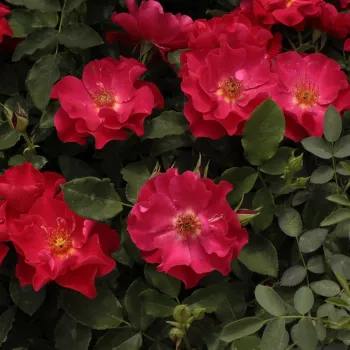
Consistent height and spread create a unified block of ruby-red clusters; once established, routine feeding and pruning are straightforward, so you gain a strong visual statement without complex shaping for time-poor beginners |
| Statement container on hard landscaping |
In a 40–50 litre pot with good drainage, this rose offers a structured, repeat-flowering accent on patios or paved front gardens, where you can control soil quality and watering more easily than in difficult ground for balcony-and-courtyard users |
| Family garden edging with colour |
Moderate height and dense foliage form a soft boundary along lawns or play areas, adding bright flower clusters and seasonal hips while remaining compact enough to keep sightlines open for family-focused gardeners |
| Seasonal hip and winter-interest corner |
After flowering, the orange-red spherical hips bring subtle colour and structure into late autumn, extending visual interest beyond summer and pairing well with grasses or seedheads for four-season enthusiasts |
Styling ideas
- TerraceWelcome – Line a short front path with ANNA MÈGE™ and low Nepeta x faassenii for a soft, ruby-and-lilac edging – ideal for small London terraces wanting gentle formality.
- UrbanRibbon – Create a continuous strip of ANNA MÈGE™ along a drive, underplanted with drought-tolerant sage to tie paving and planting together – suitable for practical, design-aware homeowners.
- CrimsonPocket – Use a single, large 50-litre container by the doorstep with ANNA MÈGE™ underplanted with trailing thyme – perfect for renters or balcony users needing movable colour.
- GirlyBorder – Combine ANNA MÈGE™ with Clematis montana ‘Elizabeth’ on a fence and airy grasses at the front for a soft, romantic frontage – appealing to those who like feminine, cottage-style planting.
- SeasonShift – Mix ANNA MÈGE™ with nepeta and late-flowering perennials so hips and seedheads carry the display into winter – for gardeners who value subtle, year-round structure.
Technical cultivar profile
| Parameter | Data |
|---|
| Name and registration |
Modern Shrub rose; commercial bed rose. Registered as MASanme, marketed as Anna Mège™ Les Églantelles® MASanme. Part of the Les Églantelles® collection, exhibition category shrub rose. |
| Origin and breeding |
Bred by Dominique Massad, France, from an unknown seedling × ‘Pierre de Ronsard’. Developed at Pétales de Roses, Doué-la-Fontaine; introduced and distributed in France from 2012. |
| Growth and structural characteristics |
Bushy, medium-height shrub reaching about 85–115 cm high and 65–95 cm wide. Moderately thorny canes with dense, slightly glossy dark green foliage, forming a full yet compact outline in beds. |
| Flower morphology |
Semi-double, cluster-flowered blooms with 13–25 petals, medium-sized (approx. 4–7 cm). Flat, open form on repeat-flowering trusses, providing abundant first and strong second flushes through the season. |
| Colour data and phenology |
Dark ruby-red, cool-toned petals with velvety sheen; intense crimson when opening, softening to raspberry-red with darker centres and slightly blackish-maroon edges while maintaining an overall deep red impression. |
| Fragrance and aroma |
No noticeable scent; assessed as an unscented rose. Best suited where colour, structure and repeat flowering are priorities and fragrance is secondary, such as near streets or busy family garden areas. |
| Hip characteristics |
Moderately abundant spherical hips, about 8–12 mm in diameter. Orange-red colouring provides additional late-season interest and subtle wildlife value once the main flowering period has passed. |
| Resistance and winter hardiness |
Hardy to approximately −21 to −18 °C (RHS H7; Swedish zone 3; USDA 6b). Disease sensitivity moderate to high, especially rust; regular monitoring and appropriate plant protection are recommended. |
| Horticultural recommendations |
Best in full sun with fertile, well-drained soil. Space 50–90 cm depending on use, giving 3.3–3.8 plants/m² for mass planting. Maintain a preventive fungicide programme and prune annually to renew flowering wood. |
ANNA MÈGE™ offers compact structure, repeat crimson colour and seasonal hips on a durable own-root plant that suits long-term, easy-going family gardens, making it a thoughtful choice for those planning ahead.