AMBROISE PARÉ – pink historical Gallica rose - Vibert
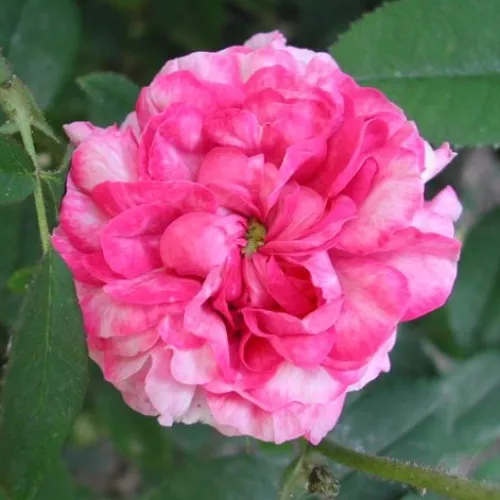
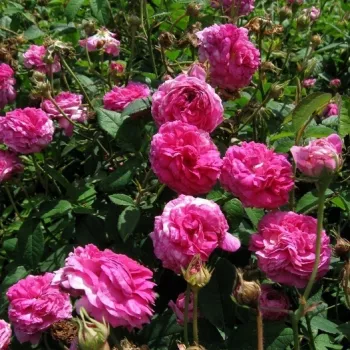
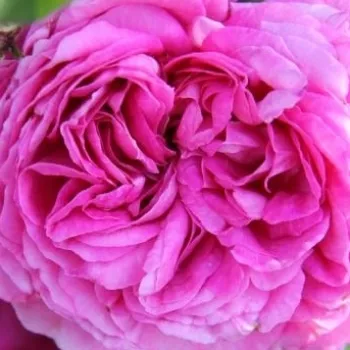
Step onto your city front path after rain and breathe in the fragrance of ‘Ambroise Paré’, a tall, upright Gallica rose that feels perfectly at home in compact, sustainable gardens where drainage copes calmly with frequent showers and blustery winds. Its once-a-year summer display is a concentrated moment of beauty, with richly marbled violet-pink blooms that age through softer pastel shades, providing a changing palette against brick, railings or evergreen structure. As a historical rose with a reputation for longevity, it is well suited to own-root planting, settling in steadily and then rewarding you with a stable outline and reliable seasonal structure. The flowers carry a strong, spicy-rose perfume that makes even a narrow London front garden feel like a scented walk, while its bushy, vertical habit creates privacy and a soft, romantic frame around doors and windows.
Usage options
| Target area | Reasoning |
|---|
| Terraced-house front boundary hedge |
A tall, bushy and upright habit allows ‘Ambroise Paré’ to form a characterful, semi-formal hedge along low railings or a narrow front boundary, creating a scented screen in June without needing constant clipping; ideal for busy urban gardeners |
| Statement specimen near the front door |
Planted as a single specimen at the recommended spacing, its once-blooming flush of richly marbled flowers creates a memorable summer focal point and a strong sense of place, yet maintenance remains moderate and predictable for beginner homeowners |
| Mixed shrub border with perennials |
The medium spread and vertical framework slip easily into mixed borders, where historic charm, strong fragrance and good self-cleaning combine with underplanting such as lavender, sage or nepeta to reduce weeding and support a calm, natural look for low-maintenance gardeners |
| Rain-aware front garden planting strip |
The deep, own-root system develops steadily and helps anchor the shrub in exposed, rain-washed strips, supporting stable growth where traditional lawn would struggle and aligning well with front gardens designed to handle frequent wet spells for sustainability-minded owners |
| Informal historic-style rose bed |
Once established, its long-lived woody framework delivers the same height and outline year after year, making it easy to design historically inspired beds where structural reliability matters more than constant deadheading, which suits heritage-rose enthusiasts |
| Partially shaded side return |
Suitability for partial shade allows planting in side returns or between buildings where sun is limited, while the strong scent helps this tucked-away space feel inviting during its flowering period, a practical benefit for space-constrained city gardeners |
| Wildlife-leaning family garden corner |
Although highly double blooms offer limited nectar, the shrub still contributes shelter and seasonal hips in autumn, and its robust height provides perching and cover, supporting a layered planting approach that appeals to nature-aware families |
| Large container by entrance (40–50 L+) |
In a substantial 40–50 litre container, its upright form and strong perfume can be enjoyed close-up without taking ground space, while own-root resilience supports long-term container culture when combined with careful watering and feeding for courtyard and balcony owners |
Styling ideas
- Victorian-porch – Pair ‘Ambroise Paré’ with lavender and sage at its feet for a softly scented, period feel framing a townhouse door – ideal for heritage-loving city dwellers
- Rain-garden – Line a permeable gravel strip with this rose and low nepeta, letting runoff soak in while the tall blooms provide colour and scent – suited to sustainability-focused homeowners
- Pink-ensemble – Combine with Waldsteinia ternata and Pachysandra terminalis to carpet the base in green and gold beneath the violet-pink rosettes – perfect for romantic front gardens
- Formal-edge – Use a low Lonicera nitida ‘Maigrün’ hedge in front, with ‘Ambroise Paré’ rising behind as a loose, flowering wall – good for those wanting structure without fuss
- Cottage-strip – Underplant with self-seeding annuals and pastel perennials along a front path, letting the rose provide height and June drama – appealing to relaxed, cottage-style gardeners
Technical cultivar profile
| Aspect | Data |
|---|
| Name and registration |
Historical Gallica rose marketed as Ambroise Paré, originating from Vibert’s heritage collection; unregistered cultivar widely accepted in heritage circles and listed in the historic Gallica exhibition category. |
| Origin and breeding |
Bred in France around 1845 by Jean-Pierre Vibert and introduced in 1846; parentage is unknown, reflecting many early Gallica roses with long garden histories and limited formal breeding records. |
| Growth and structural characteristics |
Bushy, upright shrub reaching about 150–210 cm high and 80–120 cm across, with moderately dense, matt mid-green foliage and dense prickles, forming a tall, characterful framework in beds or hedges. |
| Flower morphology |
Medium-sized, very double rosette blooms with over 40 petals, carried in clusters; once-flowering in early summer, with good self-cleaning as most petals fall away naturally after the main display. |
| Colour data and phenology |
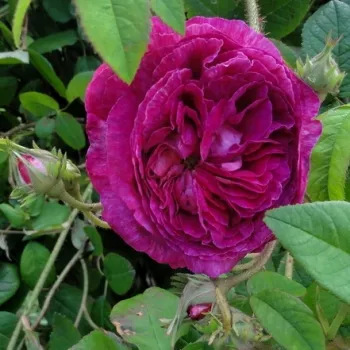
Vivid lilac-pink base softened by mauve tones; buds deep crimson-pink, opening to purplish-pink with darker striping, then softening to pastel pink, and finally lightening markedly in strong sun towards whitish pink. |
| Fragrance and aroma |
Strong, distinctly scented rose with a spicy character typical of old Gallicas, designed to be noticed on warm, still days and particularly effective when planted where you pass close by. |
| Hip characteristics |
Hip set is usually light due to very double flowers, though any produced are spherical, bright red hips about 10–15 mm across, adding a modest autumnal accent in suitable seasons. |
| Resistance and winter hardiness |
Rated to approximately –32 to –29 °C (RHS H7, USDA 4b, Swedish zone 5); disease resistance moderate overall, with good black spot resistance and moderate susceptibility to powdery mildew and rust. |
| Horticultural recommendations |
Best in well-drained soil with regular watering during dry spells; plant 85–95 cm apart in hedges or mass plantings, or 170 cm as a specimen, with medium maintenance and occasional pest or disease checks. |
AMBROISE PARÉ offers tall, fragrant historic charm with once-a-year drama, reliable long-term structure and the regenerative security of an own-root shrub; a thoughtful choice if you enjoy characterful roses that quietly earn their space.