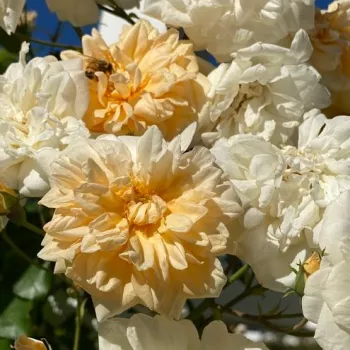
ALISTER STELLA GRAY – pale yellow rambler climbing rose - Gray & Dickson
Imagine brushing past a curtain of buttery blooms after rain, their soft tea-and-fruit fragrance hanging in the air as you walk along a narrow path that stays welcoming even in wind-washed, changeable weather. Alister Stella Gray is an easy-going, long-lived climbing rambler that settles happily into small London front gardens or family plots without demanding expert care, ideal where you prefer collecting rainwater and letting the garden quietly look after itself. Its remontant habit gives generous waves of flowering, while heat- and drought-tolerant growth keeps foliage healthy and glossy through typical urban dry spells. Own-root vigour supports a dependable framework of canes for arches, pergolas and sunny walls, and over time you will notice a calm rhythm: roots establishing in year one, shoots building structure in year two, and by year three the rose offering full, balanced ornamental presence. Easy deadheading and light annual pruning are enough to maintain an airy, romantic screen that sits comfortably within a sustainable, low-fuss city garden.
Usage options
| Target area | Reasoning |
|---|
| Front-garden pergola in a small terraced plot |
Remontant flowering gives two main flushes of soft lemon-yellow, then creamy clusters, so a compact front pergola feels welcoming for much of the season with little more than tying-in and light deadheading – reassuring for the beginner. |
| Sunny house wall or fence in a family garden |
Strong heat and drought tolerance means this climber copes well against warm brickwork where soil may dry quickly, staying leafy and balanced in a typical urban microclimate – helpful for the busy gardener. |
| Rainwater-conscious city garden with heavier soil |
The robust own-root system and moderate vigour suit gardens where you rely on stored rain and occasionally heavy, moisture-retentive ground, provided drainage is improved with grit or compost – reassuring for the sustainability-minded. |
| Romantic side path or archway “walk-through” feature |
Medium-strength tea-and-fruity fragrance and manageable flower size create an enveloping yet not overpowering scented tunnel, ideal for narrow paths where you want everyday pleasure from brushing past blooms – perfect for the sensory gardener. |
| Low-maintenance family seating or play area backdrop |
Good resistance to powdery mildew, black spot and rust keeps foliage attractive with minimal spraying, so a relaxed seating or play corner remains appealing and easy to manage – ideal for the time-poor owner. |
| Specimen pillar or obelisk in a mixed border |
Moderately dense, glossy mid-green foliage and a graceful climbing habit allow neat training around a pillar, giving vertical interest without overwhelming neighbouring perennials – a good choice for the design-conscious gardener. |
| Large container by a front door or balcony edge |
In a 40–50 litre or larger pot with quality peat-free compost and regular watering, its own-root resilience supports long-term use, offering a refined, gently scented welcome near entrances – appealing to the urban dweller. |
| Traditional cottage-style mixed planting |
The small, semi-double, clustered flowers fit naturally among cottage perennials, and colour-softening from buttery yellow to cream blends well without clashing, even in tighter spaces often exposed to coastal breezes – comforting for the home gardener. |
Styling ideas
- Front-Door Arch – Train Alister Stella Gray over a slim metal arch with lavender or nepeta at the base for soft fragrance at two levels – ideal for busy London homeowners wanting charm with little upkeep.
- Creamy-Citrus Wall – Pair its pale yellow clusters on a south-facing wall with violet Salvia nemorosa and airy Bupleurum for a cool, upright contrast – suited to design-aware small-garden owners.
- Evening Pergola – Let stems weave loosely over a simple pergola, underplanted with white gaura and soft grasses so the tea-scented flowers glow in low light – for those who unwind outdoors after work.
- Cottage-Style Corner – Combine this rambler on a wooden pillar with Crocosmia ‘Lucifer’ and old-fashioned herbs to create a nostalgic nook in even a compact plot – perfect for romantic, low-tech gardeners.
- Container Screen – Grow it in a 50-litre half-barrel with peat-free compost and a slim trellis, softening balcony railings or bin stores – ideal for urbanites seeking gentle privacy without major construction.
Technical cultivar profile
| Parameter | Data |
|---|
| Name and registration |
Alister Stella Gray, also known as Alexander Hill Gray; historic rambler / climbing rose grown as a shrub-climber for pergolas and wall systems; unregistered but established in specialist and heritage collections. |
| Origin and breeding |
UK-bred from ‘William Allen Richardson’ × ‘Madame Pierre Guillot’; attributed to Alexander Hill Gray and Alexander Dickson II; introduced by A. Paul & Son, Dickson & Sons and Arthur Yates & Co. from 1894. |
| Growth and structural characteristics |
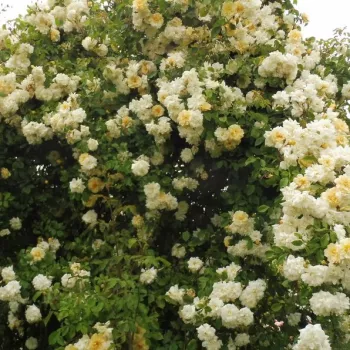
Rambling climbing rose with moderately dense, glossy mid-green foliage; height around 200–360 cm, spread 200–400 cm; moderately thorny canes suitable for training on arches, pillars, fences and small pergolas. |
| Flower morphology |
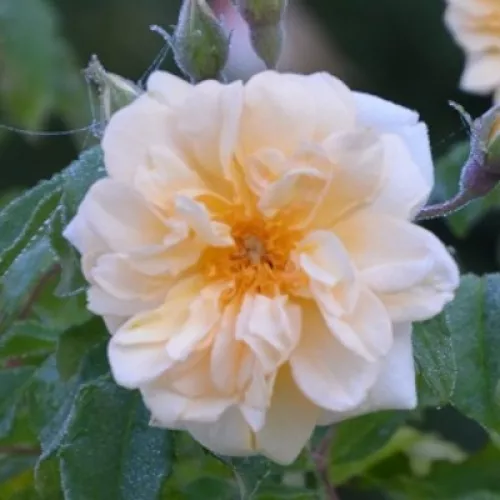
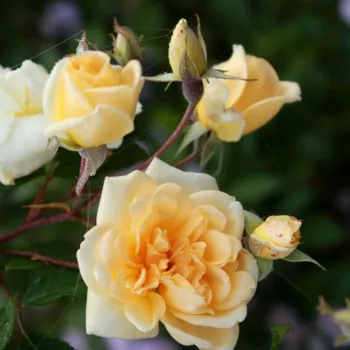
Clustered, small S-sized, semi-double, cup-shaped blooms with about 13–25 petals; remontant with an abundant second flush; weak self-cleaning so faded flowers often remain and benefit from later deadheading. |
| Colour data and phenology |
Buds egg-yellow, opening buttery lemon (RHS 8C outer, 11D inner) then fading to creamy white; colour lightens faster in strong sun; overall effect pale yellow softening to cream, gentle in mixed plantings. |
| Fragrance and aroma |
Medium-strength, well-scented flowers with a soft tea character and light fruity notes; fragrance best appreciated at close range along paths, seating areas, doorways or other walk-by positions in the garden. |
| Hip characteristics |
Rose hip formation is typically sparse, with only occasional small hips developing; ornamental value is primarily from repeat-flowering clusters rather than prominent or persistent autumn fruit. |
| Resistance and winter hardiness |
Rated resistant to powdery mildew, black spot and rust; excellent heat and drought tolerance once established; hardy to about –26 to –23 °C (RHS H7, USDA 5b, Swedish zone 4) in normal garden conditions. |
| Horticultural recommendations |
Best on well-drained but moisture-retentive soil; tolerates partial shade; low maintenance with simple annual pruning and tying-in; recommended spacing about 225–380 cm depending on use and desired coverage. |
ALISTER STELLA GRAY offers refined repeat flowering, reliable heat- and disease-tolerant growth and long-term own-root resilience, making it a thoughtful choice if you want a quietly elegant, low-effort climbing rose.