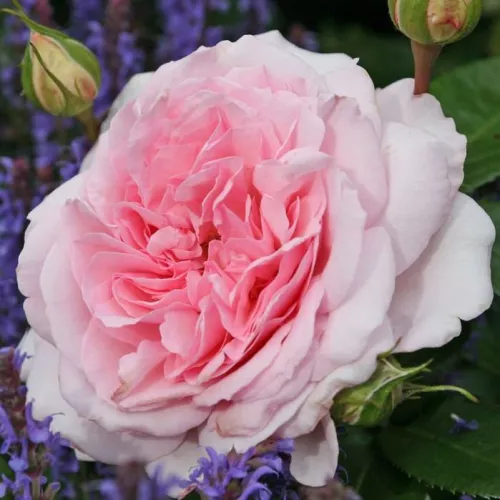
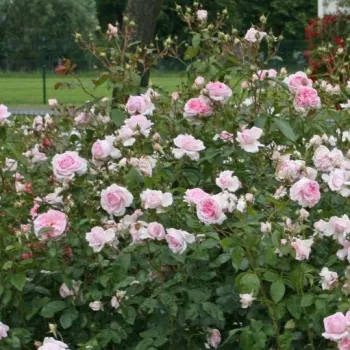
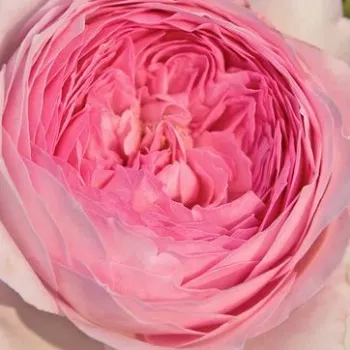
ALEXANDRA - P. DE LUXEMBOURG ® – salmon-pink hybrid tea rose
Imagine stepping out after rain along a narrow path edged with roses, as clusters of warm salmon blooms release a fruity sweetness that hangs in the cool air. Alexandra – P. de Luxembourg® forms a neat, bushy structure ideal for compact London front gardens and urban beds, coping reliably even where wet weather and heavy soil create extra pressure on planting. Its repeat-flowering habit keeps the display going from early summer well into autumn, and with simple seasonal deadheading it stays neat with minimal effort. As an own-root plant it settles in steadily, building a long-lived, resilient framework that can regenerate from the base and offer stable ornamental value year after year, moving from root establishment to confident growth and finally a full, romantic presence in about three seasons, supporting a calm, sustainable garden balance.
Usage options
| Target area |
Reasoning |
| Front garden feature rose |
The upright yet compact habit and large, classic hybrid tea blooms make Alexandra – P. de Luxembourg® an ideal focal point by a front door or bay window, offering strong scent and clear structure without dominating a small plot, well suited to the busy urban homeowner. |
| Low, formal rose border |
Its bushy, evenly branched framework and repeat flowering lend themselves to short, formal rows along a path or drive, giving a structured look with less pruning complexity than taller roses, appealing to the beginner gardener. |
| Specimen in large container (40–50 litres+) |
Planted in a generous, well-drained container of at least 40–50 litres, this own-root rose builds a durable root system, making it a long-lived, movable feature for paved front gardens or balconies that appeals to the space-conscious city dweller. |
| Mixed border with perennials |
The warm salmon-pink flowers blend elegantly with soft blues and silvers such as lavender, sage or nepeta, while the mid-green foliage fills gaps, creating an easy, romantic mix for the style-aware home gardener. |
| Rain-conscious clay or chalk garden |
With a robust bushy frame and reliable remontant flowering, Alexandra – P. de Luxembourg® performs well where frequent rain and dense, improved clay or chalky soils can challenge fussier roses, giving confidence to the climate-aware planter. |
| Scented seating-area planting |
The strong, sweet-fruity perfume is released fully in still evening air, making this rose perfect beside a bench or patio where a few shrubs can create a luxurious atmosphere for the fragrance-loving owner. |
| Long-term, low-replacement planting |
As an own-root rose it ages slowly and can regenerate from its base if cut back after damage, reducing the need for periodic replacement and suiting those planning a garden for decades, especially the long-view gardener. |
| Structured hedge or line of roses |
At roughly 80–105 cm high with dense foliage, Alexandra – P. de Luxembourg® forms an even, low hedge when spaced correctly; moderate care and regular deadheading maintain a smart outline for the order-loving gardener. |
Styling ideas
- Regal Welcome – Line a narrow terraced-house path with single specimens underplanted with low lavender for a fragrant, princess-inspired entrance – ideal for urban front-garden owners.
- Balcony Salon – Grow one plant in a 50-litre clay pot with airy grasses to soften railings and enjoy strong evening scent – perfect for flat-dwellers with limited space.
- Storybook Border – Combine with nepeta, soft pink salvias and small ornamental grasses for a fairy-tale, “girly” planting – suited to families wanting a charming, low-fuss border.
- Rain-Garden Ribbon – Plant a gently curving row along a gravel strip that channels roof run-off, pairing with drought-tolerant perennials – for eco-minded gardeners managing rainwater elegantly.
- Elegant Trio – Group three plants in a triangle in front of evergreen shrubs to create a long-flowering, structural focal point – ideal for homeowners seeking simple but polished design.
Technical cultivar profile
| Property |
Data |
| Name and registration |
Hybrid tea rose, registered as KORjuknei, marketed as Alexandra – P. de Luxembourg® within the MärchenRosen® collection; ARS exhibition name Alexandra Princesse de Luxembourg. |
| Origin and breeding |
Bred in Germany around 2000 by Tim-Hermann Kordes; registered in 2012 and introduced after 2012, with parentage and initial distribution details not publicly documented. |
| Awards and recognition |
Recipient of a silver medal at the Kortrijk International Rose Competition, alongside further awards at other international trials, confirming ornamental and garden performance value. |
| Growth and structural characteristics |
Bushy, medium-height shrub reaching about 80–105 cm tall and 50–70 cm wide, with dense, slightly glossy mid‑green foliage and moderate prickles, forming a compact, well-filled framework. |
| Flower morphology |
Large, double, rosette-shaped blooms with roughly 26–39 petals, usually borne in small clusters; remontant habit with a notably generous second flush prolonging the flowering season. |
| Colour data and phenology |
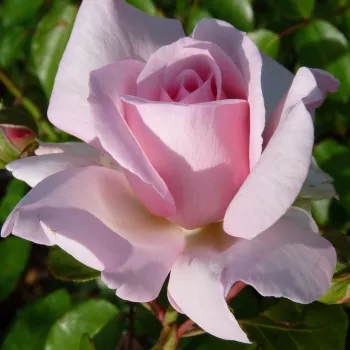
Clear, warm salmon-pink flowers with a soft coral tinge; buds deepen toward the tip, then open paler before reaching vivid salmon and finally fading to pastel tones with creamy petal edges. |
| Fragrance and aroma |
Strongly scented hybrid tea rose with a distinctively sweet, fruity character; fragrance is noticeable at a short distance and particularly effective when planted near paths or seating. |
| Hip characteristics |
Rose hips form only sparsely because of the double blooms and good self-cleaning; occasional small, ellipsoidal, orange‑red hips 8–12 mm across may develop late in the season. |
| Resistance and winter hardiness |
Hardy to approximately −29 to −26 °C (RHS H7, USDA 5a, Swedish Zone 4); disease resistance moderate overall, with good resistance to black spot and rust, but only moderate to powdery mildew. |
| Horticultural recommendations |
Best in full sun with well-drained but moisture-retentive soil; suitable for borders, specimens or large containers, spaced 45–90 cm apart depending on use, with periodic deadheading advised. |
ALEXANDRA - P. DE LUXEMBOURG ® offers strong fragrance, compact structure and reliable repeat flowering on a durable own-root framework, making it a thoughtful choice for long-term, low-fuss planting.