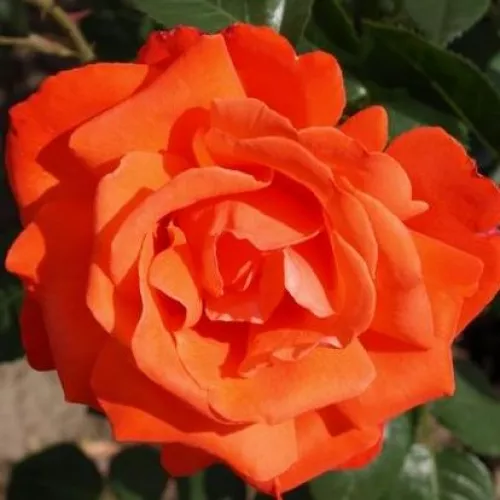
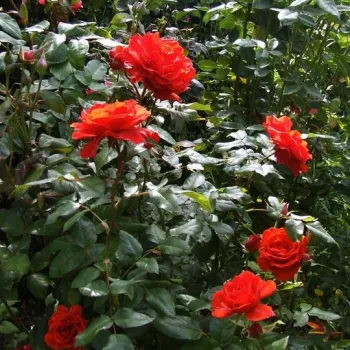
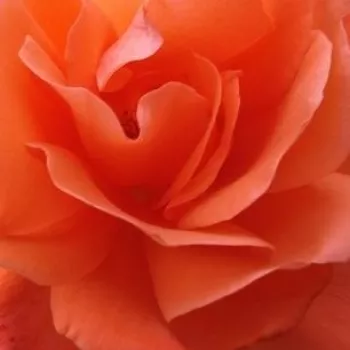
ALEXANDER™ – orange-red hybrid tea rose – Harkness
Bring structure and colour to a compact front garden with the vivid, orange-red blooms of ALEXANDER™, a tall, upright hybrid tea rose bred for reliable performance and long-term garden structure. Its balanced habit suits narrow London terraces and small beds, coping well with breezy, damp conditions and typical British rainfall while still flowering steadily from early summer into autumn. As an own-root plant, it offers reassuring longevity, regenerating from the base if stems are damaged and maintaining stable ornamental value over many years. In the first season it concentrates on roots, in the second on taller shoots, and by the third delivers its full ornamental impact with masses of elegant blooms for cutting. Moderate disease resistance and medium maintenance needs keep care straightforward: prune once a year, water wisely, and manage drainage where soils are heavy clay for a resilient, sustainable display in your family garden.
Usage options
| Target area | Reasoning |
|---|
| Single feature rose in a small front garden |
The tall, upright habit and vivid orange-red flowers create an immediate focal point in modest urban plots without needing complex design, giving strong visual structure from one well-placed plant for the beginner-gardener. |
| Cutting rose for home arrangements |
Long, straight stems with classic, high-centred blooms make this variety ideal for cutting, providing elegant flowers with good vase life so you can enjoy the same colour and form both indoors and out as a home-florist. |
| Season-long flower bed in a family garden |
Remontant flowering with an abundant second flush keeps beds lively from early summer to autumn; a simple routine of deadheading and feeding rewards you with consistent colour through school holidays for the busy family-gardener. |
| Own-root planting for long-term reliability |
Grafted unions are absent, so the plant grows from its own roots, helping it recover from winter damage or pruning mistakes and preserving its true character over time, ideal peace of mind for the cautious new-owner. |
| Structured hedge or boundary row |
The upright, balanced growth allows evenly spaced plants to form a loose, formal line that frames paths or driveways, giving height without overwhelming narrow spaces, appreciated by the space-conscious town-gardener. |
| Resilient planting in exposed or damp locations |
Moderate disease resistance and a robust frame suit typical British conditions with wind and frequent showers, provided drainage is adequate on heavier soils, making upkeep manageable for the weather-aware urban-gardener. |
| Container rose on patio or front step |
In a 40–50 litre pot with peat-free compost and regular watering, its vertical habit and repeat blooms give height and colour in tight spaces, ideal for renters or balcony spaces where ground planting is not possible for the flat-dweller. |
| Low-input, long-lived structural planting |
Once established, the combination of own-root vigour, hardy top growth and dependable rebloom means only annual pruning, feeding and occasional protection are needed, suiting the time-limited but quality-focused hobby-gardener. |
Styling ideas
- Terrace-centrepiece – Plant one ALEXANDER™ in a circular bed by the front gate, underplant with lavender and nepeta to soften the base – ideal for design-conscious city homeowners.
- Sunset-border – Combine its vivid orange-red blooms with Crocosmia and bronze grasses for a warm, glowing summer palette – suited to creative family gardeners wanting evening impact.
- Formal-ridge – Line a short front path with evenly spaced plants, edging with low sage or lobelia to highlight the upright structure – perfect for those seeking simple, classical order.
- Balcony-feature – Grow in a 50 litre container with peat-free mix and trailing lobelia, using stored rainwater for irrigation – made for sustainability-minded flat or maisonette gardeners.
- Cutting-corner – Dedicate a small sunny patch to ALEXANDER™ with obedient plant as a cool contrast, ensuring a steady supply of stems for vases – great for home florists who love home-grown arrangements.
Technical cultivar profile
| Property | Data |
|---|
| Name and registration |
Hybrid tea rose, shrub type; registered as HARlex, marketed as ALEXANDER™ – orange-red hybrid tea rose – Harkness; ARS exhibition name Alexander for show and cut-flower use. |
| Origin and breeding |
Bred by Jack L. Harkness (UK) from ‘Tropicana’ × (‘Ann Elizabeth’ × ‘Allgold’); introduced in 1972 by R. Harkness Roses & Co. Ltd. and widely proven in temperate European gardens. |
| Awards and recognition |
Highly decorated cultivar: RNRS Certificate of Merit, ADR status, multiple Gold Medals including Hamburg and Belfast, RNRS James Mason Gold Medal, and RHS/RNRS Award of Garden Merit for garden performance. |
| Growth and structural characteristics |
Tall, upright shrub reaching about 145–195 cm high and 85–115 cm wide, with moderately dense, light green foliage and plentiful prickles; forms strong vertical stems suited to hedging and specimen planting. |
| Flower morphology |
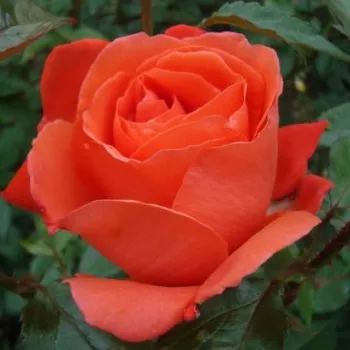
Medium-sized, double blooms with around 26–39 petals, borne mainly singly on stems; classically cupped, medium high-centred hybrid tea form, repeat-flowering with particularly abundant second flush in season. |
| Colour data and phenology |
Vivid orange-red flowers (RHS 34A–34B) with subtle vermilion tones; buds open deep and bright, then gradually soften to a salmon-orange pastel while generally holding colour well through the flowering period. |
| Fragrance and aroma |
Mild, delicately scented rose fragrance with a soft character; perceptible at close range without being overpowering, making it comfortable near seating areas or paths where strong perfume might be intrusive. |
| Hip characteristics |
Limited hip set due to full, double flowers; occasional orange-red, egg-shaped hips around 12–18 mm may develop late season, adding a subtle ornamental touch without significant wildlife food value. |
| Resistance and winter hardiness |
Hardy to approximately –21 to –18 °C (RHS H7; USDA 6b); good resistance to powdery mildew and black spot, moderate rust susceptibility; tolerates warm spells but needs watering during extended dry periods. |
| Horticultural recommendations |
Best in sunny or lightly shaded beds with fertile, well-drained soil; spacing 60–110 cm depending on use; medium maintenance with annual pruning, feeding, and occasional protection in high disease-pressure seasons. |
ALEXANDER™ offers upright structure, reliable repeat flowering and long-lived own-root resilience, making it a thoughtful choice for gardeners seeking lasting colour with manageable care.