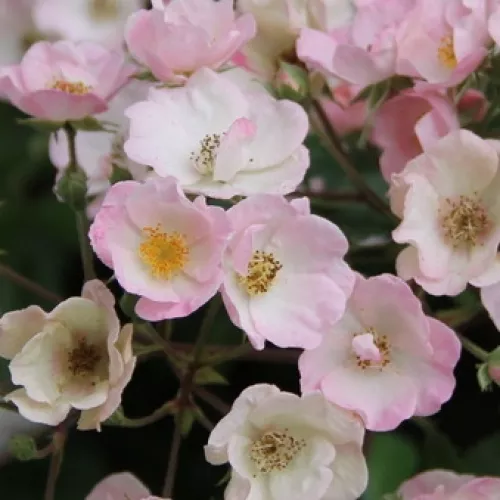
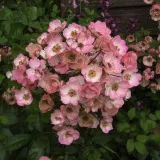
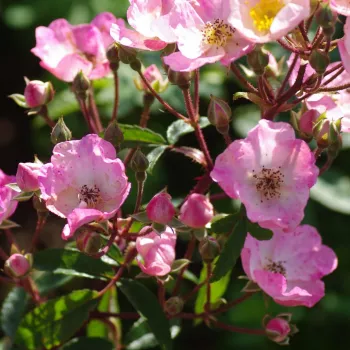
ALDEN BIESEN – light pink park rose - Lens
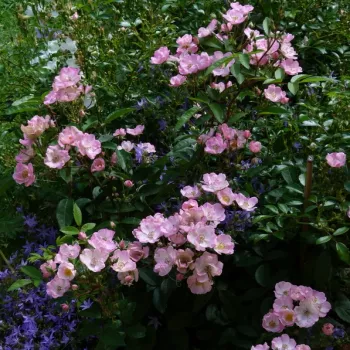
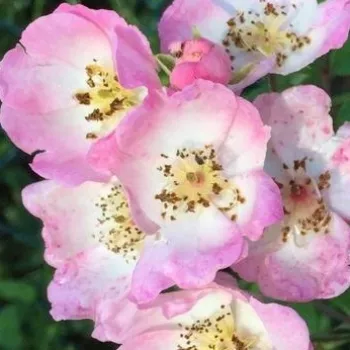
Imagine a London front garden after rain, where a narrow path leads past delicate pastel-pink clusters and deep green foliage that cope steadily with breezy, damp weather and heavier soils in typical British plots. ALDEN BIESEN settles in as an easy, upright shrub, quietly building a reliable framework that asks for little more than planting, watering and the occasional tidy. As an own-root rose it develops from strong roots into balanced structure and finally full garden presence, giving you a long-lived feature without graft worries or sudden decline. The small, single to semi-double flowers open a soft, light pink, then mellow towards greenish-white, creating a gentle, ever-changing texture against hedges, railings or mixed borders. With its low need for spraying and trimming, this is a practical choice if you prefer a more natural, rainwater-friendly garden that still feels quietly elegant.
Usage options
| Target area | Reasoning |
|---|
| Front-garden hedge for terraced houses |
Compact, upright growth and dense foliage make ALDEN BIESEN ideal as a soft, flowering hedge along railings or paths, creating privacy and structure without dominating a small front plot, well suited to the busy urban gardener. |
| Low-maintenance mixed border |
The shrub’s steady repeat-flowering and healthy leaves give reliable colour and greenery with minimal pruning or spraying; it anchors perennials and bulbs so the border looks cared for even when you have little time, perfect for the relaxed hobby gardener. |
| Rainwater-friendly family garden |
Once established, the rose responds well to regular but simple watering, working happily with mulched beds and soakaway strips so you can slow and use rain runoff rather than paving over, a good fit for the sustainability-minded homeowner. |
| Clay or chalky suburban plots |
The robust root system and park-rose breeding help it settle into ordinary garden soils, including heavier clays and lighter chalk that drain steadily but not perfectly, suiting the typical UK garden owner. |
| Statement shrub in a small lawn |
Planting one specimen with space around it allows the rounded, slightly spreading framework to develop fully, giving year-round structure and soft seasonal colour without needing complex shaping, appealing to the design-conscious beginner. |
| Informal flowering screen by seating areas |
The generous clusters of small, soft-pink blooms repeat over the season, offering a gentle backdrop to a bench or patio, while the slightly glossy foliage reads as fresh and green from spring to autumn for the outdoor-living family. |
| Own-root, long-term garden investment |
As an own-root shrub it thickens gradually, reshooting from the base if stems are damaged and maintaining its ornamental value over many years with only light renewal pruning, reassuring for the future-focused planter. |
| Urban green strip or shared front border |
Designed as a park rose, it performs well in communal or street-side beds, offering tidy structure, dependable health and repeat bloom in exposed, wind-brushed spots familiar to many city streets, ideal for the community-minded gardener. |
Styling ideas
- Gentle hedge rhythm – Plant a loose row along a front path, underplant with low lavender or nepeta to contrast the soft pink with cool blue and purple, ideal for terrace-house owners wanting calm structure.
- Cottage-layered border – Use ALDEN BIESEN mid-border with foxgloves and campanulas in front and a small ornamental tree behind for height, suited to gardeners who like relaxed, traditional planting without high upkeep.
- Green-and-pink calm – Combine with hostas, ferns and white flowering perennials to create a soothing, foliage-led palette where the rose adds gentle colour, perfect for those seeking a restful space after work.
- Family lawn focal point – Give one shrub a circular bed edged with sage or hardy geraniums so children can walk around it and watch it mature year by year, appealing to families wanting a simple, engaging garden feature.
- Urban rain garden strip – Set the rose in a permeable gravel-mulched bed with drought-tolerant perennials and a hidden soakaway to capture roof runoff, for eco-conscious city dwellers turning paving into planting.
Technical cultivar profile
| Trait | Data |
|---|
| Name and registration |
Registered as LENgrati, marketed as Alden Biesen in the Park - shrub rose group; a Hybrid Musk shrub rose with exhibition category as a shrub for landscape and display garden use. |
| Origin and breeding |
Bred by Louis Lens in Belgium from ‘Pleine de Grâce’ × ‘Pretty Pink’; registered in 1989 and introduced in 1996 by Lens Roses and Pépinières Louis Lens SA as a park and landscape shrub. |
| Awards and recognition |
Recognised in major European trials: Certificates of Merit at Kortrijk, Genoa and Geneva in the mid-1990s, plus a Gold Medal at the 1998 Geneva International Rose Trials, confirming reliable garden performance. |
| Growth and structural characteristics |
Upright to slightly spreading shrub, about 120–190 cm tall and 150–250 cm wide, with dense, dark green, slightly glossy foliage and moderate prickliness, suited to hedging, borders and specimen planting. |
| Flower morphology |
Small, single to semi-double clusters with about 5–12 petals and flat form; repeat-flowering with a notably generous second flush, though spent blooms may need occasional deadheading because self-cleaning is weak. |
| Colour data and phenology |
Light marzipan-pink flowers (RHS 65C–65D) with paler centres; pastel buds open to uniform light pink, then fade towards greenish white, especially in strong sun, creating a soft, changing effect across the shrub. |
| Fragrance and aroma |
No noticeable scent; this variety is grown primarily for its repeat clusters of soft pink flowers and strong shrub framework rather than perfume, making it useful where colour and structure matter more than fragrance. |
| Hip characteristics |
Hip set is generally limited due to the flower form, though occasional small, egg-shaped orange-red hips about 10–15 mm across may appear, adding a modest seasonal accent in late summer or early autumn. |
| Resistance and winter hardiness |
Very good disease resistance to black spot, powdery mildew and rust; hardy to around −21 to −18 °C (RHS H7, roughly USDA 6b), with moderate heat and drought tolerance when watered consistently in dry spells. |
| Horticultural recommendations |
Best in borders, hedges, parks or as a specimen; plant about 120–220 cm apart depending on use, in well-drained soil, with at least a 40–50 litre container if grown in a large pot, and prune lightly to maintain shape. |
ALDEN BIESEN offers soft, repeat light-pink bloom, dependable health and long-lived own-root growth that matures into a stable garden framework, a thoughtful choice if you value calm structure and low-effort planting.