ALBERTINE – salmon-pink historic rambler-climbing rose – Barbier
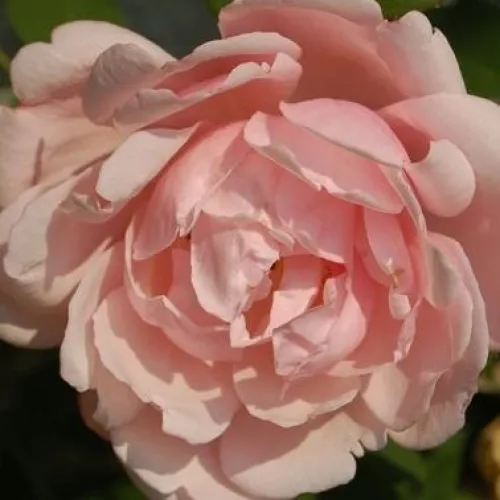
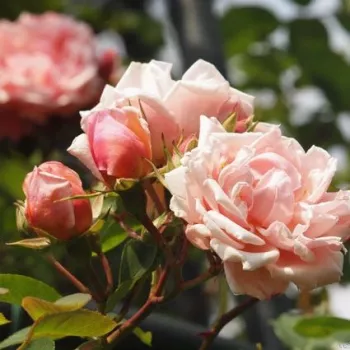
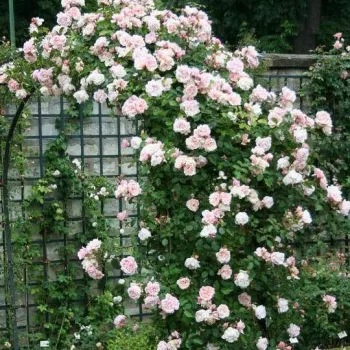
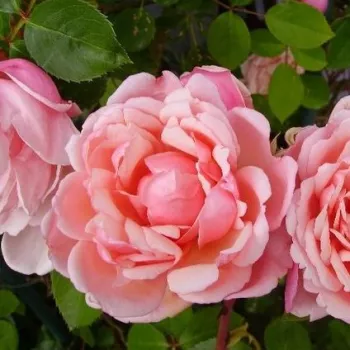
This celebrated historic rambler brings a sweep of romantic colour and a strong, far-carrying fragrance to pergolas, arches and walls, even in typical British conditions with wind and showers testing less robust plants. ALBERTINE’s dense, glossy dark-green foliage forms a lush backdrop to early-summer clusters of cupped salmon-pink blooms that age gently to softer pastel tones, keeping your front garden welcoming from pavement to doorstep. As an own-root rose it offers reassuring longevity, regrowing faithfully from its own wood after hard pruning and helping you avoid the worries of graft failure over time. Once settled, this vigorous climber is surprisingly resilient, with good hardiness and resistance to common rose troubles, so routine care rather than specialist attention is all it usually needs. In the first year it focuses on rooting, the second on building structure, and by the third it reveals its full historic character as a mature, balanced feature in a rainwater-conscious, sustainable town garden.
Usage options
| Target area | Reasoning |
|---|
| Rainwater-friendly London front garden arch |
Train ALBERTINE over a simple metal or wooden arch to frame a narrow path, using captured rainwater for deep, occasional watering so the plant establishes well and then manages on modest input for busy urban gardeners seeking ease |
| Family pergola or seating arbour |
Its strong, fruity perfume and masses of double blooms create a seasonal “ceiling” above family benches or small dining sets, with dense foliage giving privacy and shade while needing only periodic pruning to keep growth in check for scent-loving households |
| Climbing feature on a sunny terrace wall |
This vigorous climber covers bare brick or fencing quickly, tolerating heat off hard surfaces and moderate dry spells once established, while its historic character softens hard architecture for design-conscious city owners |
| Screening between neighbouring town gardens |
Planted along a boundary with space to spread, its dense leaf canopy and long canes form a living partition that filters views and wind, with medium maintenance limited mainly to guiding and tying-in, suiting privacy-focused garden residents |
| Cottage-style mixed border backdrop |
Used at the rear of a border, ALBERTINE’s salmon-pink clusters and glossy foliage create a romantic vertical accent, pairing well with perennials while requiring just seasonal pruning and feeding to satisfy relaxed cottage-garden enthusiasts |
| Low-impact, own-root heritage collection |
As an own-root, un-grafted historic rose, it offers a stable long life, regenerating from its own wood after renovation pruning and giving predictable shape and colour for years, which appeals to long-term planning heritage-rose collectors |
| Semi-shaded side return or alleyway |
ALBERTINE tolerates partial shade, so it can brighten less-sunny side paths with soft copper-pink buds and pale salmon flowers, making otherwise overlooked spaces feel intentional and welcoming for time-pressed home gardeners |
| Coastal or exposed suburban site |
Good hardiness, medium disease resistance and the ability to cope with blustery, damp weather make this climber a reliable choice where other roses struggle with cool winds and showers for practical-minded property owners |
Styling ideas
- Front-door theatre – Train ALBERTINE over a narrow arch with low lavender or nepeta at its feet to catch fragrance and soften the base – ideal for townhouses wanting instant charm at the threshold.
- Copper-pink contrast – Pair its salmon-pink clusters with white or soft-cream coneflowers and low yarrow to echo its historic feel – suited to those creating a gentle, pollinator-supporting cottage backdrop.
- Evening retreat – Let it cloak a small pergola above seating, underplanted with scented herbs like sage to complement the rose’s perfume – perfect for busy professionals unwinding outdoors after work.
- Historic statement – Use ALBERTINE as a focal climber on an old brick wall, combining with clipped hollies or box alternatives for structure – for homeowners drawn to period, classically framed gardens.
- Balcony boundary – In a 50-litre or larger container with a trellis, this rose can soften a balcony edge, teamed with trailing thyme for a textured, low-input display – aimed at urban dwellers with limited soil space.
Technical cultivar profile
| Aspect | Data |
|---|
| Name and registration |
Historic rambler-climber from the Barbier collection, traded as ALBERTINE; a Hybrid Wichurana historical rose used mainly as a large-flowered climber, unregistered but widely established in gardens. |
| Origin and breeding |
Bred by René Barbier in France from Rosa wichurana × ‘Mrs. Arthur Robert Waddell’, introduced in 1921 by Barbier Frères & Cie, representing classic early twentieth-century French rambler breeding. |
| Awards and recognition |
Holds the Royal Horticultural Society Award of Garden Merit (1993), confirming dependable garden performance and stable ornamental value under a range of conditions in typical British settings. |
| Growth and structural characteristics |
Strong, climbing growth with 3.5–6 m height and 3–5.2 m spread; dense, dark-green glossy foliage and many thorns; suitable for arches, pergolas and walls where generous coverage is desired. |
| Flower morphology |
Double, cupped blooms with 26–39 petals on clustered trusses; predominantly early-summer flowering with a lighter repeat later, small-flowered but impressive in overall display on long, flexible canes. |
| Colour data and phenology |
Mid salmon-pink with copper tints, buds deep copper-red; flowers brighten then fade to pastel pink with creamy edges, colour richer in cooler weather and paler under strong sun or high summer heat. |
| Fragrance and aroma |
Notable for a strong, far-scented sweet, fruity perfume that drifts around the garden, especially in still evening air, making it valuable where fragrance is a key design or planting priority. |
| Hip characteristics |
Produces limited hips; small, 8–12 mm ovoid orange-red fruits may appear after flowering, adding a discreet seasonal accent rather than a dominant autumn feature in the planting scheme. |
| Resistance and winter hardiness |
Hardy to approximately –26 to –23 °C (RHS H7), with medium disease resistance; generally resistant to black spot and powdery mildew, with rust needing monitoring in humid or crowded conditions. |
| Horticultural recommendations |
Best on supports such as pergolas, arbours, fences and walls; allow space, plant 2.4–4.4 m apart, and use well-drained soil, mulching and periodic pruning to maintain shape and flowering. |
ALBERTINE combines romantic salmon-pink early-summer display, strong fragrance and vigorous coverage with the dependable regeneration of an own-root climber, making it a thoughtful long-term choice for arches and walls you will live with for years.