AKAROA – dark pink bedding floribunda rose – Matthews
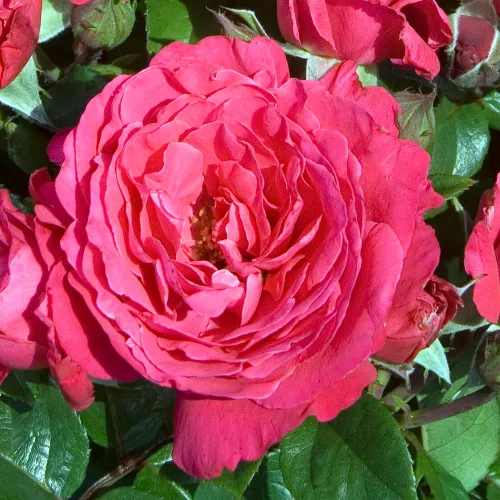
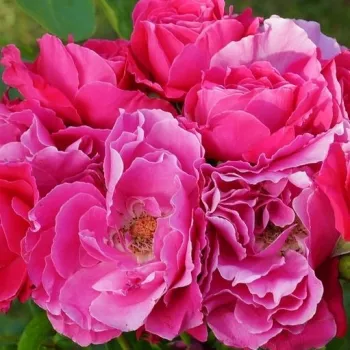
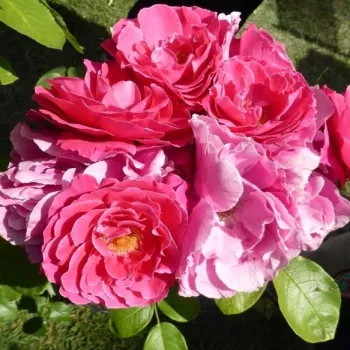
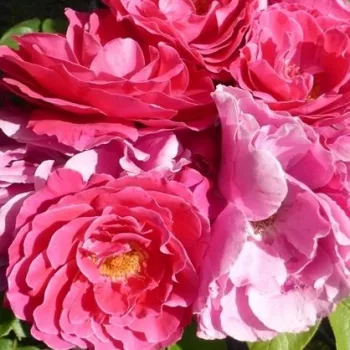
Step out to your front garden after rain and meet Akaroa glowing against glossy foliage: a compact floribunda that brings balance and everyday elegance to small London terraces and family plots alike. Its neat, upright habit and medium height make it easy to place along paths or low fences, while the dense canopy helps the soil cope better with wet spells and strong breezes typical of exposed, rain‑swept gardens, including coastal spots. Clusters of medium-sized, cup-shaped blooms open in vivid raspberry pink before softening to a powdery tone, giving relaxed colour continuity from early summer well into autumn. Own-root plants establish steadily and live long, giving you a reassuring lifespan and dependable regrowth if stems are damaged. Plant once, keep watering and feeding simple, and watch roots build in year one, top growth strengthen in year two, and full ornamental value unfold by year three for quietly sustainable impact with minimal effort in everyday gardens.
Usage options
| Target area |
Reasoning |
| Front-garden flower beds in small to medium family plots |
Compact, upright growth and a 75–105 cm height range keep Akaroa perfectly in scale with typical UK front gardens, giving tidy structure, repeat flowering and easy access for routine care for the busy urban gardener. |
| Edging and low informal hedges along paths or drives |
Dense, bushy plants spaced at 50–55 cm knit into a soft, low hedge that guides the eye, hides bare soil and frames paths without overwhelming narrow spaces, ideal for the terraced-house owner. |
| Containers and large pots on patios or balconies |
The compact framework and upright habit sit well in 40–50 litre peat-free containers, where a single plant can deliver months of colour with straightforward watering and feeding for the balcony or courtyard gardener. |
| Low-maintenance bedding schemes with simple routine care |
Moderate disease resistance and average drought tolerance mean regular watering, a yearly mulch and a light trim are usually enough to keep plants floriferous and healthy for the time-poor beginner. |
| Sustainable, rainwater-managed urban front gardens |
Dense, glossy foliage and a compact root system help reduce soil splash and surface run-off during heavy showers, supporting practical rainwater handling in paved or partially permeable plots for the sustainability-minded homeowner. |
| Mixed planting with lavender, nepeta and other perennials |
The rich dark pink clusters contrast beautifully with silvery lavender or soft blue nepeta, creating a long-season tapestry that looks designed yet relaxed for the style-conscious garden improver. |
| Part-shade borders with morning or late-afternoon sun |
Suitable for partial shade, Akaroa flowers reliably where many roses sulk, making use of east- or west-facing sites that receive only a few good hours of light for the light-challenged plot holder. |
| Long-term, resilient planting for family gardens |
Own-root plants re-sprout from the base if stems are damaged, avoiding graft failure and supporting a long-lived, stable display even after harsh winters or pruning mishaps for the risk-averse newcomer. |
Styling ideas
- Parisian-Frontage – Line a narrow front bed with Akaroa and lavender for a quietly formal, French-accented welcome – ideal for terrace owners seeking simple symmetry.
- Raspberry-Ribbon – Thread a curving band of Akaroa through mixed perennials to link lawn and patio – perfect for families wanting colour without fussy maintenance.
- Balcony-Boulevard – Grow a single Akaroa in a 40–50 litre pot with trailing nepeta at the rim – suits renters wanting maximum flower from minimal space.
- Clay-Corner – Use Akaroa in a small raised bed over heavy clay, underplanted with low herbs to keep things tidy – helpful for homeowners taming awkward, soggy spots.
- Evening-Glow – Place Akaroa where it catches late sun, so the dark pink flowers glow above dark foliage – for after-work gardeners who savour a calm, fragrant view.
Technical cultivar profile
| Property |
Data |
| Name and registration |
Floribunda bed rose registered as MATtanstill, marketed as Akaroa Bedding rose MATtanstill; floribunda bedding rose suited to flower beds, edging and containers in family gardens. |
| Origin and breeding |
Bred by Bob Matthews, Matthews Nurseries Ltd, Whanganui, New Zealand; breeding completed around 2010, registered 2010 and introduced in 2014 in New Zealand for general garden use. |
| Growth and structural characteristics |
Compact, upright, bushy shrub reaching about 75–105 cm high and 65–95 cm wide, with dense, dark green glossy foliage and moderate prickliness; builds a full, rounded outline in well-managed beds. |
| Flower morphology |
Medium-sized, cup-shaped, double flowers with 26–39 petals borne in clusters; remontant habit with a generous second flush, providing prolonged seasonal colour in bedding and border plantings. |
| Colour data and phenology |
Vivid dark pink with raspberry tones; buds open warm raspberry-pink, then soften towards powdery cream at fade; colour retention moderate, giving a gentle, evolving palette over the flowering period. |
| Fragrance and aroma |
Mild, classic rose fragrance that does not overpower small spaces; best appreciated at close quarters along paths or near seating, adding a subtle scented layer to compact urban gardens. |
| Hip characteristics |
Produces few, occasional rose hips; small, spherical fruits around 8–12 mm across, coloured medium red, offering modest late-season interest without significantly reducing flowering performance. |
| Resistance and winter hardiness |
Moderate resistance to black spot, powdery mildew and rust; reliably hardy to approximately −21 to −18 °C (RHS H7, USDA 6b, Swedish zone 3) with normal UK winter conditions and basic care. |
| Horticultural recommendations |
Best at 50–55 cm spacing in beds or low hedges; tolerates partial shade; water regularly in warm spells, use peat-free compost, and prune lightly to maintain shape and encourage repeat bloom. |
Akaroa Bedding rose MATtanstill offers compact dark-pink bedding colour, reliable repeat flowering and long-lived own-root resilience; consider it where you want graceful structure with modest, manageable care.