ADELAIDE HOODLESS – red park rose - Marshall
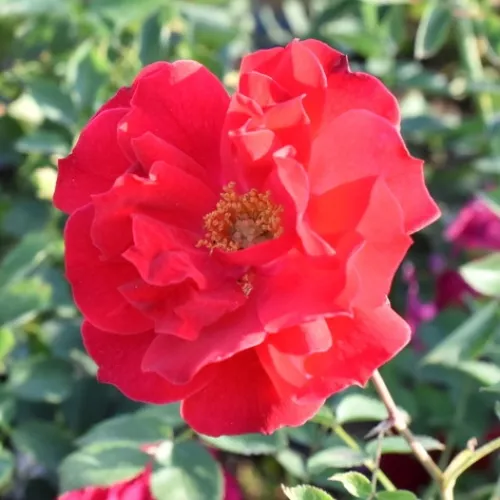
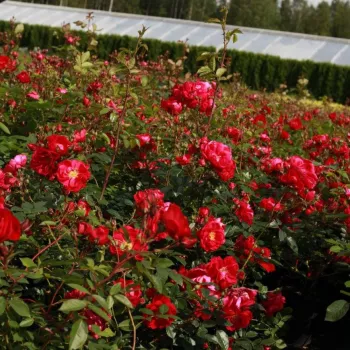
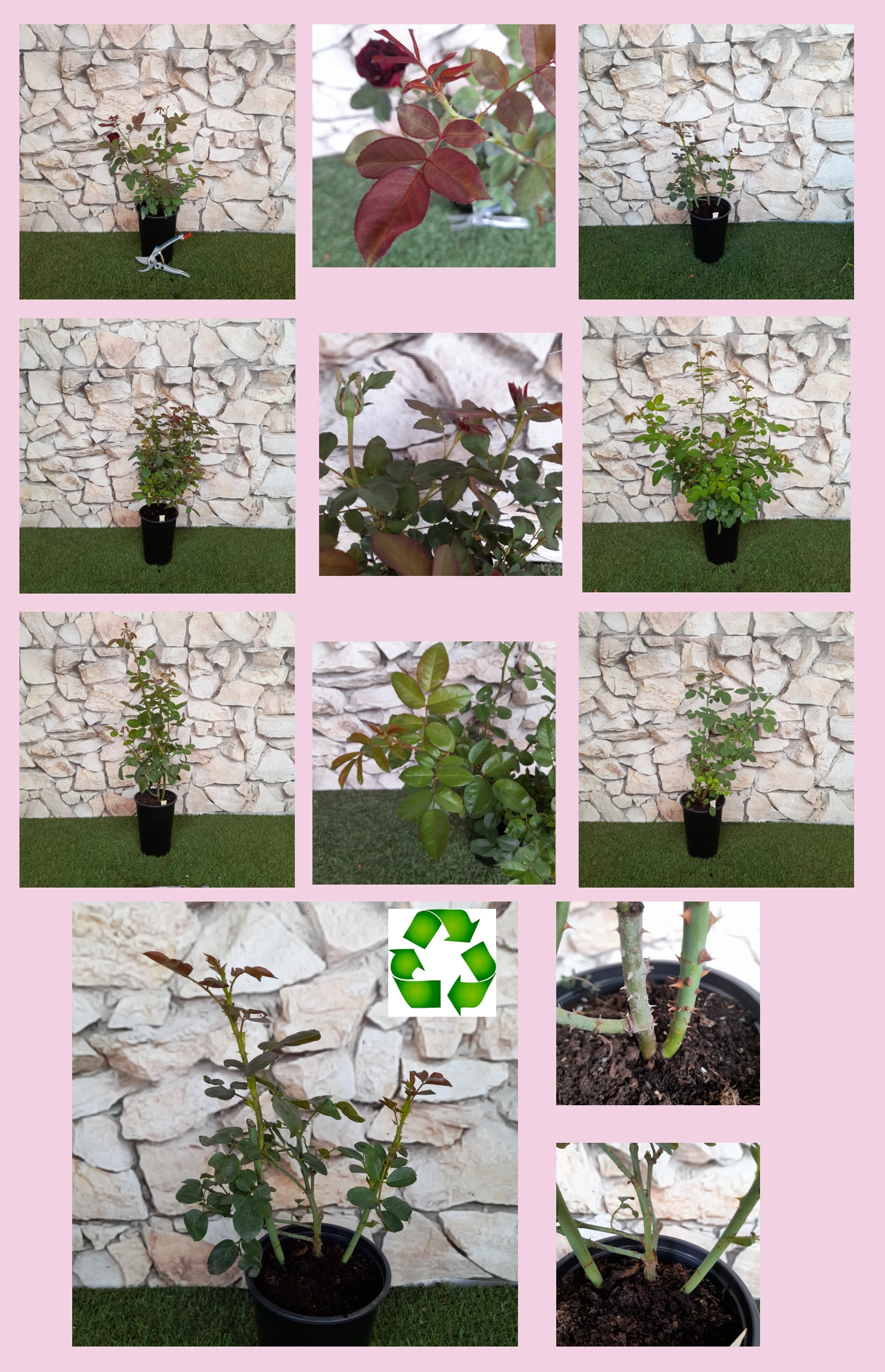
Step into a London front garden after rain and let the Adelaide Hoodless shrub rose draw your eye with generous clusters of bright mid-red blooms on a naturally upright, bushy framework that fills modest spaces with structure and colour. Bred in Canada for extreme hardiness, it copes reassuringly well with cool, wet spells and brisk winds common in British gardens, even where heavy soils need careful drainage after downpours. Once settled, its resilient roots support good heat and drought tolerance, so everyday maintenance in busy family gardens stays refreshingly simple. As an own-root rose, it grows into a long-lived, reliable shrub that can regenerate from the base if cut back hard or nibbled by life’s mishaps, helping you enjoy a stable, lasting display with less worry. In its first year it focuses on roots, in the second on building strong shoots, and by the third season it usually reaches its full ornamental potential as a shaping backbone for sustainable, rainwater-wise planting schemes.
Usage options
| Target area | Reasoning |
|---|
| Small London front garden hedge |
Its upright, bushy habit and 110–190 cm height make it ideal for a low, semi-formal hedge, giving structure and privacy without dominating a narrow frontage or enclosed urban plot, particularly appreciated by the family gardener. |
| Rain‑tolerant curbside planting strip |
Canadian breeding and robust wood allow it to handle cool, wet spells and brisk winds in exposed street-side beds, where passing traffic and reflected heat demand resilient shrubs valued by the urban homeowner. |
| Feature shrub in mixed perennial border |
The dense, glossy foliage and repeated red flowering provide a strong focal point among perennials and grasses, giving a long season of colour and form that appeals to the design-conscious gardener. |
| Low‑maintenance own‑root specimen |
As an own-root plant it builds a deep, stable framework that can regrow from the base if cut back or damaged, supporting a long-lived, forgiving shrub sought by the time-poor beginner. |
| Heat‑tolerant front garden accent |
Once established, it tolerates heat and moderate drought well, so it copes with warm south-facing brick frontages and reflective paving where water is used carefully, reassuring the sustainability-minded owner. |
| Structural backdrop for “girly” planting |
The refined, flat semi-double blooms form soft clusters that sit neatly behind frothy perennials and ornamental grasses, giving a composed backdrop that pleases the romantic garden-maker. |
| Long‑term boundary planting |
Hardiness down to around –40 °C and solid shrub framework make it a durable choice for permanent boundary lines, maturing into a reliable, long-lived feature appreciated by the long-range planner. |
| Container-grown rose for paved front gardens |
In a 40–50 litre or larger container with good drainage, its upright habit and repeat clusters of red flowers give a strong vertical accent by the front door, suiting the balcony or courtyard city dweller. |
Styling ideas
- Terraced-Chic Hedge – line a short front boundary with evenly spaced plants, underplanting with low nepeta to soften the base and keep the look airy – ideal for style-aware London terrace owners.
- Raspberry-Romantic Border – combine with pale pink perennials and airy cosmos to create a “girly” colour story framed by its red clusters – suited to beginners wanting an easy romantic feel.
- Rain-Garden Spine – place as the structural backbone in a rainwater-collecting front bed, surrounded by moisture-tolerant grasses and perennials – for urban gardeners focused on sustainable drainage.
- Front-Door Welcome – grow a single shrub in a large 50 litre container, underplanted with trailing thyme to spill over the edge – perfect for busy homeowners needing impact in small paved spaces.
- Textured Park-Style Mix – echo public park planting by pairing with fountain grass and globe thistles for contrast against its glossy foliage – attractive to those who enjoy a refined, designed look.
Technical cultivar profile
| Parameter | Data |
|---|
| Name and registration |
Shrub rose, commercial type park rose; current trade name ADELAIDE HOODLESS – red park rose - Marshall; ARS approved exhibition name Adelaide Hoodless; part of the Park - shrub rose collection. |
| Origin and breeding |
Bred by Dr Henry H. Marshall at Morden Research Station, Canada, from ‘Fire King’ floribunda × (‘J.W. Fargo’ × ‘Assiniboine’) seedling; introduced 1973 via Canadian Ornamental Plant Foundation. |
| Awards and recognition |
Holds the RHS Award of Garden Merit, indicating dependable performance, ornamental value and usefulness in a wide range of garden situations under typical UK conditions when grown with appropriate care. |
| Growth and structural characteristics |
Upright, medium to large shrub with dense, glossy, dark green foliage and moderate prickles; height and spread around 110–190 cm, forming a bushy, structural plant suitable for hedging or specimen use. |
| Flower morphology |
Semi-double, flat flowers with 13–25 petals, produced in clusters on the stems; small blooms (about 0.5–1.5 inches) with remontant flowering, including an abundant second flush in favourable conditions. |
| Colour data and phenology |
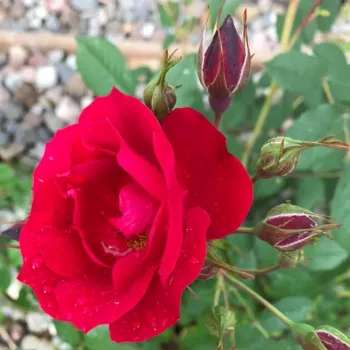
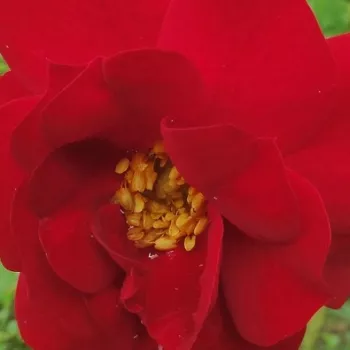
Medium, bright red flowers; outer petals RHS 53B, inner 53A; colour may lighten slightly in strong sun, shifting towards a softer raspberry-red as blooms age, while buds open from deep velvety red. |
| Fragrance and aroma |
Very weak fragrance, with only a delicate rosy character detectable at close range; chosen primarily for flower colour, form and shrub performance rather than scent, especially in exposed or public settings. |
| Hip characteristics |
Hip set is usually sparse; when present, bears small ovoid hips about 7–13 mm across, coloured orange-red, adding a modest seasonal accent without significantly affecting overall flowering display. |
| Resistance and winter hardiness |
Extremely hardy, RHS H7 and USDA zone 2b, tolerating around –40 °C; good heat and moderate drought tolerance once established; black spot resistant but very sensitive to powdery mildew and rust. |
| Horticultural recommendations |
Best in sunny sites with well-drained soil; mass planting at 0.9–1.05 plants/m², hedges at 90 cm spacing; regular preventative care advised due to disease sensitivity, especially in humid, congested plantings. |
ADELAIDE HOODLESS offers upright structure, long-lived own-root resilience and reliable red flowering for compact front gardens, making it a thoughtful, enduring choice if you value steady garden character over time.