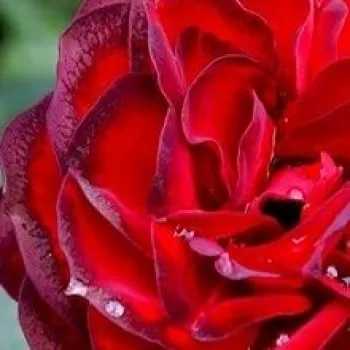
A Pesti Srácok Emléke – dark red bedding floribunda rose – Márk
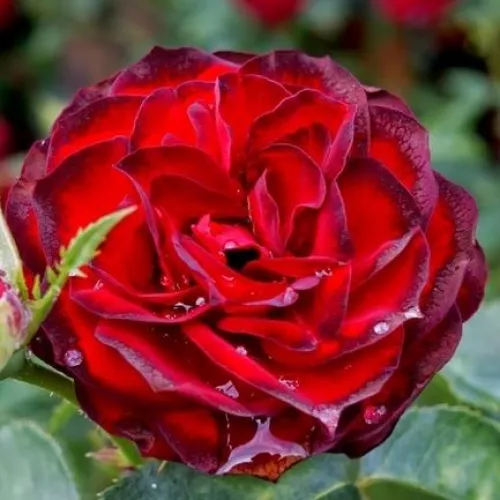
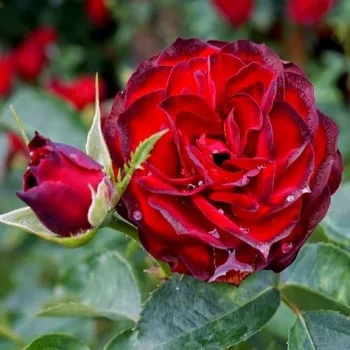
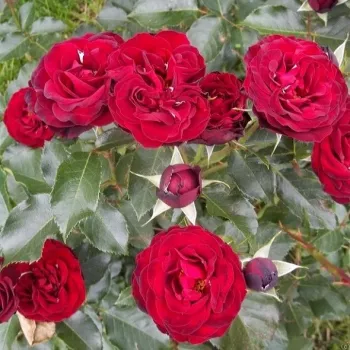
With its deep, commemorative character and generous flowering, A Pesti Srácok Emléke suits small London front gardens and compact urban borders where rain is frequent and drainage matters, rewarding you with clusters of dark red, semi-double blooms from early summer to autumn. This compact bushy shrub forms a stable structure on its own roots, building strength below ground in year one, pushing more confident shoots in year two, and reaching full ornamental value by year three, so your planting matures gracefully with minimal fuss. Its good disease resistance and reliable repeat flowering mean less spraying and deadheading, while the semi-double form offers moderate interest to visiting pollinators. Neat proportions make it ideal for low hedging or pattern bedding in family gardens that must stay practical yet atmospheric, and its heat- and dryness tolerance helps it cope with exposed, sun-baked spots by pavements or drives. Own-root longevity supports a long-lived, sustainable planting, able to regenerate if cut back hard and to maintain stable colour and form over many seasons, providing durable structure and an easy-care focal point for busy gardeners.
Usage options
| Target area | Reasoning |
|---|
| Low-maintenance family front garden bed |
The bushy, compact habit and robust disease profile keep this rose looking tidy with minimal intervention, ideal beside paths and drives where family life is busiest and you have little time for spraying or complex pruning, suiting the needs of the busy urban gardener. |
| Small to medium mixed border in a city garden |
Its moderate height and medium spread slot easily between perennials and grasses, giving long-season dark red colour without overwhelming the space, so you can create depth and balance in a typical terraced-house border while still keeping maintenance straightforward for the beginner planter. |
| Rainwater-conscious front garden with improvised drainage |
Well-suited to spots where water can linger after downpours, this rose handles damp spells as long as the soil is not permanently waterlogged, making it a good choice in urban clay soils where you are channelling rain from roofs and drives and still want reliable performance as a sustainability-minded owner. |
| Informal low hedge along a path or boundary |
Planted 40–50 cm apart, its compact, repeat-flowering habit forms a low, dark red edging that defines boundaries without becoming over-tall, giving structure and a sense of order to family gardens while staying easy to trim and tidy for the occasional gardener. |
| Pollinator-friendly accent among herbs and perennials |
Semi-double flowers with accessible stamens offer moderate pollen interest across repeated flushes, especially when combined with lavender, sage or nepeta, helping you support visiting insects while still enjoying a classic rose look as a wildlife-aware gardener. |
| Heat-exposed front bed near paving or walls |
Good heat and moderate drought tolerance help this rose cope beside sun-warmed brick or tarmac, so once established it will continue to flower through warm, dry spells with modest supplementary watering, fitting the needs of the time-poor homeowner. |
| Large container (40–50 litre) on a balcony or patio |
In a generous, well-drained peat-free container of at least 40–50 litres, its compact habit and repeat blooms bring structure and colour to paved spaces, while own-root vigour supports long-term container life for the space-limited balcony gardener. |
| Long-term, sustainable planting in clay or chalky soil |
As an own-root rose with good overall robustness, it settles into challenging UK garden soils, gradually building a resilient framework that can be rejuvenated if cut back, so your bed or border keeps its character for many seasons, reassuring the long-term planner. |
Styling ideas
- Terrace-edge ribbon – Plant in a single low line along a London terrace front path, underplant with creeping thyme to soften the paving – ideal for householders wanting tidy structure without daily care.
- Herb contrast – Combine with lavender, sage and nepeta for a blue–purple frame that sets off the deep red flowers – suited to cooks and casual gardeners who enjoy scent and visiting bees.
- Clay-breaker mix – In improved heavy clay, group with feather reed grass and small-leaved euonymus to add vertical movement and evergreen footing – helpful for owners of difficult, wet-prone urban plots.
- Commemorative corner – Create a small reflective nook with three shrubs backed by dark green evergreens, using gravel mulch to manage rain splash – appealing to those who like meaningful, low-work planting.
- Container focal point – Grow one plant in a 40–50 litre pot with peat-free compost, skirted by trailing ivy-leaved plants – perfect for balcony or patio gardeners seeking long-lived colour in limited space.
Technical cultivar profile
| Parameter | Data |
|---|
| Name and registration |
Current trade name A pesti srácok emléke; American Rose Society exhibition name identical; floribunda bed rose, shrub type, commemorating the young freedom fighters of the 1956 revolution. |
| Origin and breeding |
Bred by Márk Gergely in Hungary around 2000 from ‘II. Rákóczi Ferenc emléke’ × ‘Ama’ (Kordes, 1955); introduced to the market in 2006 by PharmaRosa® Ltd. as a bedding floribunda. |
| Growth and structural characteristics |
Bushy, compact shrub reaching about 60–80 cm in height and 60–85 cm spread, with moderately dense, matt, mid-green foliage and moderate thorniness; suits beds, borders and low hedging layouts. |
| Flower morphology |
Semi-double, medium-sized cup-shaped blooms in clusters, typically with 13–25 petals; flowers repeatedly through the season with abundant second flush; medium self-cleaning so some deadheading improves neatness. |
| Colour data and phenology |
Uniform deep dark red with a burgundy tone, ARS code DR, RHS 187A outer and 187B inner; colour holds well with only slight lightening in strong sun; presents a velvety effect in full bloom for strong visual impact. |
| Fragrance and aroma |
No noticeable scent; grown primarily for colour effect, structure and reliability rather than fragrance; well suited where visual consistency, repeat flowering and robust habit are the main selection criteria. |
| Hip characteristics |
Produces moderate numbers of spherical red hips about 10–14 mm in diameter; hips may lend seasonal interest in late summer and autumn if spent flowers are not removed for repeat flowering. |
| Resistance and winter hardiness |
Shows good heat and moderate drought tolerance; reliably hardy to around −21 to −18 °C (RHS H7, roughly USDA zone 6b, Swedish zone 3); rated resistant to powdery mildew, black spot and rust in normal conditions. |
| Horticultural recommendations |
Prefers sunny sites with reasonably well-drained soil; spacing 40–75 cm depending on use, allowing about 4–4.6 plants/m² for mass planting; suits beds, borders, low hedges, parks and urban green spaces. |
A Pesti Srácok Emléke offers compact, repeat dark-red flowering, strong disease resistance and long-lived own-root reliability, making it a thoughtful choice for low-maintenance, sustainable family gardens and small urban spaces.